 #Interviews
#Interviews
27.01.2026
“You cannot do good science in your spare time,” says author of study highlighted at European cardiology conference
Cardiologist Pedro Lemos explains the intricacies of a large multicenter study involving over 3,000 patients, the results of which could be used by Brazil’s public health system (SUS).
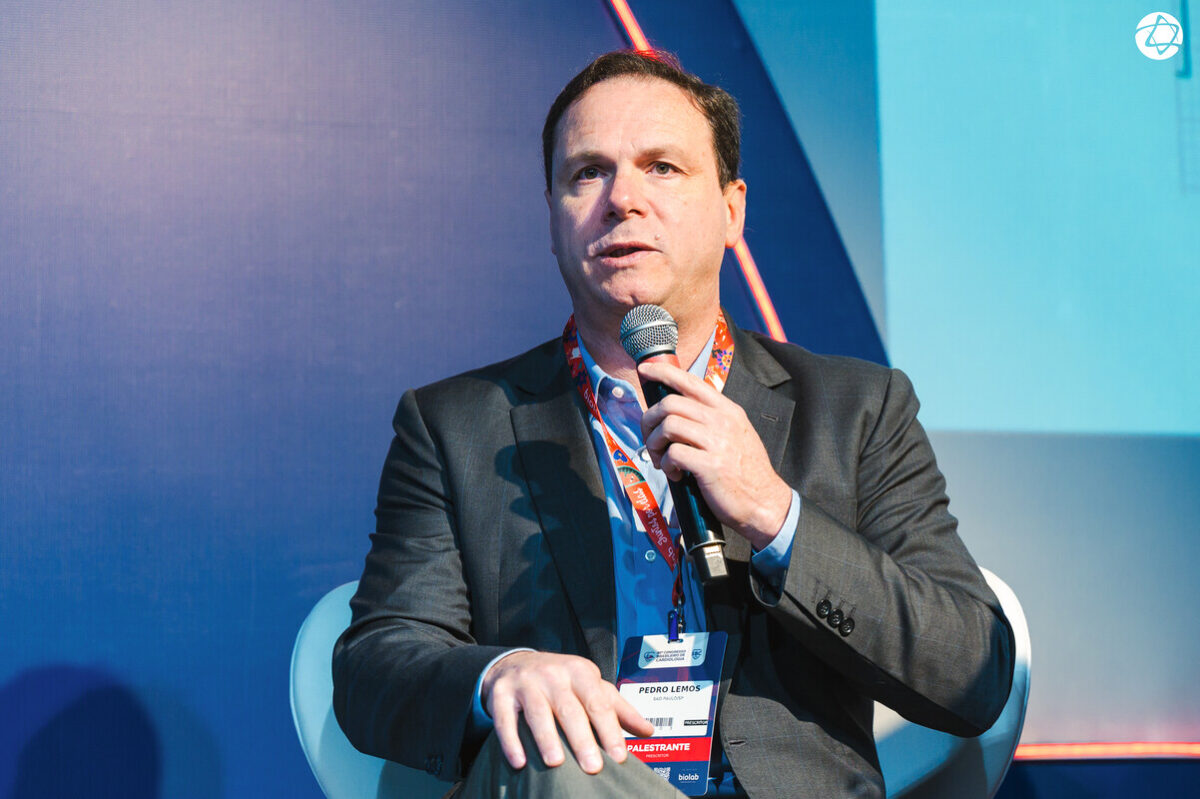 Recognized for his work in minimally invasive cardiac interventions, Dr. Pedro Alves Lemos Neto is the principal investigator of NEO-MINDSET, a Brazilian multicenter clinical trial | Image:
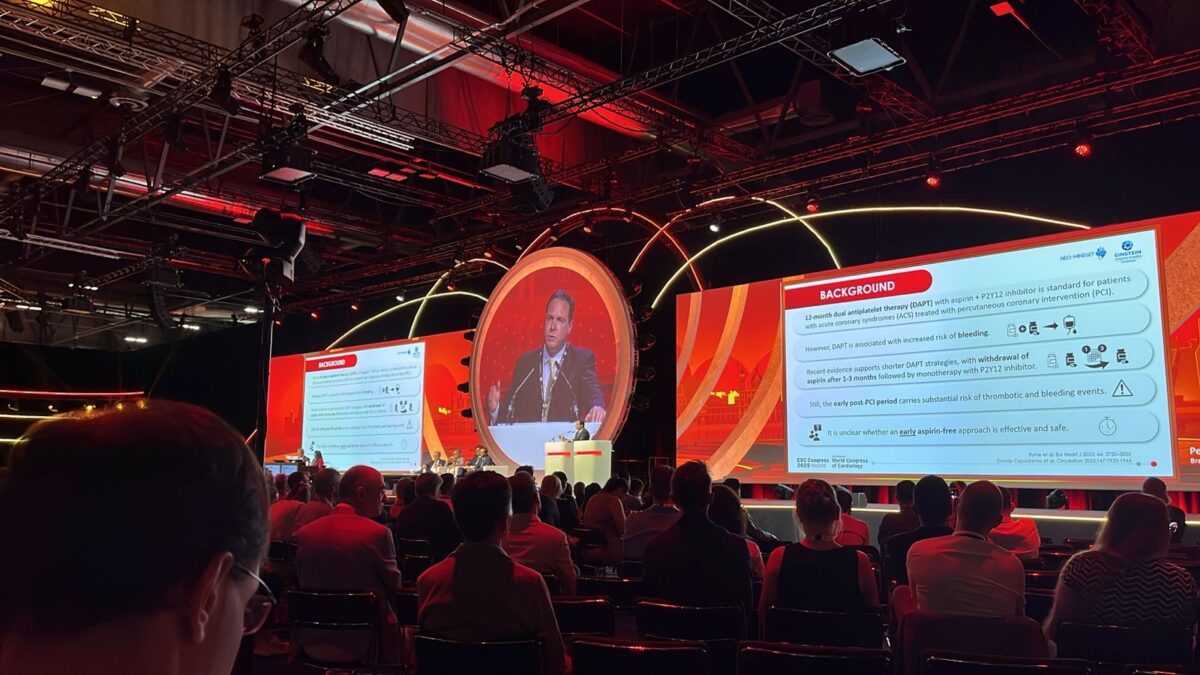
Dr. Pedro Alves Lemos Neto, director of the cardiology program at Einstein Hospital Israelita in São Paulo, is the principal investigator of a Brazilian multicenter study highlighted at the European Society of Cardiology’s 2025 congress—the world’s largest cardiology conference—held last year in Madrid, Spain.
Published in The New England Journal of Medicine in August, the NEO-MINDSET clinical trial compared P2Y12 receptor inhibitor monotherapy with dual antiplatelet therapy (DAPT) in patients with acute coronary syndrome who had been given new-generation stents.
The P2Y12 inhibitor monotherapy uses a single drug to inhibit platelet function and is less likely to induce bleeding. Standard treatment with DAPT, meanwhile, combines a P2Y12 inhibitor with aspirin, promoting a more intense antiplatelet effect, but increasing the risk of hemorrhage.
“The NEO-MINDSET trial showed that stopping aspirin intake soon after a heart attack increases the risk of further cardiac events,reinforcing the need to continue taking it for at least a month,” explains Lemos, who is also a professor at the University of São Paulo’s School of Medicine (FM-USP) and has a PhD in sciences from Erasmus University in the Netherlands.
The study, which received funding from the Support Program for Institutional Development of the Public Health System (PROADI-SUS), involved 50 research centers across Brazil and 3,400 patients.
It used a robust, randomized, blinded endpoint methodology to verify whether P2Y12 inhibitor monotherapy could match the efficacy of the traditional DAPT with greater safety.
Known for his work in minimally invasive cardiac interventions, Lemos spoke to Science Arena about the intricacies of the study and the challenges of bringing together dozens of Brazilian research centers and thousands of patients.
In the following interview, the cardiologist also explains the logistical and scientific processes involved in coordinating such a complex clinical trial and ensuring quality, standardization, and integrity at every stage.
Science Arena: What were the biggest logistical and scientific challenges of coordinating a multicenter study of this magnitude?
Dr. Pedro Alves Lemos Neto – A study of this nature can only be done as a multicenter trial. No single institution would be able to recruit the required number of patients within a reasonable timeframe. It is important to emphasize that a multicenter approach also increases representativeness, since the results are not limited to a single population profile.
Brazil is extremely heterogeneous, so the more centers that participate, the more the results reflect Brazilians on a nationwide level. But this leads to major challenges: we had to align protocols, quality standards, and regulatory actions across approximately 50 centers simultaneously.
High-quality research requires professionalism. You cannot do good science in your spare time.
Research is one of Einstein’s institutional pillars. The study was organized by its Academic Research Organization (ARO), a division dedicated exclusively to clinical research. We have doctors, nurses, and coordinators hired specifically to handle every stage of the trial with a standardized and professional approach, from data collection to ethical and regulatory processes, including drug distribution and management.
How did you ensure that this standardization was maintained across so many different centers and data sets?
In several ways. First, absolute scientific rigor in the methodological design. Second, an operational structure that oversees every stage of the process, from ethics approval to continuous data monitoring.
The ARO created a specific online database of standardized vocabulary to be used by the centers; different hospitals often record the same information in different ways, and that needs to be standardized before analysis.
We also conducted on-site audits, with teams from Einstein visiting the centers and verifying 100% of the data they submitted. Furthermore, we set up independent committees to oversee the integrity and safety of the study, with no interference from the researchers.
How was the study designed to account for the heterogeneity of the Brazilian population?
We included research centers from multiple states across Brazil to ensure geographic and demographic diversity. Throughout the entire process, Einstein maintained close and constant contact with these centers, offering operational support, resupplying medications, and adjusting protocols when necessary.
Since heart attacks can occur at any time, the enrollment system operated 24 hours a day, seven days a week.
The total number of 3,400 patients was statistically calculated to ensure sufficient analytical power and minimize both type I errors, when differences that do not actually exist are detected, and type II errors, when differences that do exist are not detected.
How did NEO-MINDSET address the ethnic, racial, and socioeconomic diversity of the Brazilian population?
The goal was to reflect the day-to-day operations of each center. The broad geographic distribution naturally led to considerable patient diversity.
Approximately 30% of the participants were Black and brown-skinned people, and 30% were women, a significant achievement considering how often these groups are underrepresented in coronary heart disease studies.
How did you minimize bias among centers of different sizes and capacities?
There are two types of study design: the competitive model, in which each center enrolls as many patients as possible, and the distributive model, in which every center has to enroll the same number of participants.
We opted for the competitive model because it speeds up recruitment. Larger institutions naturally included more patients, but that reflects the size of their populations.
To avoid bias, we accounted for the percentage of participants in relation to the total number of patients treated by each hospital. In the end, around 70% of eligible patients were included, which is an excellent number in terms of representation.
How important are studies like this, which revisit already known protocols, within programs such as PROADI-SUS?
Good medicine is based on evidence. Clinical reasoning and experience are the basis of medical practice, but decisions must be supported by robust data.
We typically conduct trials to validate new treatments, but it is equally important to reassess long-standing therapies, even if only to identify when something becomes obsolete.
PROADI-SUS is essential in this regard, enabling evidence to be generated within the public health system using technologies readily available in Brazil and addressing questions relevant to our circumstances.
Heart attacks are a health problem worldwide, but we need to understand how results apply to Brazil specifically.
The NEO-MINDSET study fulfills exactly that role by including 3,400 patients and providing solid evidence that the treatment remains effective and safe.
Are there any other studies within PROADI-SUS that have had a similar impact?
Yes. Although PROADI-SUS is relatively new, it already plays a central role in generating clinical evidence in Brazil. The RIVER study, conducted at the HCor Heart Hospital, is one important example. We have two ongoing studies at Einstein, involving thousands of patients with hypertension, expected to report results next year.
They are investigating a simple question with enormous clinical relevance and potential impact on public policy: what is the ideal blood pressure level for treatment?
*
This article may be republished online under the CC-BY-NC-ND Creative Commons license.
The text must not be edited and the author(s) and source (Science Arena) must be credited.