 #News
#News
#News
28.01.2026
Crisis in U.S. Federal Science: The impact of a mass exodus of PhDs
A Science magazine survey shows that more than 10,000 PhDs have left federal positions since Donald Trump’s return to the White House
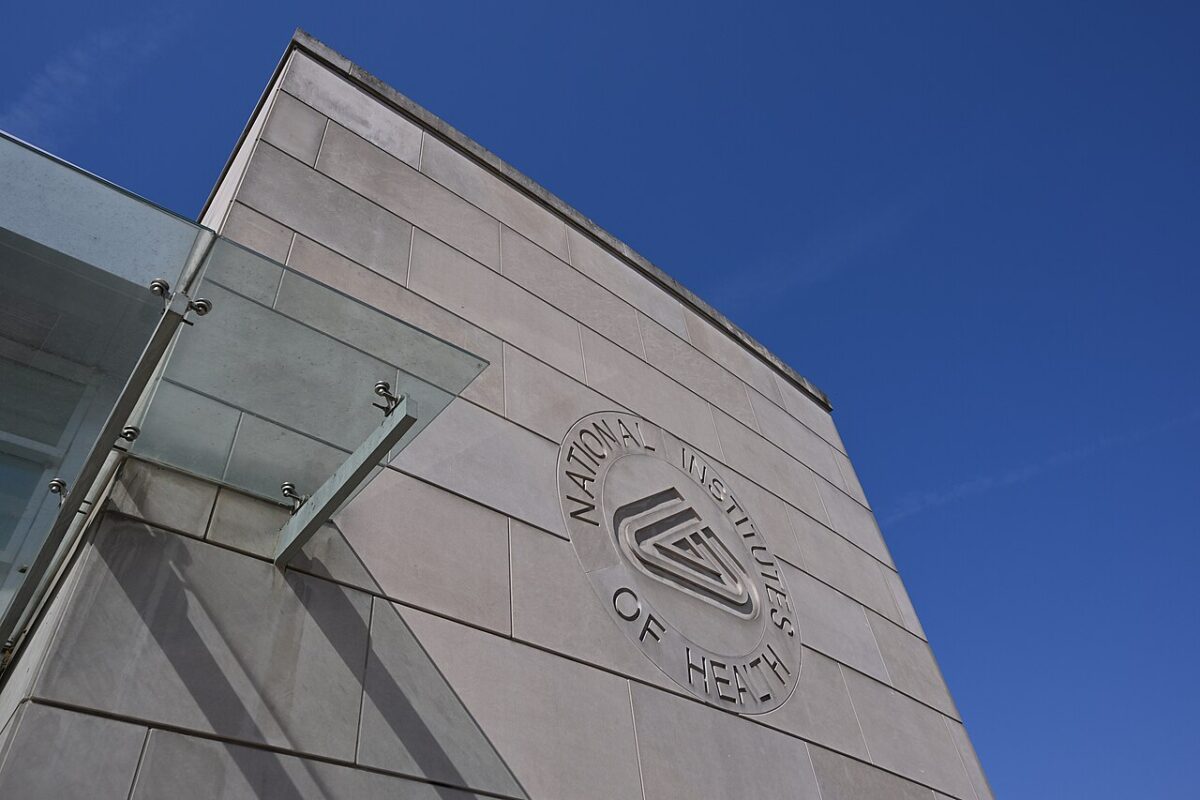 The National Institutes of Health (NIH), the leading funder of biomedical research in the United States, tops the list, with more than 1,100 PhD resignations in 2025 | Image: G. Edward Johnson/Wikimedia Commons
A new survey by Science magazine revealed that the U.S. government has lost more than 10,000 PhDs in STEM fields (science, technology, engineering, and mathematics) since Donald Trump returned to the White House in 2025. The figure is a worrying indicator of the crisis facing American science during the Republican president’s second term.
According to Science, the exodus represents just 3% of the 335,192 federal employees who vacated their positions last year. However, it accounts for 14% of all PhDs working in STEM or health sciences who were employed at the end of 2024, when Joe Biden was preparing to leave office.
The data were drawn from employment records released earlier this month by the White House Office of Personnel Management (OPM), Science reports.
Loss of highly qualified personnel
The sharp decline in highly qualified professionals in the public sector—particularly within federal agencies, universities, and research institutes—reflects a combination of factors that U.S. experts have been observing for years: funding cuts, administrative restructuring, and a political climate that many researchers view as hostile to evidence-based science.
According to the survey, the impact is especially pronounced in federal agencies that employ large numbers of scientists, such as the National Science Foundation (NSF), the country’s primary agency for funding basic research.
“Across the government, the PhDs who left their positions took with them a vast amount of expertise in their respective fields, as well as knowledge about how these agencies operate,” Science warns, based on its analysis of data from 14 federal agencies.
The U.S. National Institutes of Health (NIH) top the list, with more than 1,100 PhD resignations in 2025. By comparison, the agency recorded 421 resignations in 2024.
“On average, the 14 agencies lost roughly three times more PhDs in 2025 than in 2024, with the largest proportional increases at the National Oceanic and Atmospheric Administration (NOAA), the Environmental Protection Agency (EPA), and the U.S. Forest Service (USFS),” the magazine reports.
At the same time, the number of newly hired STEM PhDs across all agencies was dramatically lower last year than in 2024.
Dismantling the scientific research system
Another alarming finding highlighted by Science concerns the dismantling of the NSF, the main agency supporting basic science in the United States. Between January and November 2025, the net loss of 205 PhDs represented 40% of the agency’s specialized workforce prior to Trump taking office, reducing the share of PhDs on staff from 30% to 26%.
According to Science, in most agencies the most common reasons for departures were retirement and resignation. Although the OPM classifies many of these exits as voluntary, external factors—including fear of dismissal, the appeal of severance offers, and deep disagreement with Trump’s policies—likely influenced many decisions to leave.
Pressure on the U.S. science and technology system under the current Trump administration is not new.
Below are the main threats to science in the United States during Donald Trump’s first term (2017–2021) and his second term (in office since January 2025).
-
Political interference in scientific and health agencies
-
- Pressure on, and attempts to influence, reports and recommendations from institutions such as the Food and Drug Administration (FDA) and the National Institutes of Health (NIH).
- Example: the promotion of treatments lacking scientific evidence during the COVID-19 pandemic.
-
Climate denialism and environmental setbacks
-
- Repeal of more than 100 environmental regulations during the first term, undermining efforts to reduce greenhouse gas emissions.
- Withdrawal of the United States from the Paris Agreement, weakening global commitments to climate action.
- Rollback and weakening of clean energy policies.
-
Risks to research funding
-
- Attempts to cut budgets at scientific agencies, particularly those supporting climate research and other key areas of science.
- With Republican control of Congress, greater ease in approving budget cuts or redirecting funding priorities.
- Potential loss of public data essential for research and innovation.
-
Controversial appointments to strategic positions
-
- Appointment of individuals with records of scientific denialism, especially regarding public health issues such as vaccines and pandemic response.
- Increased risk of politicization of science and erosion of public trust in government institutions.
*
This article may be republished online under the CC-BY-NC-ND Creative Commons license.
The text must not be edited and the author(s) and source (Science Arena) must be credited.