#News
#News
#News
09.03.2026
How biological and social conditions influence vaccine effectiveness
An international review shows how biological, socioeconomic, and environmental factors affect immune responses to vaccines among different populations
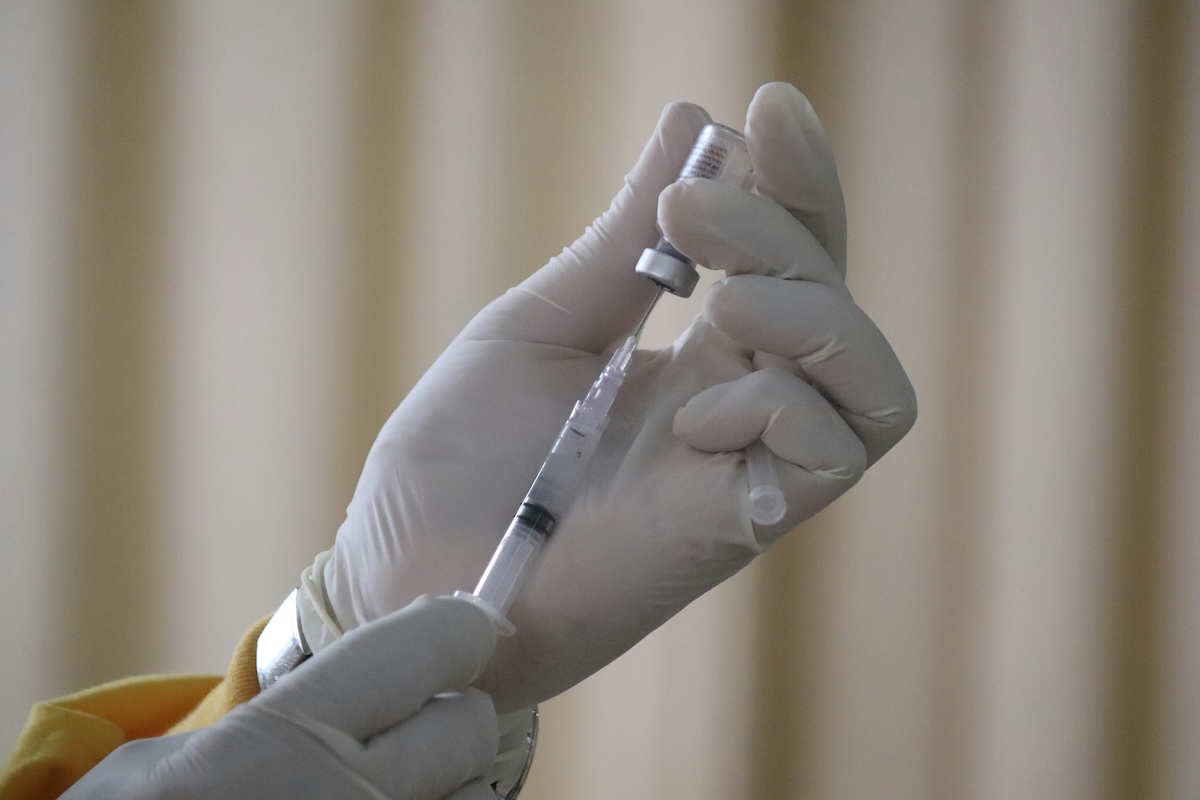 Biological and situational factors may influence the immune response to vaccines in different populations | Image: Unsplash
It is not just a question of access. Accumulated evidence indicates that vaccine effectiveness varies significantly between different regions of the world, even when the same vaccines are used. Conditions such as malnutrition, concurrent infections, genetic factors, and delays in immunization schedules are among the main determinants of reduced immune responses.
This is the main conclusion of a scientific literature review conducted by researchers from HypoVax Global Knowledge Hub, an international consortium that brings together immunologists, clinicians, data scientists, and public healthcare specialists dedicated to the study of vaccine hyporesponsiveness—defined as a reduced or insufficient immune response to a given vaccine.
Inequalities beyond access
Among the researchers involved is immunologist Helder Nakaya, a senior researcher at Einstein Hospital Israelita who contributed toward the identification of studies containing immunological and omics data. In a post on his LinkedIn profile, Nakaya drew attention to a structural imbalance in global scientific research:
“Almost all public datasets come from Europe and the US, while the places where vaccines perform the worst barely show up.”
According to Nakaya, “we are trying to understand a problem that mainly affects poorer populations using data that come mostly from wealthier ones.”
HypoVax Global seeks to close this gap by fostering international collaborations, generating better quality data in underrepresented regions, and providing a more accurate picture of global immunological inequalities.
Evidence compiled in an international publication
In 2024, the consortium held an international workshop about vaccine hyporesponsiveness in the Netherlands. The discussions and evidence presented were outlined in an opinion article published in November in the journal The Lancet Microbe.
The analyzed data indicate that oral vaccines against poliomyelitis, cholera, and rotavirus infections, for instance, have long been observed to be less immunogenic in infants in low- and middle-income countries compared with infants in high-income countries.
In clinical trials, for example, the effectiveness of the rotavirus vaccine after 12 months ranged from 44% to 77% in high- and medium-mortality countries—all of which are low- and middle-income—while it reached 94% in low mortality countries, all of which are high-income.
Significant variations were also observed in the response to the hepatitis B vaccine. Among children under 15 years in sub-Saharan Africa, seroprotection rates varied from 85% in South Africa to 64% in the north of the continent.
Single-country comparative studies reinforced the influence of the local context. In Gabon, children from rural areas presented lower antibody responses to the influenza vaccine than those from semi-urban regions. In Uganda, adolescents from rural areas demonstrated weaker responses to various vaccines than those from urban areas.
Biological and clinical factors associated with hyporesponsiveness
The immune response to vaccines is shaped by multiple factors:
- Genetics: different ethnic groups living in the same location may present different responses and varying rates of antibody decline.
- Comorbidities: children with celiac disease exhibit lower levels of antibodies after hepatitis B vaccination and lose protection more rapidly.
- Prematurity and malnutrition: premature infants and malnourished children exhibit weaker responses to vaccines such as hepatitis B, measles, and oral poliovirus.
- Concomitant infections: nursing infants with symptomatic malaria infection present reduced responses to Hib, measles, meningococcal C, Salmonella, and tetanus vaccines.
Another important factor is the interval between doses. Schedules with longer intervals tend to induce more robust immune responses. Evidence shows that antibody levels against the acellular pertussis vaccine are significantly higher when administered at 2, 4, and 6 months, compared with accelerated schedules, such as 2, 3, and 4 months.
Pathways to reducing vaccine inequalities
According to the authors, the findings support the idea that biological and contextual conditions profoundly shape vaccine effectiveness. As a result, the rational development of new vaccines should seek strategies to modulate innate immunity, either through pre-vaccination interventions or the use of more effective adjuvants.
To make this possible, it is essential to expand the availability of diverse databases, with more inclusion of specialists and populations from low- and middle-income countries—precisely where vaccine hyporesponsiveness is most prevalent.
Artificial Intelligence tools and advanced data integration techniques are highlighted as resources with transformative potential for identifying predictive biomarkers, optimizing vaccine formulations, and generating actionable evidence tailored to the specific challenges of each population.
*
This article may be republished online under the CC-BY-NC-ND Creative Commons license.
The text must not be edited and the author(s) and source (Science Arena) must be credited.