 #News
#News
#News
04.12.2025
Is there really a crisis of confidence in science?
In an editorial, The Lancet suggests that public trust in science is relatively high, but that science communication remains a critical issue.
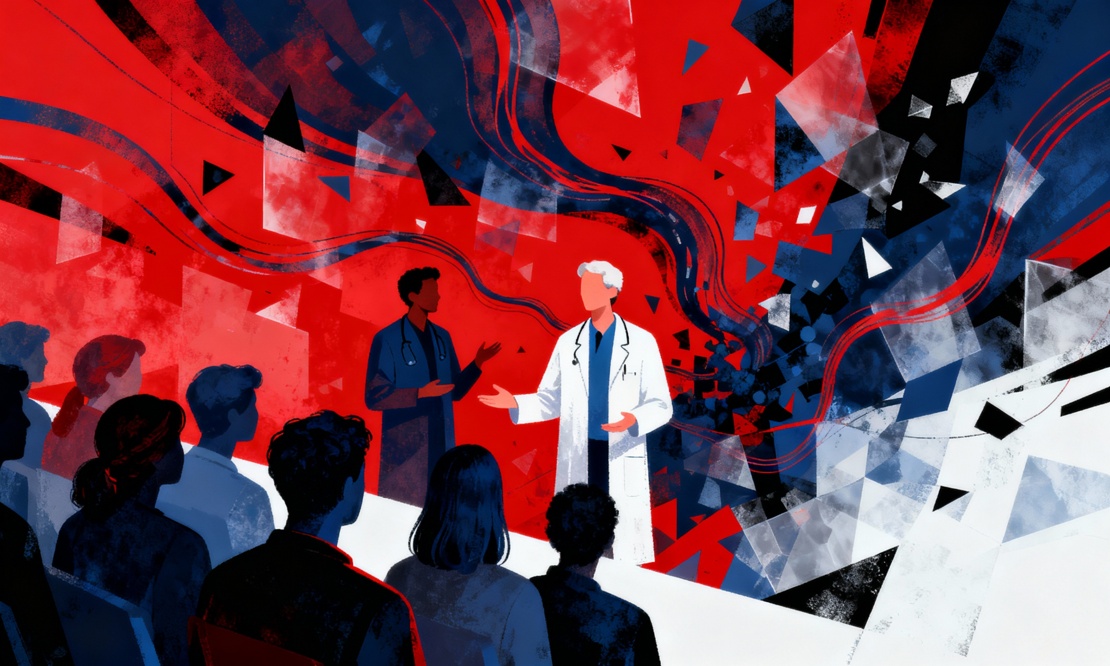 An editorial in The Lancet argues that the credibility of science itself is not the problem, but rather the way scientists communicate the processes, uncertainties, and limitations of their research to the general public | Image generated by AI
In an editorial published on November 29 in The Lancet, Richard Horton, the journal’s editor-in-chief, posed a provocative question—and used it to turn a narrative that has become entrenched in public debate on its head: the idea that we are experiencing a growing erosion of trust in science.
According to him, although examples such as anti-vaccine movements, climate denialism, and conspiracy theories about the COVID-19 pandemic may appear to support this diagnosis, the most recent data suggest the exact opposite.
Horton points to the results of two large surveys—conducted in the United States and 68 countries, respectively—that show high and stable levels of public trust in science and in scientists.
The problem, the editor emphasizes, is not the credibility of science itself, but the way scientists are communicating their processes, uncertainties, and limitations.
Data that challenges common assumptions
The first piece of evidence presented in The Lancet editorial is a survey conducted in October 2024 by the Pew Research Center with 9,593 adults in the United States.
The findings are striking:
- 76% of respondents said they had “a great deal of” or “a fair amount of” confidence that scientists act in the best interests of the public.
- This figure represents a three-point increase over 2023 and signals a recovery after the decline observed during the pandemic.
In 2020, at the height of the health crisis, confidence reached 87%, before declining in the following years. However, as Horton points out, the trend is now upward, and the rebound is especially strong among Republicans, the group that experienced the steepest drop in trust during that period.
Scientists also continue to outperform other professional categories, such as journalists, politicians, business leaders, and religious leaders.
In terms of individual attributes, researchers are viewed as:
- Intelligent (89%);
- Honest (65%);
- Committed to solving real problems (65%).
The editorial underscores that this pattern is not unique to the United States. Horton cites another study—coordinated by Victoria Cologna and colleagues, published in Nature Human Behavior in January 2025—which surveyed attitudes in 68 countries (including Brazil), with more than 71,000 respondents.
The result is unequivocal: global trust in scientists was rated as “moderately high,” with an average score of 3.62 on a scale of 1 to 5. No country recorded a “very low” level of trust.
In addition, 75% of participants agreed that the scientific method is the best way to test hypotheses—a clear indication of broad support for the foundations of scientific reasoning.
For Horton, this evidence contradicts the widespread idea—even within the academic community—that the public has turned away from science.
On the contrary, the data indicate a predominantly favorable attitude, with cultural, social, and political nuances that merit attention but do not support a diagnosis of a “crisis.”
The real weak point: science communication
If trust in scientists remains high, why does the sense of distance between science and society persist? Horton identifies a critical point revealed in the Pew Research Center study: only 45% of Americans consider scientists to be good communicators—a significant decrease from 2019.
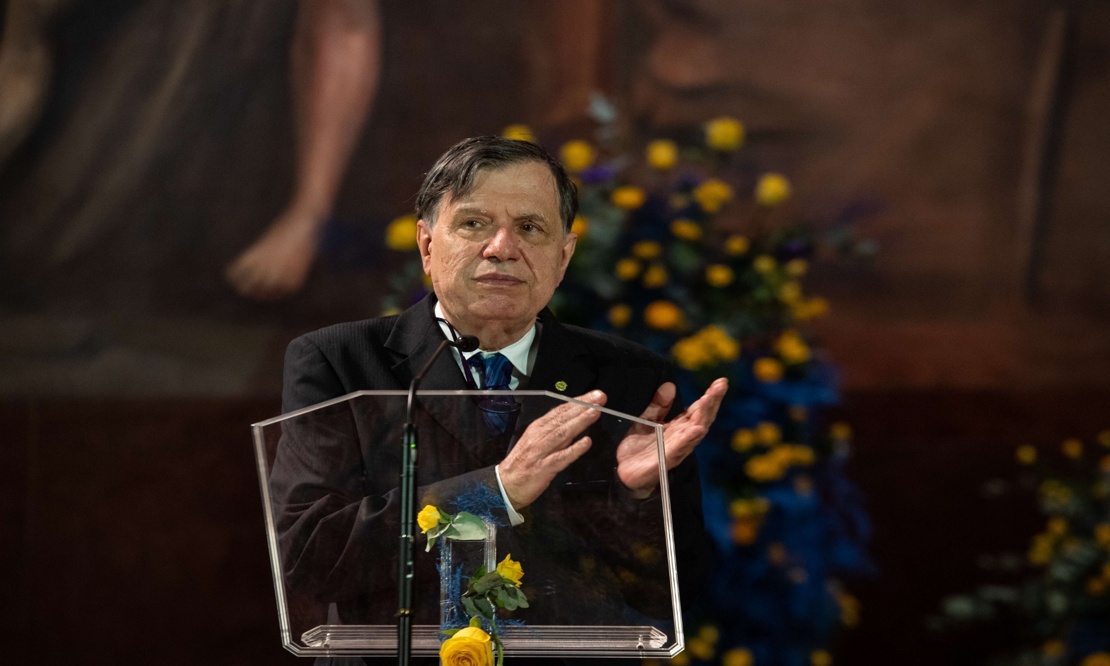
At this point, Horton’s editorial shifts tone and begins to address the urgency of rethinking how science communicates. Drawing inspiration from the book In a Flight of Starlings (Penguin Press, 2023), written by Italian physicist and Nobel laureate Giorgio Parisi, Horton argues that simply communicating results is not enough.
Giorgio Parisi proposes something more ambitious: showing the scientific process itself, with all its uncertainties, impasses, and surprises.
Key aspects of communication addressed in The Lancet editorial
- Transparency in the scientific process: Parisi argues that scientists should not only present their conclusions but also explain how they arrived at them—and Horton endorses this view.
- Valuing the unexpected: Parisi’s book shows that scientific progress is often driven by unforeseen discoveries; reporting them brings the public closer to the real dynamics of science.
- Acknowledging limitations: Scientists can appear arrogant when they convey absolute certainty; acknowledging uncertainty strengthens credibility.
- Science as culture, not merely technique: Parisi insists that science should be defended not only for its practical benefits but also for its cultural role as a way of seeing and interpreting the world.
- Risk of “science as magic”: When science is presented as something inaccessible, the public tends to seek alternative—and often irrational—explanations.
- Personal experience as narrative: Parisi uses episodes from his own career to explain complex concepts; Horton suggests that more scientists adopt similar strategies to reduce the distance between themselves and the public.
Why does this discussion matter?
Horton’s editorial is both a critique of the “crisis of confidence” narrative and a warning about a real problem: science communication to the general public remains insufficient to keep pace with expectations and information-consumption habits in the 21st century.
By drawing on robust research and contemporary intellectual references, Horton argues that trust does exist—but what is lacking is approachability, clarity, epistemological humility, and the ability to build bridges between science and society.
Studies cited in The Lancet editorial
-
Pew Research Center (2024)
-
Survey of 9,593 adults in the United States. Conclusion: public trust in scientists is high and recovering after the pandemic. Partisan differences persist, but show signs of narrowing. Attributes such as intelligence, honesty, and a public-service orientation are widely recognized.
-
Cologna et al., Nature Human Behaviour (2025)
-
Study conducted in 68 countries with more than 71,000 respondents. Global trust in scientists was rated as “moderately high.” Competence received the highest score; openness the lowest—though still positive. Most participants agreed that the scientific method is the best way to test hypotheses.
-
Giorgio Parisi, In a Flight of Starlings (2023)
-
A book that informs the editorial’s concluding discussion. It advocates for greater methodological transparency and criticizes the occasional tone of superiority in science communication. It frames science as an essential part of culture, not merely as a producer of useful technologies.
*
This article may be republished online under the CC-BY-NC-ND Creative Commons license.
The text must not be edited and the author(s) and source (Science Arena) must be credited.