 #News
#News
#News
20.03.2026
Netherlands to create innovation agency modeled on DARPA
New institution plans to spend €500 million euros on high-risk R&D and aims to bridge the “valley of death” between research and the market
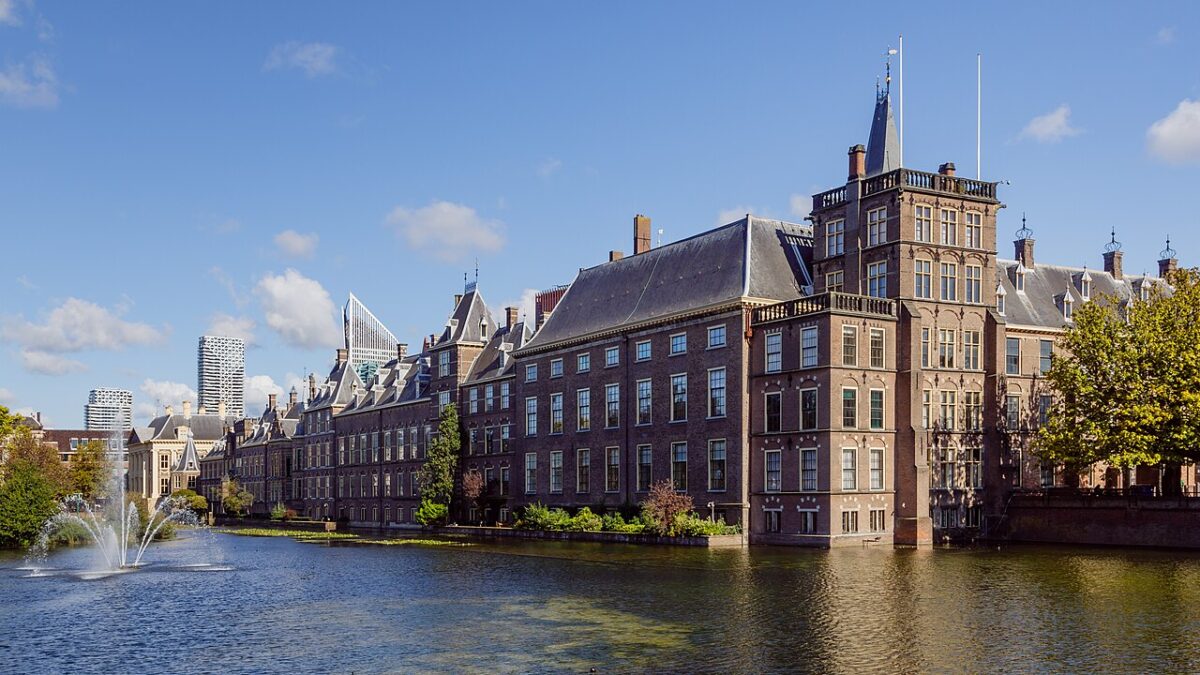 The new Dutch government has committed to establishing an agency to fund high-risk projects, modeled on the USA’s DARPA | Image: CEphoto/Uwe Aranas
The Dutch government has pledged to create an innovation agency inspired by the US Defense Advanced Research Projects Agency (DARPA). In early 2026, a three-party coalition led by Rob Jetten, head of the centrist D66 party, presented its plan for government and confirmed its intention to establish the National Agency for Breakthrough Innovation (NABI).
The proposal is based on a set of recommendations by Peter Wennink, former CEO of ASML, a Dutch high-tech company that supplies photolithography machines to the global semiconductor industry. In December, Wennink published a comprehensive report warning that “in these times of geopolitical tensions, rapid technological developments, and increasing pressure on public services, the Netherlands is in danger of getting left behind.” He adds that “only targeted and timely investment can ensure we will have the ongoing capacity to pay for fundamental public services and guarantee prosperity for future generations.”
Investments for innovation
To achieve these objectives and others, Wennink recommended creating a National Investment Bank (NIB) with initial capital of at least €10 billion, and the National Agency for Breakthrough Innovation (NABI) with an annual budget of €2 billion. The goal would be to use public funds to drive private investment more effectively. The new Dutch coalition’s plan appears to have incorporated these suggestions. In addition to creating a state-backed investment institution and the NABI, it will revive the National Growth Fund (NGF) to drive disruptive innovation and provide an initial market for these products.
The Dutch government aims to increase its investment in R&D to 3% of GDP over the coming years, with the NABI seen as key to achieving this target.
Despite its strong scientific foundation, the Netherlands is struggling to transform knowledge into innovation at scale. Many promising technologies get stuck in the so-called “valley of death” between research and practical application. The NABI is intended to bridge this gap, focusing on high-risk, high-return projects that address complex social problems and are capable of leading to technological advances.
The coalition led by Jetten plans to allocate €500 million to the new agency to support high-risk, high-impact R&D, including for the defense sector, following a similar approach to DARPA.
Model inspired by DARPA
Established in 1958 to help the US attain technological superiority over the former Soviet Union, DARPA went far beyond funding basic research. It aided the direction of funds to specific areas, creating opportunities and mediating collaborations between public and private actors involved in the technological development process. The agency funded the formation of computer science departments, supported early research at startups, contributed to the development of semiconductors, and oversaw the early stages of the internet, helping to establish the computer industry in the 1960s and 1970s.
This strategy has inspired similar organizations around the world, such as the German Federal Agency for Disruptive Innovation (SPRIN-D), founded in 2019 to fund deep-tech research and revolutionary innovations. With budgets exceeding €220 million, the agency functions as a dynamic laboratory to help transform radical ideas into businesses, focusing on areas such as health, energy, and sustainability.
Another example is the UK’s Advanced Research and Invention Agency (ARIA), created in 2023 to fund cutting-edge research with the potential to generate innovative discoveries that lead to new technologies, products, and services. The agency has established solid foundations, having launched nine programs in recent years, covering topics such as AI safety and synthetic biology, with £400 million invested in the UK’s R&D ecosystem.
The plan is for the NABI to operate as an independent organization. To attract international talent and foster collaboration, it will adopt English as the working language, and will be free to define its own salary policies to compete with international research institutions and technology companies.
It will be staffed by a CEO, CTO, innovation directors, and associate researchers. Senior leadership will have the autonomy to design and manage programs, make quick decisions, and allocate resources. Associate researchers—early-career scientists and engineers—will be assigned flexibly across a range of programs.
*
This article may be republished online under the CC-BY-NC-ND Creative Commons license.
The text must not be edited and the author(s) and source (Science Arena) must be credited.