 #News
#News
#News
23.03.2026
Women advance in science but struggle to reach academia’s top ranks
A survey of 136 organizations reveals that 60% have gender equality policies, but fewer than 10% allocate a budget to implement them
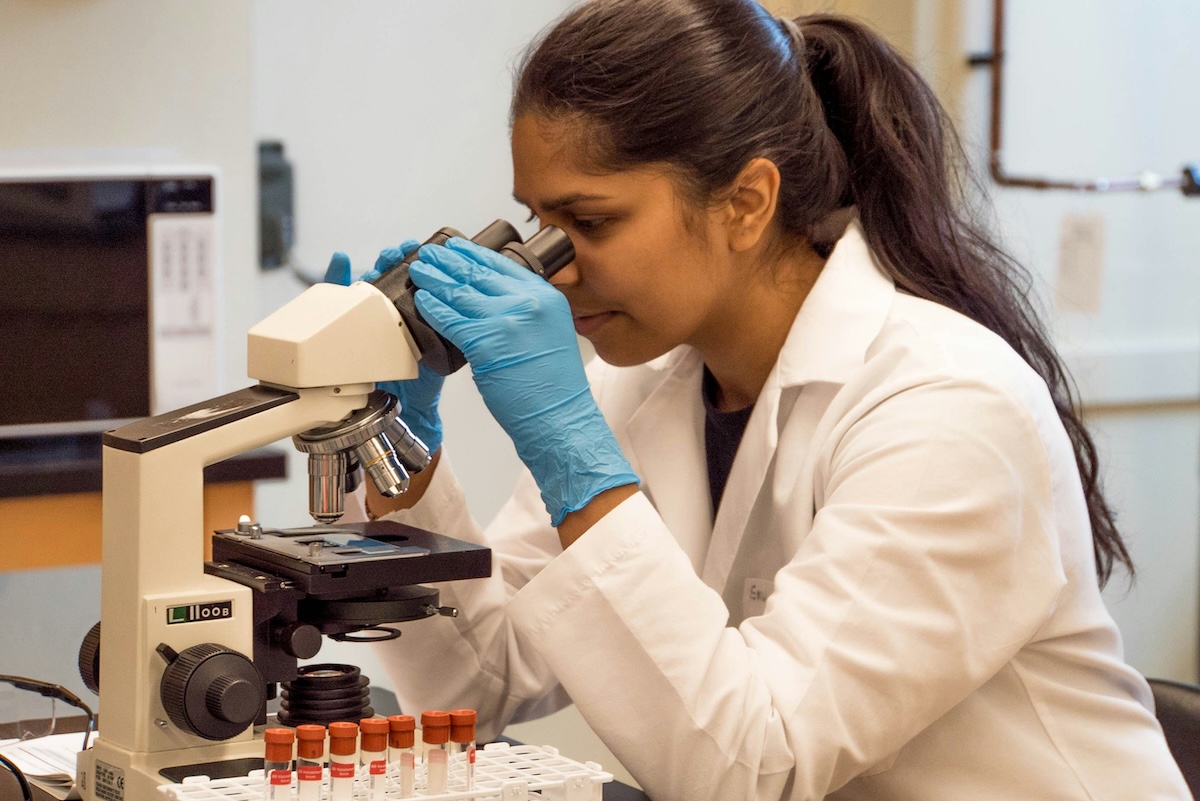 Women make up 31% of the global scientific workforce but represent only 19% of members of science academies, according to a study by the International Council for Science | Image: Unsplash
-
What the study revealed
-
1. Only 19% of national scientific academy members are women, despite women accounting for 31% of the global scientific workforce.
2. More than 60% of international scientific academies and unions have formal gender equality policies, but fewer than 10% of academies—and only 30% of unions—allocate a budget to implement them.
3. Women are 4.5 times more likely than men to miss out on professional opportunities due to caregiving responsibilities.
4. Women are 2.5 times more likely to report harassment within scientific organizations—and express less confidence in institutional mechanisms for reporting it.
5. There has been no progress over the past five years in the representation of women in the presidencies of national academies—only 1 in 5 is led by a woman.
The presence of women in science academies and international scientific unions has increased over the past decade, but only modestly, and remains far from parity. Currently, women account for an average of 19% of members in these institutions. In 2015, the figure was 12%; in 2020, it was 16%. According to the study “Towards Gender Equality in Scientific Organizations: Assessment and Recommendations,” female representation ranges from 2% to about 40% across the institutions analyzed, but in no case does it reach parity.
The research was conducted by the International Science Council (ISC), the Standing Committee for Gender Equality in Science (SCGES), and the InterAcademy Partnership (IAP). The three organizations analyzed responses from 136 scientific bodies—science academies and international scientific unions—regarding female representation among their members, presence in leadership positions, and equality initiatives. The study also gathered individual responses from approximately 600 scientists and conducted qualitative interviews with institutional representatives.
The study builds on a well-documented paradox: while women’s participation in higher education has grown in recent years, this has not translated into equivalent representation in the scientific workforce or in academic leadership. This phenomenon is known as the “leaky pipeline,” in which female researchers leave scientific careers as they move up the hierarchy, even when entry levels are relatively balanced.
Policies without budget
The data reveal a clear pattern: numerous initiatives, but limited funding. Although 62% of academies and 64% of international scientific unions report having initiatives to reduce gender inequality, fewer than 10% of academies, and only 30% of unions, allocate a budget to implement them.
The governance model also plays a role. Academies that rely on dedicated committees to elect members have, on average, 34% women on their boards, which is double the rate of those that use general assembly voting, where the average drops to 17%. This suggests that the barrier lies not in the final selection process, but in who is nominated in the first place.
The study’s data are based on voluntary responses, which imposes limitations on the analysis. The sample is not representative of all academies and unions worldwide, as its geographic distribution is uneven. In addition, a key issue lies in the data collection practices of the institutions analyzed, since many do not systematically gather gender-disaggregated data.
The consequences of underrepresentation extend beyond the numbers. Women are 4.5 times more likely than men to report missing professional opportunities due to caregiving responsibilities. They are also 2.5 times more likely to report experiences of harassment within scientific organizations and express less confidence in institutional mechanisms for reporting such cases.
Lack of progress and the Brazilian paradox
There has been no progress over the past five years in the representation of women as presidents of national academies: currently, only 1 in 5 is led by a woman. Among international scientific unions, the situation is somewhat better, with 40% led by women, but still far from parity.
The study also identified positive examples. Japan’s Science Council, for instance, reformed its appointment process and reached 39% women on its board, which is one of the highest rates among the academies analyzed.
In Brazil, the paradox is even more pronounced. Women already make up the majority of those with advanced degrees, accounting for 57%, according to the National Graduate Studies Plan 2025–2029. However, they hold only 43% of faculty positions.
The Brazilian Academy of Sciences (ABC), which participated in the ISC study, reflects this imbalance. Of its 576 full members, 107 are women (19% of the total), matching the global average. The institution elected its first female president only in 2022, when Helena Nader took office.
*
This article may be republished online under the CC-BY-NC-ND Creative Commons license.
The text must not be edited and the author(s) and source (Science Arena) must be credited.