 #Careers
#Careers
19.01.2026
Medical career: planning transitions between clinical practice, research, and industry
Drawing on her experience in endocrinology, clinical research, and pharmacovigilance, Sonia Mansoldo Dainesi advises physicians considering career transitions.
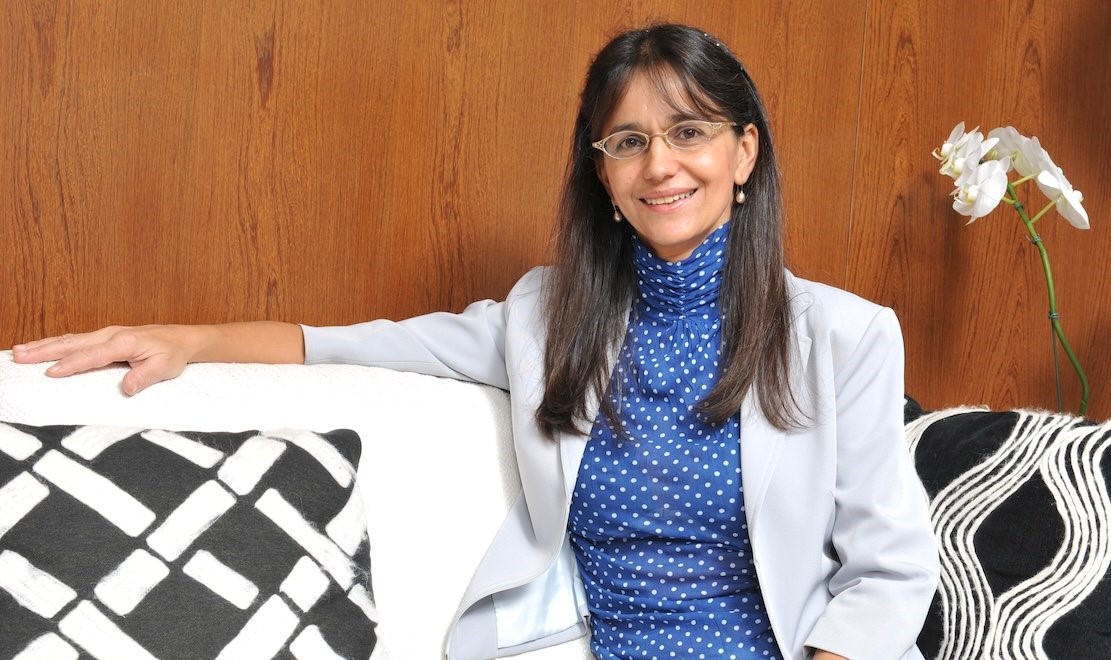 Endocrinologist Sonia Mansoldo Dainesi reflects on her career in medicine and research, highlighting curiosity, professional networks, and commitment to patients | Image: Personal Archive
For many, medicine is an early calling, almost a childhood dream. For Sonia Mansoldo Dainesi, however, the choice was not so obvious. “I was very studious and it came naturally, but it was also a necessity. I needed to maintain high grades so as not to lose my scholarship for the university prep course,” she recalls.
Her initial goal was to study psychology or even physical education, driven by a passion for sports. However, her solid performance in practice exams ultimately led her toward medicine — a decision that initially worried her parents due to the course duration.
The daughter of a seamstress and a factory worker, she was the first of three sisters to pursue higher education. Accepted by both the Federal University of São Paulo (UNIFESP) and the University of São Paulo (USP), she chose USP, graduating in 1982.
After completing her residency in endocrinology, she followed a traditional path: opening a private practice and working in health centers. That changed one Sunday, when a classified ad altered the course of her career.
“In the jobs section, there was an ad looking for a doctor to work in industry. I had no idea what was done in industry, I didn’t know anyone, but I thought, ‘I don’t know — I’ve always been very curious. I’ll send my résumé and see what happens!’ That’s exactly how my career in the pharmaceutical industry began,” she explains.
At the former Rhodia Farma, she balanced her clinical work with her new role. During the day, she worked in the company’s regulatory affairs department, preparing dossiers for submission to regulators. In the evenings, she saw patients at her private practice and at health centers.
Her experience broadened further in 1990, when she moved to the Netherlands for two years. During an internship at the Free University of Amsterdam, she combined her specialization in endocrinology with clinical research.
This experience ultimately cemented her decision to leave the clinic and pursue a career in industry.
Clinical Research and New Horizons
Back in Brazil, she joined another pharmaceutical company, working in what today is known as medical affairs, where she provided support to the marketing and commercial departments. “Anything said about a drug has to be based on evidence; it’s not easy to advertise,” she points out.
Over time, she expanded her work into pharmacovigilance — an area dedicated to monitoring medicines after they reach the market. “Everything unfolded very naturally. Pharmacovigilance is another example of that, and I have published articles on the subject,” she notes.
She later moved into clinical oncology research, a field marked by constant challenges and a considerable demand for innovation. “It was a huge challenge, but it also became a real opportunity,” she reflects. “Oncology had — and continues to have — significant need for new drugs, with new treatments emerging all the time. I was able to witness the evolution of therapies used today, including immunobiologicals and targeted drugs.”
The Return to Academia and the Unified Health System (SUS)
In 2005, after leaving a pharmaceutical company following a merger, Dainesi was invited to help establish clinical research centers at the USP Hospital das Clínicas. “It was wonderful to return to academia,” she says.
The experience led her to pursue a doctorate in preventive medicine, with a focus on clinical research, which she completed in 2011.
This academic path gave her clarity about the different roles played by each sector, and she also had a hand in creating the National Clinical Research Network, an initiative of the Ministry of Health that expanded investment in research centers.
“Academia generates knowledge, often without immediate added value. The private sector develops drugs and seeks profit. Government connects all of this on a large scale.”
Stigma and Integration Between Worlds
In the 1980s and 1990s, moving from clinical practice into industry was often frowned upon. “At the time, a doctor who made that move was seen as someone who had ‘betrayed medicine’ or no longer wanted to care for patients — a practice I missed most when I left clinical work,” she says.
Dainesi believes that today’s landscape is different, in part because of the pandemic. “I sometimes joke that the pandemic was, in many ways, useful in helping people understand the methodology and importance of research. Prejudice has decreased,” she says. Still, she argues that a broader shift in mindset is needed.
“We need to put an end to the idea that professionals in the private sector are somehow less ethical or lack good character. We also need to talk more openly about the opportunities industry offers healthcare professionals — and how these transitions can happen.”
She advocates for closer integration between sectors: “Academia should make room for industry professionals, as happened with me at the Hospital das Clínicas, and the corporate world should value PhDs and technical researchers — even if they do not initially understand business — because their scientific knowledge is crucial.”
Career Advice
Looking back, Sonia says that each transition helped shape her as a professional. She offers practical advice for young physicians and researchers:
-
Believe in yourself
-
Trust your desire to move or explore new areas — and remember that you can always go back.
-
Maintain connections
-
Foster strong professional relationships wherever you go; they open doors.
-
Test possibilities
-
Try new roles without completely stepping away from clinical practice.
-
Don't lose sight of the patient
-
Regardless of the sector, a physician’s core mission is to care for people.
-
Dedication and study
-
Persistence and preparation are essential to overcoming prejudice.
“My own experience — from a humble childhood to the many changes life has brought me — has shaped who I am and reinforced my belief in the importance of my principles and values, regardless of the work environment,” she says.
*
This article may be republished online under the CC-BY-NC-ND Creative Commons license.
The text must not be edited and the author(s) and source (Science Arena) must be credited.