 #Careers
#Careers
30.01.2026
“Teamwork is essential to being a scientist,” says Brazilian scientist awarded for study on OCD
Leonardo Saraiva, a physician, advocates for closer integration between research and clinical practice and highlights the collaborative spirit of science.
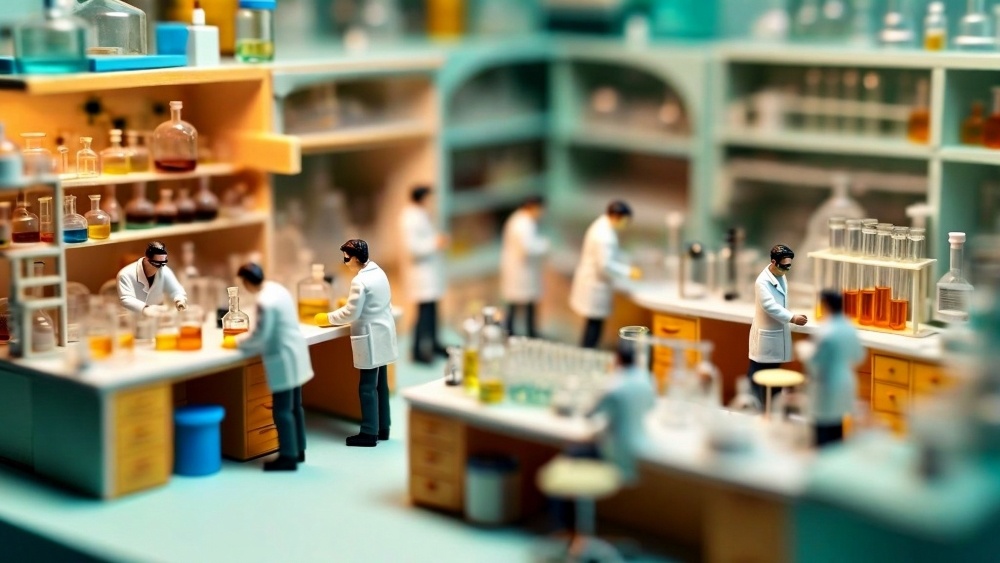 “Working in research groups has been a defining part of my career. I am more productive in a team than on my own,” says researcher Leonardo Saraiva, emphasizing the importance of scientific collaboration in studies on psychiatric disorders | Image: Shutterstock
When Leonardo Cardoso Saraiva, 30, was in his sixth year of medical school in 2019, his classmates were preparing for residency exams and choosing their specialties. He, however, was considering a different path.
Since the previous year, between internships and hospital shifts, he had been in contact with psychiatrist Euripedes Constantino Miguel, a professor at the University of São Paulo School of Medicine (FM-USP), and geneticist Carolina Cappi, a professor at Rutgers University, to take part in research on obsessive-compulsive disorder (OCD).
In 2025, the physician received the Michael A. Jenike Young Investigator Award from the International OCD Foundation (IOCDF), one of the world’s largest organizations dedicated to OCD.
Saraiva was recognized for his investigation of the biological bases of the disorder. In his work, the Brazilian researcher uses neuroimaging techniques, such as magnetic resonance imaging (MRI), to identify more precise ways of diagnosing OCD and, potentially, other psychiatric disorders.
The award-winning study, Comprehensive structural neuroimaging in OCD: A cross-disorder comparison, seeks to move beyond conventional neuroimaging approaches.
While earlier research has focused primarily on changes in brain volume and cortical thickness in patients with OCD, Saraiva investigates lesser-known features, including patterns of cortical folding and the shape of subcortical structures. He also examines the genetic factors that may be associated with these brain alterations.
The research is part of his work at Yale University in the United States, where he is currently a postdoctoral researcher.
Biological bases of OCD and the use of neuroimaging
“In other areas of medicine, there are important biomarkers that help confirm a diagnosis, but in psychiatry, disorders are identified based on symptoms defined by consensus among specialists,” explains Saraiva.
“We still don’t know the biological bases of these disorders—it’s all done by convention. I see this as a limitation,” he adds.
Diagnosis, technology, and treatments
In his studies, Saraiva relies on MRI scans because this technology is widely available in healthcare centers; this accessibility allows him to work with large samples.
On a daily basis, much of his routine involves working in front of a computer, unraveling the “mysteries” of patients’ brains.
According to Saraiva, there are several methods available to study the brain and psychiatric disorders, but his main focus lies on approaches that utilize supercomputers.
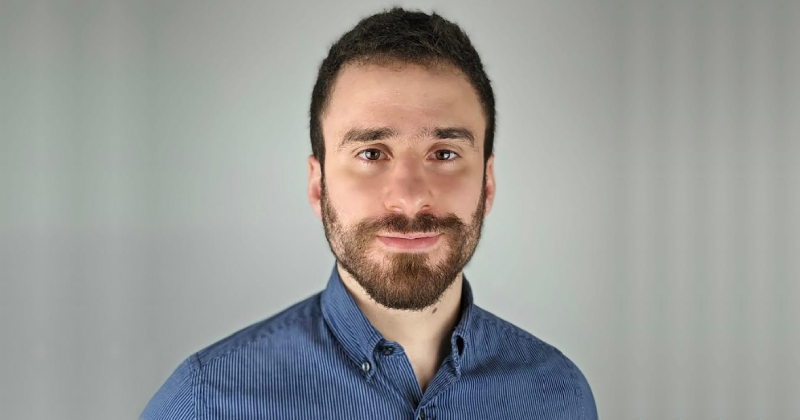
“My work involves running analyses and code on clusters—groups of high-performance computers. I also attend meetings to present results and discuss projects. It’s very different from the image people usually have of a medical doctor.”
Engaging with the public and scientific responsibility
Since receiving the award, Saraiva has become increasingly concerned with communicating his work as a scientist to a broader audience.
“I realized this needs to be a greater priority for researchers, and something I must consistently work toward.”
In his view, limited public understanding of certain research topics contributes to declining investment in scientific projects.
“We researchers can be quite isolated from the general public, so not everyone understands the benefits of science or why research requires both public and private investment,” says Saraiva.
Research as an extension of medical practice
The decision to pursue a research career was initially met with surprise among his medical peers, Saraiva notes. “In Brazil, medicine is still largely viewed as a profession centered on care,” he says.
“But care is only one facet of medicine. There are many ways to help patients—and research is one of them. That’s why scientific careers should be more strongly encouraged in this country,” he argues.
In his view, scientific research is deeply intertwined with clinical care, “after all, they are two areas that must be integrated.” Scientific advancements, he explains, should directly inform decisions made in doctors’ offices, clinics, and hospitals.
During medical school, his first exposure to research had such an impact that Saraiva decided not to pursue a medical residency. His goal, he recalls, was to begin building an academic career as early as possible.
Even so, Saraiva completed clinical internships, worked hospital shifts, and took part in outpatient activities at the Institute of Psychiatry. “It was an excellent experience. I learned a great deal in the clinical setting and carried much of that knowledge into my research.”
Admiration as a starting point
Although he is not formally trained as a psychiatrist, having not completed a residency in the field, Saraiva’s interest in OCD was sparked by his admiration for psychiatrist Eurípedes Miguel.
“To be honest, I think I would have worked on any condition he studied,” says the physician, who is also a member of the Gen_TOC project, based at USP and led by Miguel and geneticist Carolina Cappi. The project focuses on the genetics of OCD and related disorders.
“Over time, I began to find the subject increasingly interesting and fascinating,” says Saraiva, who went on to earn a doctorate in the field. He is also an enthusiastic supporter of programs such as the MD–PhD, a dual-training pathway for physician-scientists in which students earn both a Doctor of Medicine (MD) and a Doctor of Philosophy (PhD). While well established in the United States, such programs are still in their early stages in Brazil. The model allows physicians to receive integrated training in both clinical practice and research.
Science is not a solitary pursuit
With no plans to work in a private medical practice, Saraiva says he is drawn to the collaborative spirit fostered by teamwork in the scientific community. “Working in research groups is a central part of my career. I’m more productive in a team than on my own,” he says.
“Knowing how to interact is crucial,” Saraiva adds. “In science, if you’re not willing to engage in dialogue and exchange ideas, your chances of ‘surviving’ are much lower. You have to know how to work as part of a group.”
Reflecting on his recent award, he lists several people who helped him, including professors Eurípedes Miguel and Carolina Cappi, his doctoral advisors, and Christopher Pittenger, who currently supervises his work at Yale.
“I was fortunate to work with people who truly understand the importance of collaboration and shared effort in science,” he concludes.
*
This article may be republished online under the CC-BY-NC-ND Creative Commons license.
The text must not be edited and the author(s) and source (Science Arena) must be credited.