 #News
#News
#News
09.02.2026
Climate crisis increases maternal and neonatal mortality in Africa
Heatwaves and extreme rainfall exacerbate pregnancy risks and expose healthcare system shortfalls in vulnerable regions
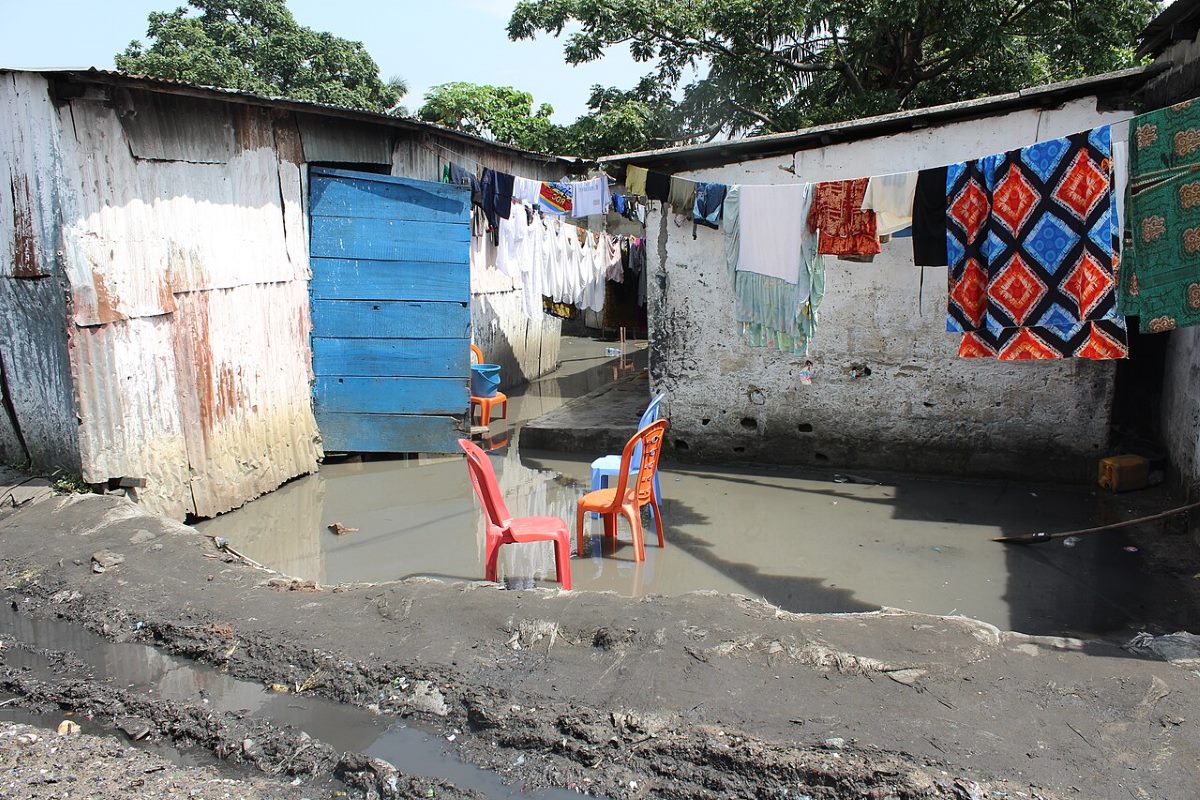 Heatwaves and floods in the Democratic Republic of Congo, Africa, are impacting maternal and neonatal health, study indicates | Image: Wikimedia Commons
Extreme weather events, such as heatwaves and unusually heavy rainfall, are associated with an increase in maternal deaths, stillbirths, and neonatal deaths in Africa.
This is the conclusion of a study published in the journal Environment International, based on an analysis of 22.7 million birth records from the Democratic Republic of Congo between 2018 and 2023.
The researchers examined data from the District Health Information System 2 (DHIS2) and cross-referenced them with monthly climate variables related to temperature and precipitation, identifying statistically significant associations between extreme weather conditions and adverse health outcomes for pregnant women and newborns.
Even after adjusting for spatial and temporal factors, the impacts of extreme climate conditions remained significant.
Temperatures above 34°C pose a risk to pregnant women
One the study’s key findings was that average monthly temperatures exceeding 34°C were associated with an additional 27.3 maternal deaths per 100,000 live births for each degree above that threshold.
The risk of stillbirth also increased significantly, with approximately 2.3 additional fetal deaths per 1,000 births for each degree above 34°C.
“Our finding that temperature and precipitation associations were stronger with stillbirth and maternal mortality than with neonatal mortality suggests that heat exposure as a direct environmental factor appears to be less consequential after mother and child have survived birth,” the researchers stated.
The authors of the study explain that extreme heat increases the risk of stillbirth and maternal mortality more than it affects newborns, showing that the danger is greatest before and during childbirth.
With the average temperature in the Democratic Republic of Congo projected to increase by 1°C to 2.5°C by 2050, temperatures will more frequently surpass 34°C, increasing the likelihood of stillbirth and maternal death if no measures are taken to adapt to climate change and strengthen the healthcare system.
Anomalous rainfall: outside the historical norm
Anomalous rainfall refers to precipitation levels that deviate from the historical average, be it heavier than expected, resulting in flooding, or lower than expected, leading to droughts.
In the study, heavier rainfall than the historical norm had an even more significant effect than extreme heat.
Months when the rainfall volume was above the 95th percentile—classified as an extreme event—were associated with an increase of approximately 120 maternal deaths per 100,000 live births, exceeding the impact observed for high temperatures.
These rainfall anomalies can be characterized using the Rainfall Anomaly Index (RAI), which compares observed precipitation with a region’s 30-year climatological average.
The index identifies positive or negative deviations from the historical norm, allowing for the classification of periods of drought or excessive rainfall.
Tools like the RAI are essential for accurately defining extreme hydrological events and understanding their impacts on maternal and neonatal health.
Why does climate affect maternal health?
The impacts of extreme heat or rainfall occur through both direct and indirect mechanisms. During pregnancy, physiological changes such as increased body mass, changes in placental metabolism, and reduced systemic vascular resistance make maternal thermoregulation more difficult.
Exposure to heat can cause oxidative stress, an imbalance in the body that reduces blood flow to the uterus and activates inflammatory and neuroendocrine responses.
This increases the risk of complications such as gestational hypertension, diabetes, premature placental abruption (separation), and severe maternal morbidity.
Environmental factors, such as heatwaves and floods, can impact maternal and neonatal health directly, by affecting the physiology of a pregnancy, or indirectly by limiting access to healthcare or altering social conditions.
Heavy rainfall tends to disrupt access to health services, especially in regions with poor infrastructure.
Impassable roads, difficulties getting to maternity centers, drinking water shortages, food insecurity, and increased exposure to infectious diseases heighten risks for pregnant women and newborns.
Malaria, for example, is more prevalent during rainy periods and is associated with increased maternal, stillbirth, and neonatal deaths.
Social vulnerability amplifies climate impact
The researchers emphasize that climate impacts disproportionately affect certain populations, depending on their level of social vulnerability.
Pregnant women who are from low-income households, live in rural areas, are less educated, or who work in agriculture or other outdoor work face significantly higher risks.
In the Democratic Republic of Congo, the rainy season coincides with periods of intensive agricultural activity, with many women continuing to perform demanding physical work while receiving less family support.
The study indicates that although approximately 80% of births occur in healthcare facilities nationwide, many pregnant women face delays in accessing adequate care.
Additional factors such as violence, insecurity, internal displacement, and chronic diseases also reduce the capacity to adapt to thermal stress and adverse environmental conditions.
Climate impacts could intensify in the coming decades
Climate projections indicate that average temperatures in the region could increase by 1°C to 2.5°C by 2050.
That would increase the number of months with temperatures above 34°C, further increasing the likelihood of maternal death and stillbirths associated with heat if measures are not implemented to adapt to these changes.
The study also highlights the potential of integrating climate data with public health information.
The data provided by DHIS2 offer an accessible and robust opportunity to assess the connections between extreme climate events and maternal and neonatal health outcomes on a national level, as demonstrated by the analysis of the Democratic Republic of Congo.
The main health information system used in Brazil is DATASUS, complemented by e-SUS APS for primary care, but DHIS2 is also used as a management and analysis tool for aggregated and individual data.
The platform supports various activities within the country’s public health system (SUS), including epidemiological surveillance, program management, data analysis and visualization, monitoring and evaluation, data integration, and reporting to donors and partners.
By transforming raw data into actionable information, it supports the planning, decision-making, and evaluation of health policies and can be used to analyze the effects of climate change on maternal and neonatal health, providing a basis for targeted and effective strategies.
Strategies to reduce risk and protect pregnant women
The study authors stress that adaptation strategies are urgently needed, including:
- Early warning systems for heatwaves
- Training for health professionals
- Educating pregnant women about climate risks
- Improved access to water
- Adequate ventilation
- Climate-resilient infrastructure
Interventions in the built-up environment are also necessary, such as creating more shade, planting trees in urban areas (afforestation), and improving household ventilation. These measures could help reduce the impacts of heat—although they remain poorly evaluated in low- and middle-income countries.
Other proposed adjustments to the built environment to improve maternal health outcomes yet to be evaluated include planting trees, increasing household ventilation, and improving access to water.
The researchers argue that existing maternal and neonatal health programs should explore opportunities to protect women from the effects of extreme heat and commit to assessing these initiatives to refine effective approaches.
Given the urgent need to improve maternal and neonatal health outcomes in anticipation of projected temperature and precipitation changes, it is essential to assess the available data infrastructure and analyze climate associations to understand how extreme heat and rainfall could compromise progress in maternal and perinatal health at the populational level.
The authors highlight that an evidence base with data from tropical regions could support more effective public policies.
They go on to emphasize that further investigations are needed to assess the direct and indirect impacts of heavy rainfall and heatwaves, as well as strategies to ensure access to essential health services. Qualitative approaches can help identify underlying mechanisms and define appropriate ways to mitigate risks.
They also highlight the importance of identifying and testing interventions to protect pregnant women from extreme temperatures and rainfall, creating specific measures for specific situations.
To date, few evaluations in low- and middle-income countries have documented the effects of extreme heat or anomalous precipitation on maternal and neonatal health outcomes.
The study reinforces that climate change is not a distant or abstract threat. It is already directly affecting the health of women and newborns in socially and environmentally vulnerable situations. Integrating climate evidence into maternal and neonatal health policies is crucial to protecting lives in an increasingly hot and unstable world.
*
This article may be republished online under the CC-BY-NC-ND Creative Commons license.
The text must not be edited and the author(s) and source (Science Arena) must be credited.