 #News
#News
#News
20.02.2026
Scientific publishers as “curators of context” in the age of AI
Journals need to transform static articles into machine-accessible “knowledge objects,” argues consultant in scholarly publishing
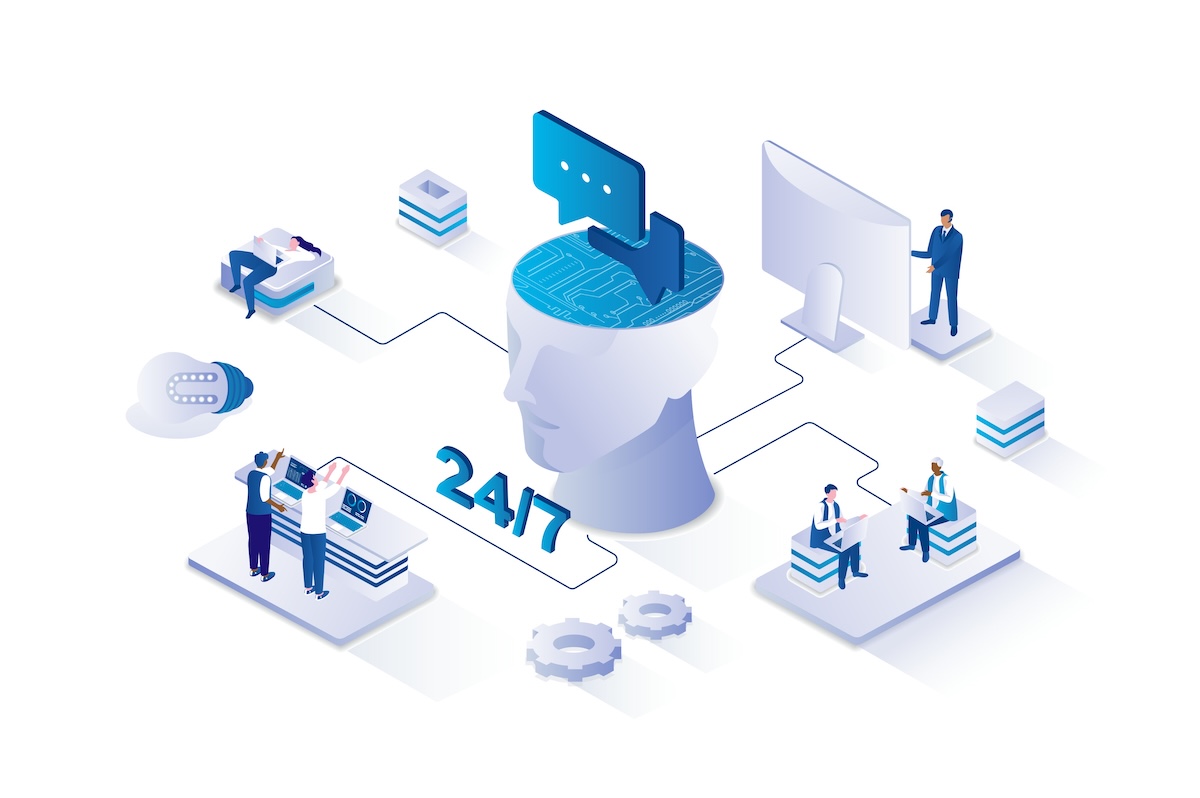 Scientific publishers face the challenge of transforming static content into structured knowledge objects that remain continuously accessible to machines | Image: Unsplash
Over the past two decades, the central debate for scientific publishers has been access to articles,but now the situation seems to be changing. For Steve Smith, founder of US-based consultancy STEM Knowledge Partners, the current issue is that computational tools require a reinvention of the scientific publishing model.
In an analysis published on the Research Information website, the scholarly publishing expert proposes that the sector needs to move beyond the focus on “static” content and transition to what he calls “computable knowledge”—structured, linked, context-rich information that can be reused at scale by machines.
In the article, Smith argues that due to the rise of AI tools such as ChatGPT, capable of rapidly analyzing large volumes of scientific text, publishers need to rethink their products.
He asserts that scientific knowledge can no longer be delivered merely as static PDF articles, but must instead be packaged as knowledge objects comprising images, captions, methodological details, and data provenance, all structured to support reliable analysis by computational tools.
“What is emerging is a knowledge-as-a-service model,” writes Smith, describing it as a way of delivering the essential and structured meaning of the research, rather than just its formatted results.
In this model, data and information are processed to answer questions, solve complex problems, and support real-time decision-making, often with the aid of AI and machine learning, such as neural networks.
The last era of scientific publishing was marked by the open-access publication of scientific articles and research data. “The next will be about connecting rooms: linking people, machines, and meaning across a trusted infrastructure,” Smith explains.
Risks of falling behind
The consultant warns that if scientific publishers do not adapt, they may lose their market position, as has already happened in other circumstances. He cites the case of Google Scholar, which aggregated citation networks developed by scientific publishers.
He also mentions the rise of Sci-Hub, a website used by many scientists to bypass publishers’ paywalls.
“The knowledge-as-a-service opportunity could follow the same arc if publishers do not act,” Smith concludes in the article.
To make “knowledge as a service” possible, Smith proposes three fundamental requirements:
Interoperability of digital systems
According to Smith, it is essential to build and incorporate compatible and interconnected digital systems. If different programming interfaces are not compatible with one another, the result will be fragmentation.
The objective of consolidating trustworthy knowledge objects with accessible provenance cannot be achieved without interoperability.
Trust governance
When (AI) machines become primary consumers of scientific content, the reputation of major publications will no longer be central to assuring that published knowledge can be trusted.
Verifying provenance will become increasingly valuable, making it crucial to develop governance policies. Smith highlights the need for transparency regarding how machines consume content, how data are updated or deleted, and how content sources are verified.
Transparency in pricing and rights
The third requirement for establishing knowledge as a service is transparency around pricing and rights. Scientific publishers can build trust with those who pay for their services under this new business model by implementing policies committed to providing clear information.
Although Smith views the digital transformation as fundamental to market changes in the world of scholarly publishing, he also addresses some of the current limitations of AI.
Artificial intelligence can access large volumes of content quickly, but it still struggles to fully understand it in an interconnected way, Smith explains.
It is up to scientific publishers to act as what Smith calls “curators of context,” managing links between different bodies of content to establish the knowledge-as-a-service model.
*
This article may be republished online under the CC-BY-NC-ND Creative Commons license.
The text must not be edited and the author(s) and source (Science Arena) must be credited.