 #News
#News
#News
29.01.2026
Wikipedia at 25: A boost for open science in brazil
Academic projects use collaborative encyclopedia to create courses, improve Portuguese-language content, and engage with audiences
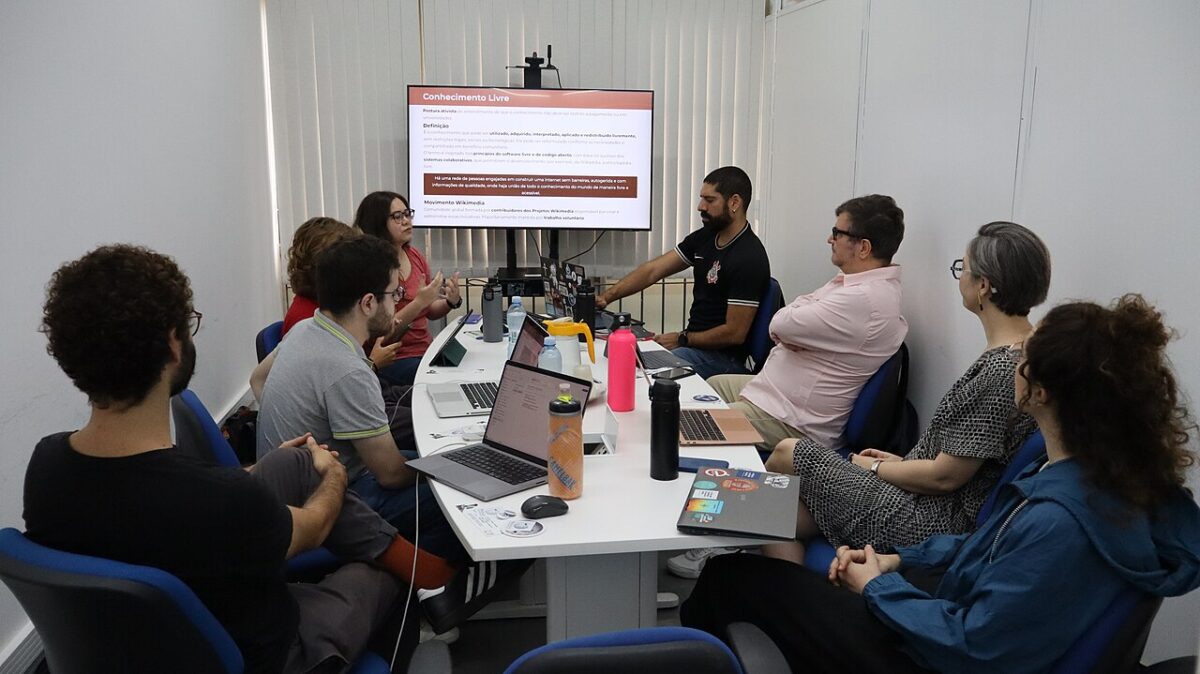
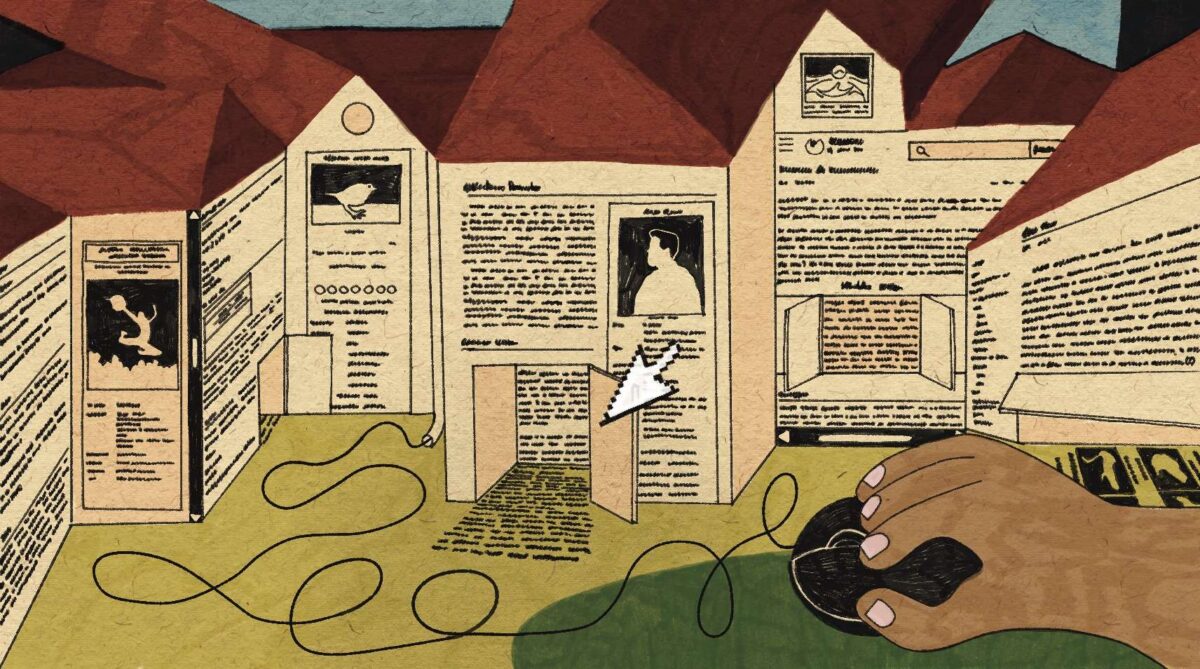 Brazilian research institutions turn to Wikipedia and other Wikimedia platforms to disseminate science, create courses, and improve Portuguese-language entries. These initiatives help enhance open science | Image: Julia Jabur/Estúdio Voador (All rights reserved)
At a time of growing appreciation of the transparency of and public access to knowledge, the open science movement is gaining momentum in Brazil. It promotes the idea that scientific knowledge—especially that generated with public funding—should be produced in an accessible and collaborative manner.
At the same time, the concept of digital sovereignty is gaining attention in public debate. This refers to a country’s ability to maintain autonomy and control over its data and digital infrastructure amid the expanding influence of large multinational tech companies, often referred to collectively as Big Tech.
A key challenge is ensuring that information and raw data obtained through scientific research do not circulate exclusively within digital environments governed by commercial interests.
In response, Brazilian universities and research centers are exploring new fields and joining forces to break with the logic of restricted academic production—often limited to articles published in paywalled journals and dependent on digital platforms operated by Big Tech.
Wikipedia: Encouraging Open Science
One strategy has been to use the collaborative encyclopedia Wikipedia, which celebrates its 25th anniversary in January 2026, as a tool for university extension. Its open structure allows academically validated knowledge to be improved and disseminated, reaching broad and diverse audiences.
The Wikimedia Foundation is the international nonprofit organization responsible for free-content projects such as Wikipedia and Wikimedia Commons.
In Brazil, Wikimedia Brasil promotes a culture of open knowledge at the local level by organizing events and courses and establishing partnerships to encourage national participation in these projects.
“There is a great deal of ‘fetishism’ surrounding technology, especially when it comes to AI, as if it were the pure expression of unbiased, unmediated knowledge—ignoring the fact that people are behind it, programming algorithms with specific interests,” says Alexander Maximilian Hilsenbeck Filho, head of Education and Scientific Dissemination at Wikimedia Brasil.
“This is a central element of current disputes about the digital environment,” adds Hilsenbeck Filho, also a professor of social sciences at Faculdade Cásper Líbero in São Paulo.
The strategic collaboration between Brazilian research institutions and Wikipedia aims not only to fill gaps in Portuguese-language content in the encyclopedia, but also to raise the level of public debate with highly reliable information, countering misinformation and scientific denialism.
Concrete Examples
Several institutions are already reaping the benefits of this collaboration. The Research, Innovation, and Dissemination Center for Neuromathematics (RIDC NeuroMat), based at the University of São Paulo (USP), has become one of the leading contributors of academic content in mathematics on Wikipedia.
Funded by the São Paulo Research Foundation (FAPESP), the center has edited around 60,000 math-related articles on Wikipedia since 2013. Together these pages have been viewed more than 30 million times.
Another example is the Centro de Estudos da Metrópole (Center for Metropolitan Studies, CEM), another RIDC based at USP, which is developing courses and public policy resources on Wikiversity, a wiki-based platform for organizing courses and study groups. The aim of the tool is to create a collaborative environment for the exchange of knowledge.
The CEM project involves social scientists, historians, and journalists, and the group has already identified some 500 problematic Portuguese-language articles in the social sciences on Wikipedia.
The first phase of the project resulted in the editing and correction of approximately 165 articles and the creation of 51 new entries related to the social sciences.
Examples include the addition of recent statistical data on inequality and urban mobility.
“Articles that were previously more generic have gained academic depth and can even be used as supporting material in courses related to the social sciences and public policy,” notes Wikimedia Brasil’s Hilsenbeck Filho.
Within the scope of Wikiversity, CEM plans to create an interactive public policy resource. The idea, explains Edney Cielice Dias, a political scientist involved in the initiative, is to present specific case studies—such as the urbanization of favelas—by combining academic literature with stories and experiences from public managers and beneficiaries. The project also aims to create a forum where anyone can contribute data and information on the topic.
“This is not about creating a top-down course in which academics pass knowledge down in a hierarchical manner,” Dias emphasizes. “On the contrary, we want to use Wikiversity to build a collaborative repository based on the exchange of experiences among academics, public managers, and civil society.”
Wikiversity and Wikisource
Professor Alícia Duhá Lose, of the Federal University of Bahia (UFBA), developed a three-month course entitled “Paleography on the Wiki Network,” offered through Wikiversity.
“The course seeks to provide an overview of the social history of written culture, with a special focus on cursive writing from the fourteenth to the nineteenth centuries,” the professor says.
On the course page at Wikiversity, visitors can freely access a set of 14 video classes, covering topics such as diplomatic document structure and new technologies for ancient knowledge.
A specialist in manuscript studies and the cultural history of writing practices, Lose also drew on Wikisource — a digital collection of books and texts in the public domain or freely available with permission.
The Portuguese-language edition of Wikisource contains more than 38,000 historical texts, including the humorous short story Médico é remédio (The Doctor is the Remedy, 1883) by Machado de Assis (1839–1908), and the Diccionario de Botanica Brasileira (Dictionary of Brazilian botany, 1873), dedicated to the then province of Pernambuco by one of its authors, botanist Joaquim de Almeida Pinto (1813–1861).
Transcriptions and Editathons
The Oswaldo Cruz Foundation (FIOCRUZ) has also been investing in the use of Wikimedia platforms, with a particular focus on training librarians and working with Wikisource.
The organization’s goal is to expand access to documents and primary sources through collaborative efforts.
Casa de Oswaldo Cruz, one of FIOCRUZ’s units, launched a course in partnership with Alícia Lose on the use of Wikisource in document collections, highlighting the advantages of collective transcription, which she describes as “many eyes, many hands.”
The course brought together participants from Brazil, Portugal, Spain, and Italy, inviting them to collaboratively transcribe historical documents.
One focus was the Malês Revolt, a rebellion of enslaved Africans that took place in Salvador in 1835. The participants used Transkribus, an AI-based platform specializing in the transcription of historical manuscripts.
In addition to the course, Professor Alícia Lose organizes editathons—collaborative marathons for editing Wikipedia entries. One initiative focuses on creating profiles of emeritus researchers at UFBA.
For Hilsenbeck Filho, after interventions by students and researchers, entries that once contained only a superficial paragraph now have a fuller structure, including biographical information, bibliography, images, and academic sources.
A notable example, he says, is the creation and editing of the entry on the Manto Tupinambá, a garment sacred to some Brazilian indigenous peoples, made from bird feathers.
“The article on the Tupinambá Mantle was created from scratch by researchers from the Indigenous Women’s Wikipedia Laboratory at Fluminense Federal University [UFF], coordinated by Professor Elisa Frühauf Garcia,” he says.
Course on Audiology
With support from FAPESP and Wikimedia Brasil, the Bauru School of Dentistry (FOB) at USP offers an open course on Wikiversity that introduces basic audiology to speech therapists and other health professionals.
It is a 20-hour course, available through the Wikiversity platform upon registration, and covers “the main tests used to evaluate hearing function, including how to interpret findings in individuals with normal hearing and hearing loss.”
“The World Health Organization [WHO] emphasizes in its reports that access to information is central to improving global hearing health,” says Adriano Jorge Soares Arrigo, a researcher involved in the FOB-USP project.
External Technological Dependence
Initiatives such as the “#CiênciaAbertaNaWiki” (“Open Science on Wiki”) campaign, held in late 2025, aim to expand access to scientific knowledge in multiple languages and formats while promoting transparency and social engagement.
A recent event on the topic, held at USP, brought together representatives from the National Council for Scientific and Technological Development (CNPq), reflecting growing interest in this issue among public agencies.
Although access to information has expanded in recent decades, the technological tools adopted by universities and research centers to offer courses or disseminate scientific information remain heavily tied to commercial platforms with unclear structures.
This dependence imposes limits on the dissemination of academic knowledge to society—especially knowledge produced in public institutions, according to sources interviewed for this report.
In response, projects linked to the Wikimedia ecosystem are being structured as sustainable alternatives. In addition to operating with open-source code and free licenses, these platforms ensure editorial transparency and allow for broad public participation.
By adopting tools such as Wikipedia, Wikiversity, and Wikisource, says Hilsenbeck Filho, institutions can not only increase the visibility of their research, “but also reinforce their commitment to open, inclusive science guided by the public interest— central pillars of effective digital sovereignty.”
The main difference between commercial platforms and Wikipedia lies in their philosophy: instead of producing ephemeral and viral content, Wikipedia seeks to consolidate lasting knowledge based on reliable sources.
“The encyclopedia and other Wikimedia platforms serve as a starting point (often sparked by short videos seen on social media) for in-depth research with a solid foundation,” says Hilsenbeck Filho.
For Arrigo, from USP, it is essential that researchers maintain a presence on commercial platforms, such as social media, in order to disseminate their work and combat misinformation. However, he adds, it is also necessary to reflect on the real impact of for-profit platforms and the potential implications of commercial models for the dissemination of knowledge.
“Wikipedia is maintained by donations and volunteers—so it does not compete with Big Tech in terms of resources, but plays a strategic role that should be valued,” Arrigo points out.
*
This article may be republished online under the CC-BY-NC-ND Creative Commons license.
The text must not be edited and the author(s) and source (Science Arena) must be credited.