 #Careers
#Careers
24.03.2026
The impact of AI on scientific careers in three phases
Researcher from Einstein Hospital Israelita maps how generative AI is expected to transform the routines of researchers
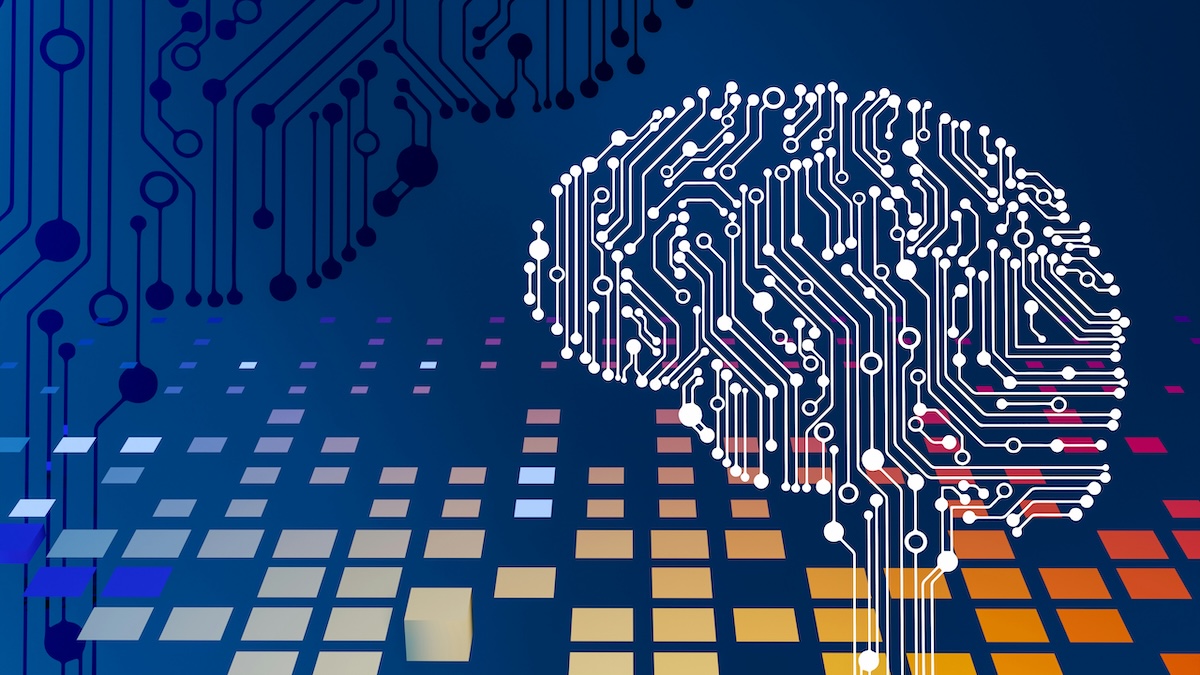 Researchers already use generative AI to automate tasks, but its long-term impact could redefine the role of scientists| Image: Unsplash
Generative artificial intelligence (AI) has already made its way into laboratories—and not only to automate repetitive tasks. The effects on scientific careers are deeper, and, according to researchers, they are only just beginning.
In an interview with Science Arena, biologist Helder Nakaya, a senior researcher at Einstein Hospital Israelita, emphasized that humanity is experiencing a historic moment, greater even than the Industrial Revolution.
In laboratories, AI has already been used for years for pattern recognition. What changes with generative models is their ability to produce language, territory until now reserved for the researcher, responsible for telling stories and developing ideas.
Watch the full interview with Jaqueline Ribas on Science Arena:
The impact in three phases
Nakaya divides this impact into three phases: the present, marked by growing adoption; the medium term, with more autonomous agents; and the long term, when the role of scientists may be redefined.
Phase one
At present, AI primarily works as a productivity booster. According to Nakaya, the models already assist in writing documents, editing texts, and performing manual tasks of low intellectual value.
Phase two
In the medium term, AI agents are likely to surpass humans in certain research tasks.
“AI will already answer questions and so it will be up to us to formulate new ones,” noted Nakaya.
The most exciting part of science will become precisely that: formulating questions, engaging in dialogue, and understanding the impasses that arise throughout the research, he says.
Phase three
In the long term, the motivation for doing science could fundamentally change. “There will no longer be that pressure to do science for practical reasons or to help someone, but rather because you enjoy it,” said Nakaya, who nevertheless admits uncertainty about how scientists will deal with this transition.
At this stage, AI will not only answer questions but formulate new ones—by analyzing data and conducting experiments. A predictable side effect: the growing difficulty of assessing individual researchers’ contributions in the face of increasing automation.
To read the full content on the use of artificial intelligence (AI) in scientific careers, see the interview in this piece from Science Arena.
*
This article may be republished online under the CC-BY-NC-ND Creative Commons license.
The text must not be edited and the author(s) and source (Science Arena) must be credited.