 #Careers
#Careers
25.06.2026
Young researchers under growing pressure to remain in science
Nature Index survey reveals less autonomy, greater risk of leaving research, and generational differences over impact and open access
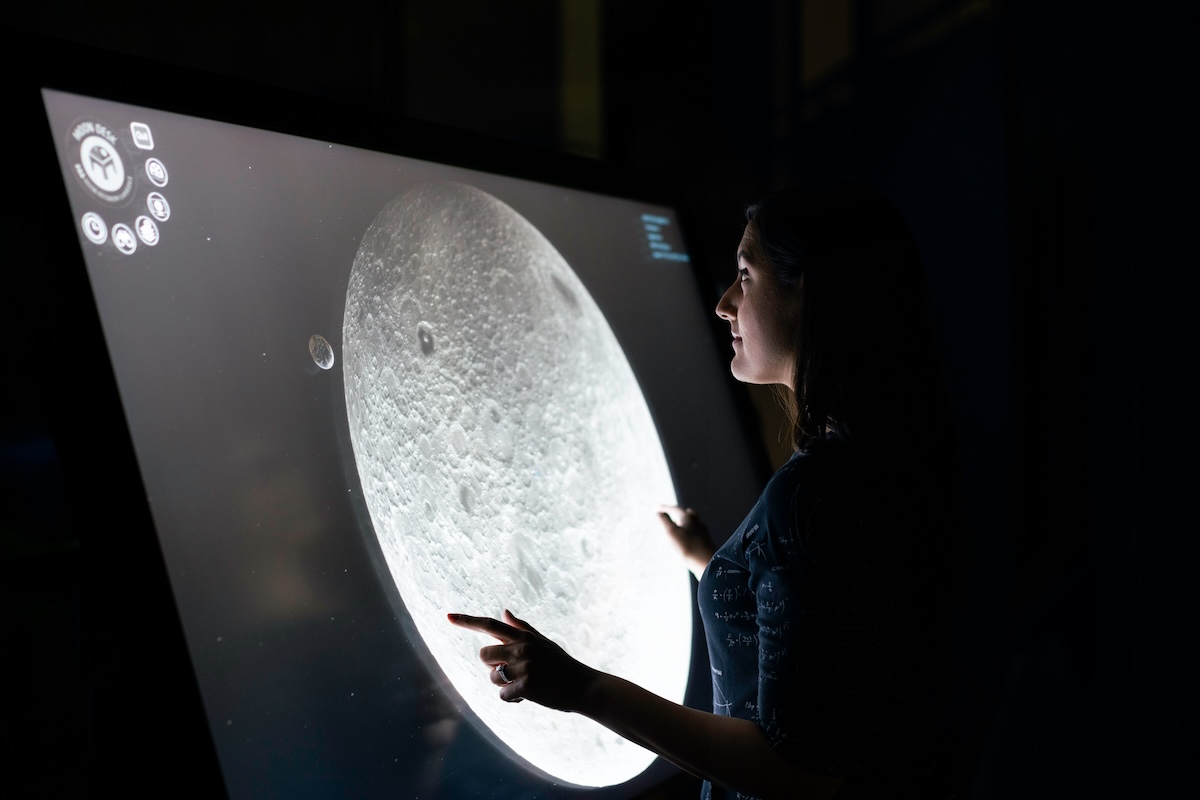 Researchers’ relationship with science is shaped not only by curiosity, but also by funding pressures, impact metrics, and career uncertainty, according to the survey | Image: Unsplash
In April 2026, Springer Nature’s Nature Research Intelligence unit, responsible for managing the Nature Index database, released the results of a survey of more than 6,000 authors with articles published in journals since 2020 and tracked by the Index, which monitors scientific output across high-impact journals in the natural and health sciences.
The Research Leaders Survey examined how successful scientists view the current research landscape, from impact metrics to working conditions and career prospects.
The data show that early-career researchers face markedly different conditions from their more senior peers. In terms of autonomy, 27% of those who had published between one and five articles reported that their institution completely or strongly determines the direction of their research—a proportion that falls to 15% among those with more than 100 publications.
The influence of funders follows a similar pattern: 37% of less experienced researchers reported strong control by funding agencies, compared with 30% of more senior respondents.
This scenario has visible consequences for career intentions. Among respondents with up to five publications, 22% said it was likely or very likely that they would leave research in the coming years—a proportion that drops progressively to 17%, 16%, 12%, and 9% as experience increases.
Regional differences are also evident: in Europe and North America, 18% of respondents said they were likely to leave research, compared with just 7% in Africa and South America and 10% in Asia and Oceania.
Sector analysts say the finding reflects both the increased availability of alternatives outside academia in wealthier countries and the lack of such options elsewhere.
When asked about the three factors that contribute most to the academic impact of a paper, the most common response was “novel, original, and innovative findings” (84%), followed by “methodologically robust and rigorous research” (70%).
The confirmation or replication of previous results was the least cited factor (15%), despite its central role in validating scientific knowledge.
For many researchers, publishing novel findings remains more closely associated with academic recognition than verifying previously reported results.
Here again, experience makes a difference. Among the most senior researchers, nearly half identified publication in high-impact journals as a key factor; among the least experienced, that figure was below one-third.
By contrast, early-career researchers tend to place greater value on open access. Survey participant Marcus Munafò, a psychologist and vice-chancellor at the UK’s University of Bath, interprets this pattern as evidence of a generational shift.
If younger researchers maintain these preferences throughout their careers, this “could lead to a real cultural shift” in how scientific quality is assessed, he believes.
Geographic differences follow the same pattern: in Asia, Africa, and South America, respondents tend to place greater weight on publishing in high-impact journals than their counterparts in North America and Europe, where open access is more highly valued.
Funding declines, with disciplinary disparities
Funding emerged as the survey’s overarching concern. The prevailing perception is that funding for cutting-edge research is on the decline, with high levels of pessimism in North America, where 69% of respondents reported reduced funding for their field in recent years.
The survey was conducted in mid-2025, when threats of federal funding cuts in the United States under the Trump administration were at their peak. The US Congress later sought to curb the reductions, rejecting some of the cuts proposed for 2026.
In Europe, Africa, and South America, about half of respondents also reported a decline in funding. In Asia and Oceania, perceptions were more mixed: 40% reported a reduction, but about one-third saw increases.
The contrasts across disciplines are striking. In the health sciences, 58% reported a decline, compared with just 19% who reported an increase. In the humanities and social sciences, 56% saw a reduction and only 13% experienced growth.
The picture is slightly more favorable in the applied sciences: 32% reported growth, although 42% still pointed to reductions in funding. This may reflect growing private investment in areas such as clean energy, climate technologies, and semiconductors.
For researchers like Evelyn Gitau, scientific director of the Science for Africa Foundation in Nairobi, Kenya, the impact is particularly severe in low- and middle-income countries. In 2024, for the first time in nearly 30 years, France, Germany, the UK, and the US simultaneously cut their development aid budgets, reducing funding for research on tuberculosis, HIV, and other high-burden diseases in the region.
Taken together, the data on impact, autonomy, career intentions, and funding point to problems often treated as individual experiences of young scientists but that, in researchers’ own view, appear to be structural features of the contemporary scientific system. These challenges raise broader questions about how to balance immediate demands with the kind of long-term research that tends to produce the most transformative advances.
*
This article may be republished online under the CC-BY-NC-ND Creative Commons license.
The text must not be edited and the author(s) and source (Science Arena) must be credited.