 #Interviews
#Interviews
14.01.2026
Rita Lobo: “Science makes an impact when it reaches people’s tables”
Chef and TV host discusses partnership with scientists and strategies for tackling unhealthy eating in Brazil
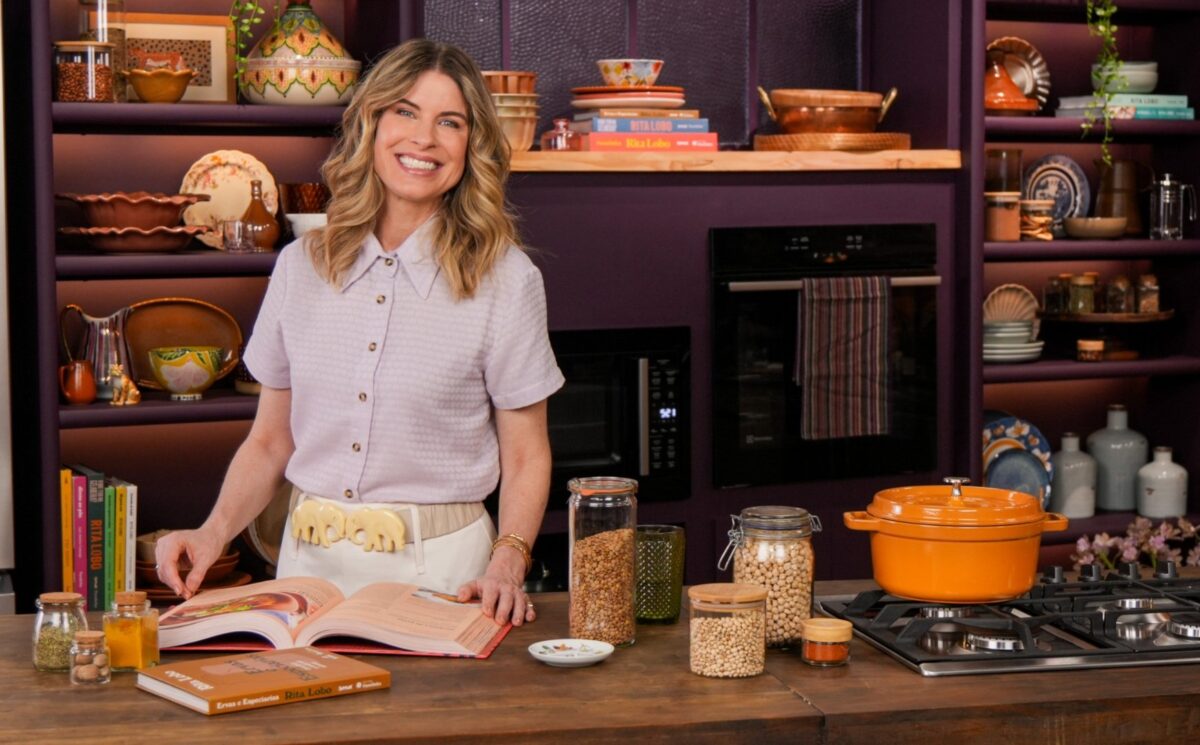 A two-way street: By forging closer ties with scientists, chef and TV host Rita Lobo creates balanced, healthy meals for Brazilian audiences and shares "real-world" information at medical conferences | Image: Editora Panelinha
Chef and television host Rita Lobo is one of the most recognized names in Brazilian cuisine, but her work goes far beyond sharing tasty recipes. The founder of Panelinha, a multiplatform initiative dedicated to improving people’s diets, has become a prominent voice in public health communication in Brazil, acting as a bridge between academic rigor and the Brazilian dining table.
Although not a scientist by graduation, Lobo has been collaborating with the Center for Epidemiological Research in Nutrition and Health (NUPENS) at the School of Public Health of the University of São Paulo (USP), headed by Carlos Monteiro, for over a decade.
The partnership, formalized in 2014, has helped transform scientific evidence—such as the classification of foods by the degree of processing—into practical tools to help tackle the rise of ultra-processed foods (industrial formulations with chemical additives and high levels of salt, sugar, and fat).
The collaboration is an example of what science philosophers Silvio Funtowicz and Jerome Ravetz call an “extended peer community,”in which scientists and other members of society work together to address complex problems, such as food insecurity and the global rise in obesity.
The combination of epidemiological research and experience discussing cooking with a large audience has resulted in a number of high-impact projects, such as the books Cozinha a Quatro Mãos (Cooking together) and Comida de Bebê (Baby food), as well as several TV series promoting traditional Brazilian diets.
The daughter of an anthropologist and an engineer—both university professors—Lobo does not only “translate” technical knowledge; she also links it to real-world issues, such as the division of domestic labor and household food organization.
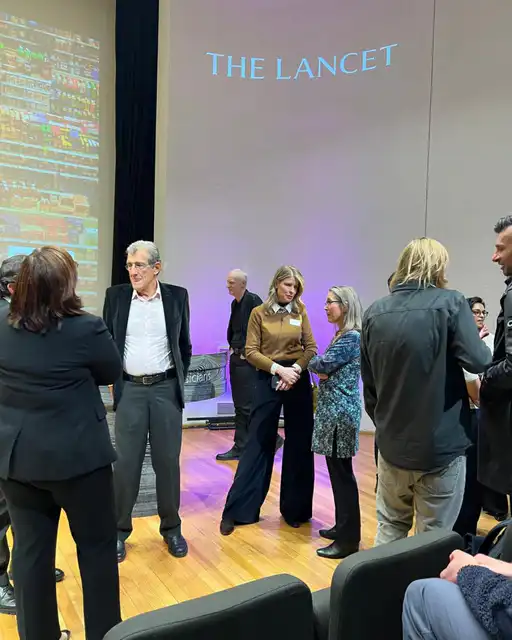
This work has taken her to places traditionally restricted to academics, such as international conferences and the launch of The Lancet’s series on ultra-processed foods. In these settings, the professional chef advocates for “real food” and argues that cooking is a liberating skill and an instrument for social transformation.
In the following interview, Rita Lobo discusses her partnerships with researchers, the challenges of navigating academia, and why the kitchen is, ultimately, a direct link to public health.
Science Arena: How do you see your current role in scientific conferences and your partnership of over a decade with NUPENS (the Center for Epidemiological Research on Nutrition and Health at USP)?
Rita Lobo: There is a formal agreement between NUPENS and Panelinha to create content based onscientific evidence. It all started with the publication of the Brazilian Dietary Guide in 2014, which recommended my book Panelinha as a reference on healthy eating.
Professor Carlos Monteiro of USP and I realized that we could combine scientific concepts with the practice of cooking.
Science provides the concepts and Panelinha shows people how to implement them in everyday life. Our goal is to create evidence-based content that encourages people to get back in the kitchen, taking ultra-processed foods off the table.
How is scientific knowledge reflected in the practical projects you work on?
I look at the data identified by science and seek practical solutions. For example, when I noticed that vegetable consumption was declining in Brazil, I created “O Que Tem na Geladeira” (What’s in the refrigerator?), featuring 200 recipes based on the country’s 30 most popular vegetables.
Another example is the book “Comida de Bebê.” We realized that the introduction of solid foods to babies presents an opportunity to improve the entire household’s diet. We showed that baby food isn’t just puree, it is a set “mini-meal.“
Parents learn that adults should also eat what the baby eats: cereals, legumes, vegetables, meat, and eggs.
You refer to the “set meal” almost like a formula. How did science help to refine the concept?
I learn a lot from my books: each one is like a master’s degree for me! The set meal is a formula, because you can propose nutritionally equivalent combinations while still making use of the four food groups.
It offers a balanced combination of the four groups that we should consume every day: vegetables; grains, roots and tubers (such as rice, potatoes, cassava flour, etc.); legumes (all types of beans); and meat and eggs (for those who eat them, of course).
Vegetables on one side of the plate; rice, beans, and meat on the other. A dish consisting of hummus, tabbouleh, and stuffed eggplant is nutritionally equivalent to a set meal.
You often emphasize that healthy eating is inseparable from the division of household chores. Why is this perspective so important?
Because ultra-processed foods are also a gender issue. From that standpoint, I offer the perspective of the kitchen and of cooking, and help guide discussions that go beyond nutrients.
In Brazil, women are still largely responsible for preparing family meals. If a woman works and/or studies and still has to handle the cooking alone, it is no surprise that she ends up resorting to “nuggets and fries.”
I argue that food is not a “housewife’s” issue—it is a household issue. Without dividing household chores (planning, cooking, shopping, cleaning), there will be no food on the table.
At the scientific and medical conferences I attend, I stress that the kitchen is a direct link to public health.
How has your work been received at medical conferences?
I try to shake things up at these events. I have to. At a recent conference full of doctors, only one person was able to conceptually define what an ultra-processed food is. My role is to show that cooking is a health tool, and neither a talent nor an art. It is a liberating learning process that empowers people to live a healthier life.
Are academic or medical circles still resistant to classifying foods by degree of processing?
Yes, because it challenges established narratives. Some health professionals focus solely on macronutrients, telling people to eat more protein and fewer carbohydrates, ignoring the fact that the protein may come from an ultra-processed yogurt full of sweeteners and preservatives.
The science shows that the body may not even recognize those products as food. There is a conflict of perspectives between looking at the food as a whole or looking only at nutrients.
Even so, the classification of foods by level of processing is gradually breaking paradigms in global nutrition.
What advice would you give to early-career scientists seeking to have a greater impact on society?
Invest in how you explain your research. Nowadays, there are many tools that can help researchers communicate better and reach a wider audience by removing the “academic tone.”
My partnership with NUPENS-USP works because we are ethically aligned: they have the evidence and I have the communication skills, plus a conviction to never promote ultra-processed foods.
If the message is to eat real food, someone has to teach us how food gets to the table; science and cooking need to work together to transform public health.
*
This article may be republished online under the CC-BY-NC-ND Creative Commons license.
The text must not be edited and the author(s) and source (Science Arena) must be credited.