 #News
#News
#News
07.04.2026
Agonists and antagonists: drugs to modulate body signals
From asthma inhalers to monoclonal antibodies: how drugs “talk” to cells
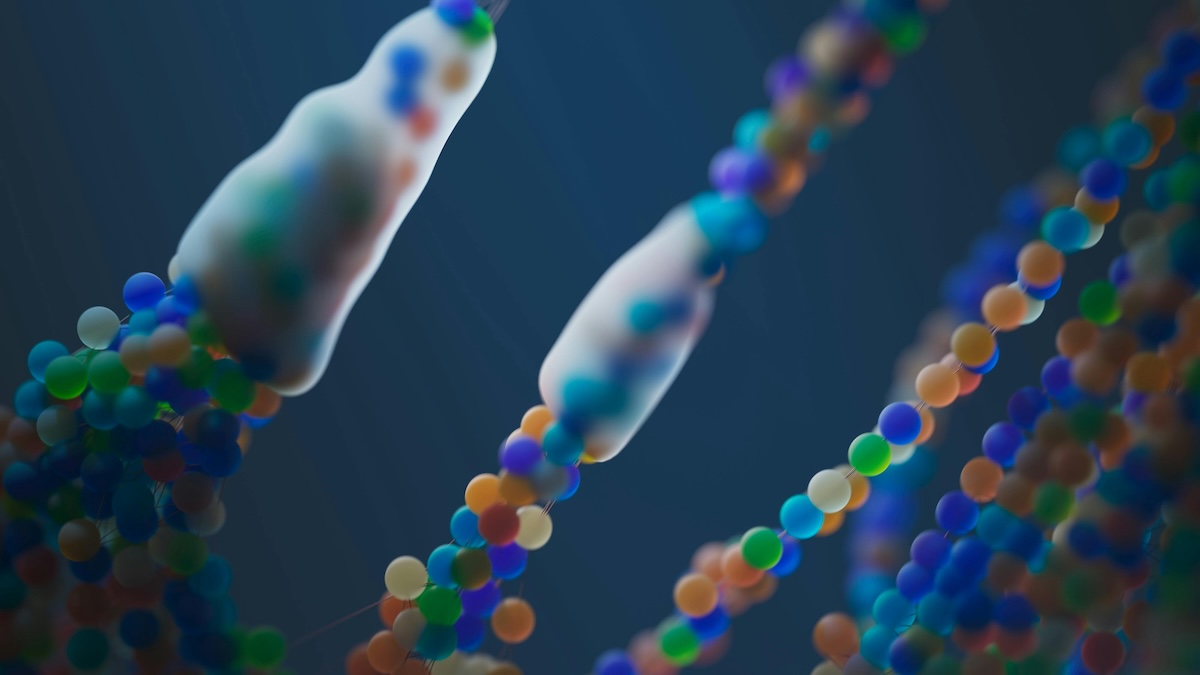 Agonists activate cellular receptors; antagonists block them—together, these mechanisms regulate everything from blood pressure to breathing | Image: Pexels
Imagine the human body is a car, and each organ is responsible for an essential function: acceleration, braking, breathing regulation, and heart rate control. In each vehicle there are specific control buttons: cellular receptors—structures that receive commands to make the body function. Drugs are the keys to this system.
Some are designed to start the engine. The so-called agonists correctly turn the ignition, activating the receptor and triggering the function, as is the case with an asthma inhaler: it switches on the “free breathing mode” in the bronchi, the airways that supply air to the lungs, causing them to dilate and facilitating the passage of oxygen.
Others have the opposite role, but are equally necessary. The antagonists also fit the receptor but do not activate it—they simply occupy the space, preventing another molecule from doing so. A classic example is antihypertensive drugs, which block the “acceleration mode” in the heart and help reduce blood pressure.
However, in clinical practice, this logic goes beyond the on/off switch metaphor.
Treatment does not involve forcing the body, but adjusting its controls
Understanding this difference is essential to explaining why many treatments do not “force” the body, according to cardiologist José Eduardo Krieger, a professor at the University of São Paulo (USP) and director of the Laboratory of Molecular Genetics and Cardiology at the Heart Institute (InCor/FMUSP).
“The drug doesn’t create a new function. It acts on preexisting control systems, regulating the intensity and duration of responses,” he explains. For him, the central idea is simple: “Drugs don’t act, they interact.”
In cardiology, blocking receptors does not mean weakening the heart. “Beta-blockers protect the cardiac muscle from excessive adrenaline stimulation, which is toxic for the heart in the long term,” says Krieger.
Modern cardiovascular treatment is, largely, a modulation strategy.
“In many diseases, the problem is not a lack of stimulation, but an excess. The role of drugs is to restore the balance of these signals,” says Krieger
How the same molecule can have different effects
Modern pharmacology goes beyond the idea of one drug for a single target. Daniela Trivella, a researcher at the National Biosciences Laboratory (LNBio) of the Brazilian Center for Research in Energy and Materials (CNPEM), in Campinas (São Paulo), highlights the growing interest in molecules capable of interacting with more than one receptor, producing complementary therapeutic effects.
“This is not necessarily a problem. In some cases, it is precisely what makes the drug more effective,” she says.
One example is tirzepatide (known by its brand name Mounjaro), a dual agonist approved for the treatment of type 2 diabetes that acts on two receptors with synergistic functions (the GIP and GLP-1 receptors), resulting in greater efficacy and fewer adverse effects compared to previous therapies, according to studies available to date.
Trivella emphasizes that side effects cannot be generalized by therapeutic class. “What determines the adverse effects is not the area in which the medication is used, but the molecule itself and how it interacts with the body,” says the researcher.
“There are highly selective drugs that act on a single receptor and have few adverse effects; this is generally what is sought, as it allows for better control of the drug’s action—and others that bind with multiple systems, sometimes beneficially, sometimes not.”
“Developing a drug involves chemistry, biology, medicine, and, increasingly, computational tools. It is an ongoing learning process, even after the drug reaches the market,” explains Trivella
How drugs “talk” to cells
For Sérgio Araújo, a PhD in biochemistry and professor of Pharmacology in the Department of Pharmacy at the Federal University of Rio Grande do Norte (UFRN), understanding what “acting on a receptor” means helps dispel myths about drugs.
“In practice, the drug binds to a specific protein on the surface or inside the cell and sends a signal. It reorganizes signals that are already part of the cell’s physiology,” he explains.
This binding occurs by intermolecular forces that alter the receptor’s three-dimensional structure, initiating or interrupting signaling cascades inside the cell.
The classic key-and-lock metaphor still helps explain specificity, but it no longer describes the process completely. Receptors are dynamic structures, capable of adopting different conformations. “The key does not merely enter the lock; it reshapes the receptor,” says Araújo.
This is why different drugs can bind to the same receptor and produce different biological responses: binding and activation are separate phenomena.
“The body responds to continuous stimulation, adjusting the sensitivity of the receptors. For this reason, dosage, duration of use, and appropriate recommendation are decisive factors for treatment efficacy and safety,” explains Araújo.
Partial agonists, selectivity, and the limits of indiscriminate use
In addition to classic agonists and antagonists, there is a third important category: partial agonists. They activate the receptor without producing a maximal response, acting as fine tuners—stimulating activity when it is low and reducing it when it is excessive.
This mechanism is especially useful in psychiatry and in the treatment of dependencies. Buprenorphine, for example, is used to manage opioid dependence: it partially activates the receptors, relieving withdrawal without producing the intense euphoria associated with full opioid agonists.
In psychiatry, aripiprazole acts on the same principal in the treatment of schizophrenia and bipolar disorder: it stimulates dopamine receptors when there is a deficit and modulates when there is an excess, reducing the risk of effects such as tardive dyskinesia, which is common with older antipsychotics.
Another central point is selectivity. Less selective drugs tend to produce adverse effects in organs not the target of treatment. For this reason, contemporary pharmacology invests in molecular modeling and artificial intelligence to develop increasingly more precise molecules.
This includes monoclonal antibodies, proteins produced in the laboratory to recognize a single molecular target with high specificity, as is the case of trastuzumab, used in the treatment of HER2-positive breast cancer, and adalimumab, indicated for inflammatory diseases such as rheumatoid arthritis and Crohn’s disease.
Despite advances, experts warn of the risks of inappropriate application. Chronic use without indication can lead the body to reduce the number of available receptors, a process called down-regulation, resulting in tolerance and the rebound effect.
In more severe cases, dosage errors and self-medication can cause arrhythmias, profound alterations in the central nervous system, and fatal events.
Where pharmacology is heading
Trivella, from CNPEM, says that advances in the field point to enhanced therapeutic precision. “Pharmacology is no longer limited to simply switching receptors on and off—it is moving toward modulating specific responses,” she explains.
With the support of artificial intelligence and new molecular design strategies, she says, the trend is toward the development of increasingly selective and personalized therapies.
Araújo, in turn, emphasizes the role of clinical parameters. “The body responds to continuous stimulation, adjusting the sensitivity of the receptors. For this reason, dosage, duration of use, and appropriate indication are decisive factors for treatment efficacy and safety,” says the professor from UFRN.
Understanding how agonists and antagonists work means understanding that drugs are chemical keys that communicate with cells—adjusting, when used correctly, the rhythm of life.
*
This article may be republished online under the CC-BY-NC-ND Creative Commons license.
The text must not be edited and the author(s) and source (Science Arena) must be credited.