 #News
#News
#News
25.05.2026
National Clinical Research Program set to speed up new drug and therapy development in Brazil
Besides increasing patient diversity in clinical trials, the Ministry of Health program seeks to accelerate drug development in Brazil
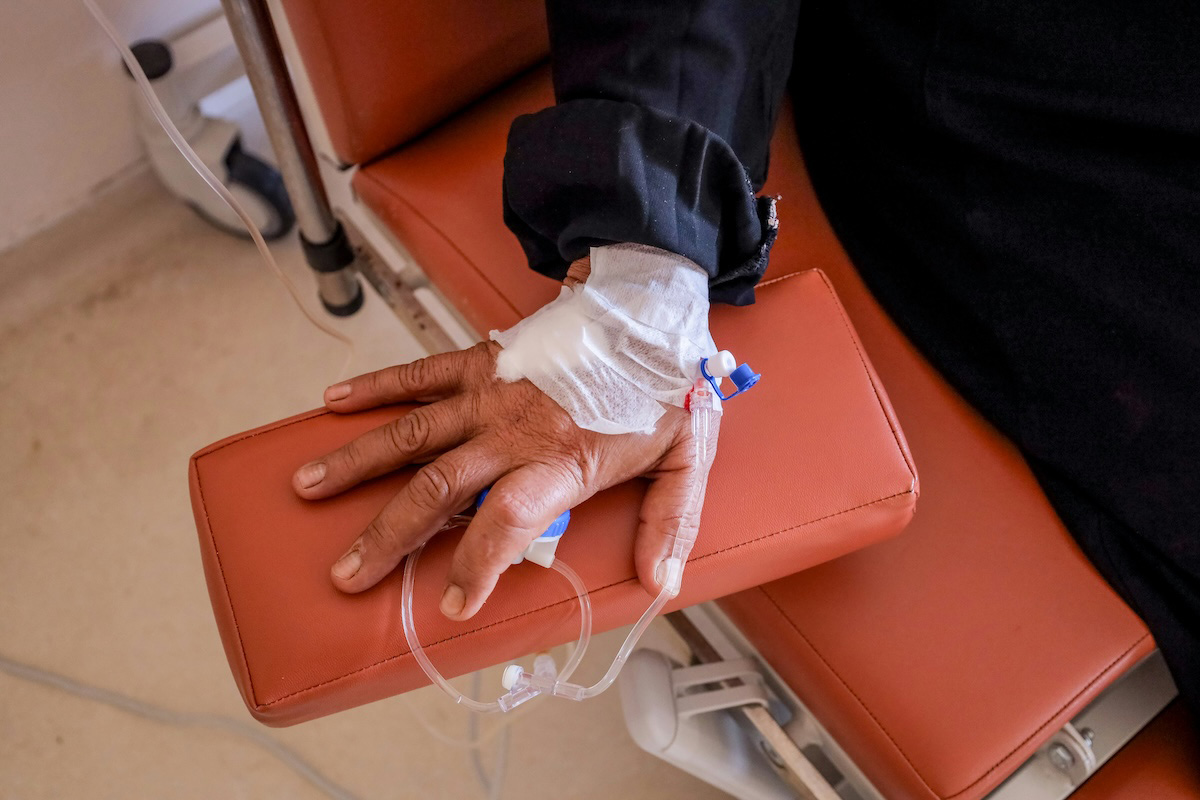
 A result of public consultation with contributions from universities, hospitals, companies, and civil society organizations, the PPClin advocates enhancing areas such as transparency, monitoring, and technological innovation in order to expand access to new healthcare solutions for Brazilians| Image: Egberto Nogueira
On May 6, the Ministry of Health published an ordinance formally establishing the National Clinical Research Program (PPClin), expected to reorganize and enhance clinical research in Brazil, making it more modern and nationally integrated.
Besides boosting Brazil’s science, technology, and innovation ecosystem, the program also aims to expand the country’s capacity to conduct clinical trials. The objective is to make the country a strategic benchmark in the development of health technologies.
The initiative also strengthens decentralized clinical trials (DCT)—featured in a 2024 report by Science Arena—whose goal is to expand patient access to studies evaluating the safety and efficacy of new medications and disease therapies.
To this end, the new policy establishes five main pillars:
- Digital transformation;
- Social participation;
- Regulatory convergence with international standards;
- Alignment with innovation policies;
- Expansion of access across all regions;
The pillars are aimed at integrating research and innovation with the needs of Brazil’s public health system (SUS), as well as reducing regional inequalities in access to clinical trials.
The program consolidates the Brazilian Clinical Research Network (RBPClin) by providing accreditation for research centers, specialized professional training, and greater integration between the Brazilian Health Regulatory Agency (ANVISA), ethics committees, and research institutions, in order to accelerate processes and accentuate governance in the sector.
RBPClin was established by the Ministry of Health in 2022 as a coordination and advisory body aimed at strengthening clinical research in Brazil.
Now, as part of its expansion strategy, the Ministry of Health has announced an initial investment of R$120 million in infrastructure, modernization, and the expansion of clinical research centers.
Devised after public consultation, with contributions from universities, hospitals, corporations, and civil society organizations, the PPClin advocates bolstering areas such as transparency, monitoring, and technological innovation in order to widen public access to new healthcare solutions.
Regulatory challenges
One of the gaps for expanding population access to clinical trials in a more diverse manner lies in regulation, which requires continuous advancement to ensure that Brazil’s population diversity is represented in these studies.
PPClin represents an important step toward more patient-centered clinical trials in Brazil by institutionally incorporating principles that, until recently, were fragmented in the legislation.
One of the main advances is in the explicit inclusion of “social engagement and participant-centric research” as a guiding principle, signaling a shift in the model: from research organized primarily around centers and sponsors to a more experience-led approach, focused on access and the real needs of volunteers.
In practice, this translates into consolidated strategies to widen the participation of historically underrepresented populations, such as those outside major urban centers, older adults, low-income communities, and diverse ethnic groups.
The emphasis on regional equity and reducing inequalities may also favor the expansion of multicenter networks, as well as the partial decentralization of trial phases and greater reach of studies, bringing clinical research closer to the realities of the Brazilian population.
Health strategy
The ordinance also seeks to boost Ministry of Health cooperation in the areas of Science, Technology, Innovation, and Education, building on a broader strategy that links investments in vaccine production with messenger RNA technology, biotechnology, and strategic medications, such as the expansion of domestic insulin production.
In this context, strengthening clinical research is seen as a key element in reducing technological dependence on other countries, increasing the country’s capacity to respond to future health emergencies, and consolidating a more robust scientific infrastructure.
In addition to the accreditation of research centers in line with international standards and the training of specialized professionals, the strategy includes the implementation of digital platforms for the monitoring, integration, and sharing of scientific data.
The program provides for rapid-response mechanisms for research in critical situations such as epidemics and emerging health crises, as well as mechanisms for avoiding bottlenecks observed in recent times, leaving Brazil better prepared to develop faster scientific responses to potential public health emergencies.
*
This article may be republished online under the CC-BY-NC-ND Creative Commons license.
The text must not be edited and the author(s) and source (Science Arena) must be credited.