 #News
#News
#News
16.02.2026
Polylaminins and laminin: Understanding the difference and their role in the placenta during pregnancy
Each protein has distinct characteristics that influence the body in specific ways
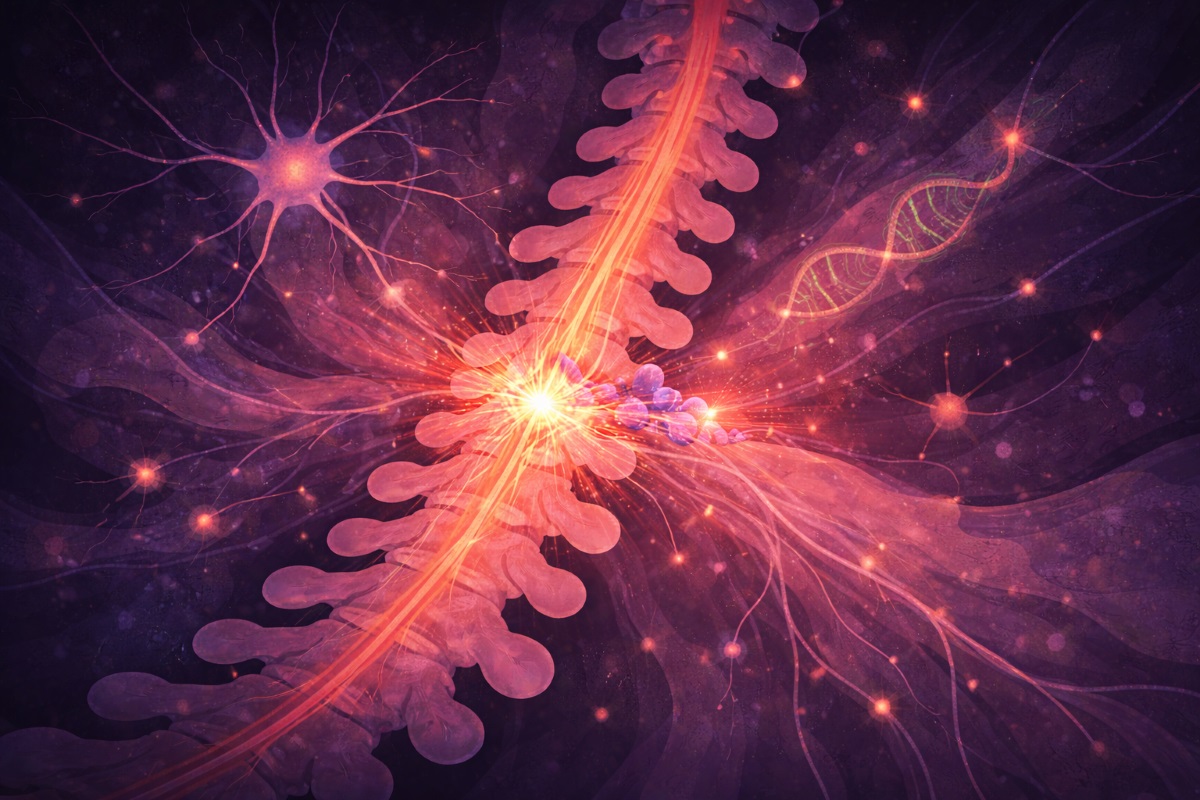 By restoring its natural polymer structure in the laboratory, scientists enabled polylaminin to form a three-dimensional network capable of promoting axonal growth and reestablishing neural connections | Image generated by AI
During fetal development, the placenta plays a fundamental role throughout pregnancy until birth. One of its functions is to produce a protein known as laminin, which is directly involved in embryonic formation.
From this substance, scientists have created a molecule called polylaminin, which may influence the treatment of spinal cord injuries.
Though related, laminin and polylaminin differ in both origin and action within the human body. While laminin is produced naturally during pregnancy, polylaminin is created in the laboratory, as we explain in this article.
Function of laminin
Laminin helps in the development of neurons and in the process of cell adhesion. This protein, abundant in the placenta, establishes connections between cells, especially in the nervous system.
It is most influential during fetal development in the uterus.
Many substances produced to support pregnancy are discarded shortly after birth. At this stage, several proteins created to provide structural support during gestation, including laminin, can be eliminated.
Polylaminin and its action in the body
In the search for effective treatments for spinal cord injuries, scientists at the Federal University of Rio de Janeiro (UFRJ) developed a new version of laminin called polylaminin.
During pregnancy, the body forms three-dimensional networks, and the polymer produced in the laboratory is capable of creating similar networks.
The relationship between polylaminin and the placenta is linked to its origin, since it is derived from laminin found in this temporary organ. Experiments analyzing its effect on spinal cord injuries showed that it can help reestablish nerve connections.
The new molecule is even more effective when administered within 72 hours after trauma. In a study conducted on paraplegic dogs, scientists observed functional improvement in the animals.
The effect was stronger when combined with certain adjuvants, as this approach helped break down scar tissue.
After the study on polylaminin in animals, researchers at UFRJ conducted tests on human patients with spinal cord injuries.
Using a substance derived from a natural protein found in the placenta, scientists sought to develop a therapeutic approach capable of promoting significant regeneration in spinal cord injuries.
To read the full article on polylaminin, visit this piece from Science Arena.
*
This article may be republished online under the CC-BY-NC-ND Creative Commons license.
The text must not be edited and the author(s) and source (Science Arena) must be credited.