 #News
#News
#News
16.03.2026

Software and physicians show similar performance in estimating ICU length of stay
Brazilian study identifies limitations in projections based on both clinical experience and digital tools, but highlights that both can be important allies in resource management
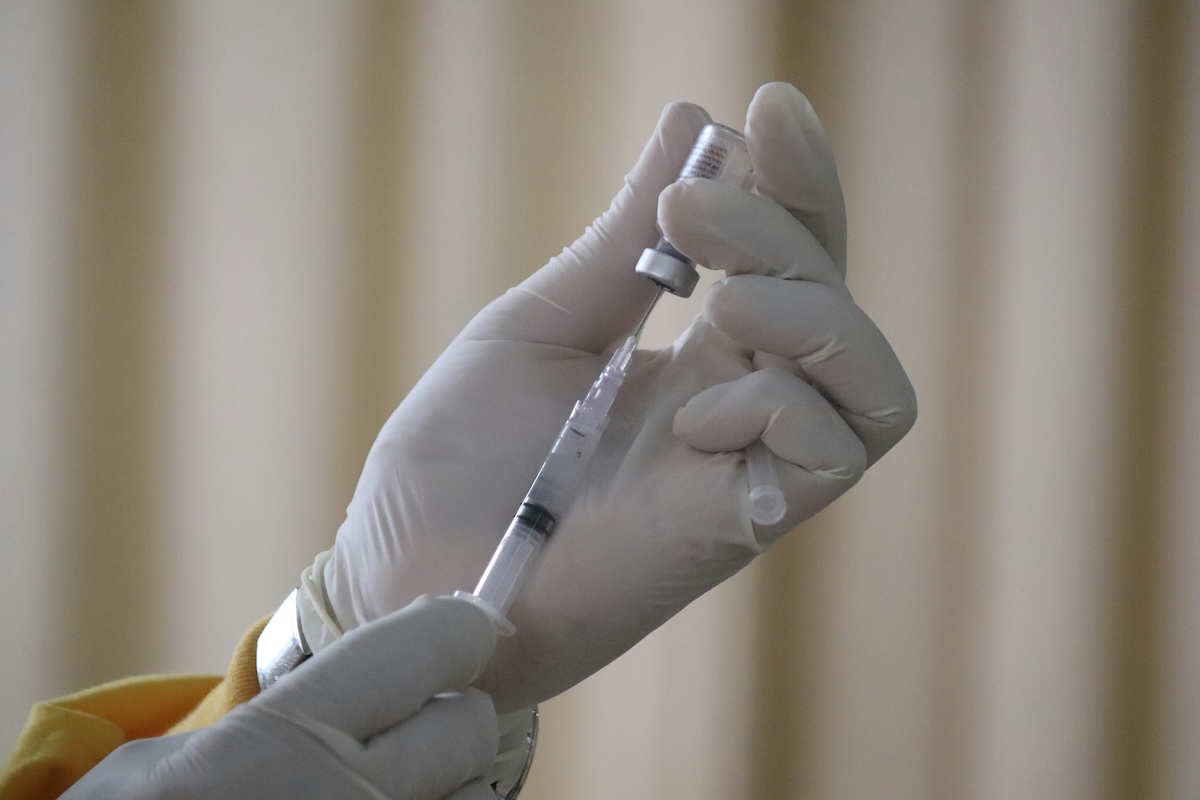
 Even with the support of technology and clinical experience, accurately predicting how long a patient will remain in the ICU remains a major challenge | Image: Fábio H. Mendes/E6 Imagens
Estimating how long a patient will remain in intensive care is essential to the functioning of any hospital. It determines, for example, the number of beds available, how medical and nursing teams should be organized, the planning of elective surgeries, and the classification of cases by level of care.
However, a Brazilian study published in November 2025 in the journal einstein (São Paulo) shows that, even with the support of technology and clinical experience, accurately predicting this length of stay remains a major challenge. To reach this conclusion, researchers compared the performance of intensivists’ estimates with projections generated by the Epimed Solutions system, using the Epimed Monitor Performance (EMP) module.
In total, 555 adult ICU admissions lasting more than 12 hours, occurring between August and December 2019, were analyzed across three intensive care units (ICUs): Hospital Beneficência Portuguesa Mirante (BP Mirante), Hospital Nove de Julho (H9J), and the Hospital das Clínicas of the University of São Paulo School of Medicine (HCFMUSP).
In addition to professionals from the hospitals where the analyses were conducted, the initiative also involved specialists from Hospital Israelita Albert Einstein, the Federal University of São Paulo (UNIFESP), Sírio-Libanês Hospital, Hospital São Luiz, Hospital Vila Nova Star, the d’Or Institute of Research and Teaching (IDOR), and the ABC University Center Medical School (FMABC).
How the predictions were made
Clinical data for the study were collected at the time of ICU admission. At that point, the attending physician assessed the patient and recorded an estimated length of stay in the unit, while the EMP software generated its own projection based on information available in the patient’s medical record and in Epimed Monitor—a cloud-based database that compiles data from multiple adult ICUs across Brazil.
The median age of the patients was 63, and nearly three out of four had comorbidities.
Admissions included both medical cases, such as infections and sepsis, and surgical cases, including elective and emergency procedures. This diversity in patient profiles made predicting ICU length of stay particularly complex.
When the researchers compared the predictions with the actual length of stay, they found that physicians and the software performed similarly.
Both clinical experience and the algorithm were able to identify general trends, but were often inaccurate when estimating the exact number of days. The difference between predicted and actual length of stay often exceeded a margin of error of four days.
Interestingly, when predictions shifted from exact figures to three categories—short, intermediate, or long stays—performance improved.
About six in ten predictions aligned with actual outcomes. For hospital management, this level of accuracy is already useful, as it allows for better forecasting of patient flow and more effective staff planning.
The software, in turn, showed a specific advantage in identifying, with reasonable accuracy, which patients were more likely to remain hospitalized for prolonged periods.
Although these cases represent a smaller share of admissions, they account for a large proportion of total ICU days and, consequently, of costs and bed occupancy.
Support, not replacement
The findings reinforce that ICU length of stay is inherently difficult to predict. The clinical condition of a critically ill patient can change rapidly, whether due to unexpected improvement or complications arising during treatment.
This unpredictability helps explain why both experienced physicians and a system based on large volumes of data showed limitations in predicting the exact length of stay.
Despite this, the authors emphasize that technology can still be a valuable ally in ICUs. Even without precisely determining how long each patient will remain hospitalized, identifying those at high risk of prolonged stays can help hospitals organize staff, adjust procedure scheduling, and plan care pathways more carefully.
In practice, this means that algorithms are not capable of replacing clinical judgment, but can enhance it.
In a high-complexity environment with limited resources, integrating data analysis with medical expertise tends to support more informed decision-making and more efficient management of intensive care.
Reference
Santos TT, Resende LS, Taniguchi LU, Romano TG, Tavares MS, Azevedo LC, et al. Predicting intensive care unit length of stay: comparing physician assessments with software predictions in a multicenter study. einstein (São Paulo). 2025;23:eAO1265. https://dx.doi.org/10.31744/einstein_journal/2025AO1265
*
This article may be republished online under the CC-BY-NC-ND Creative Commons license.
The text must not be edited and the author(s) and source (Science Arena) must be credited.