 #Interviews
#Interviews
21.05.2026
“Double Neglect”: Why tropical disease treatment also needs to address mental health
British global mental health expert argues that efforts to combat neglected tropical diseases must also confront stigma, social exclusion, and psychological suffering
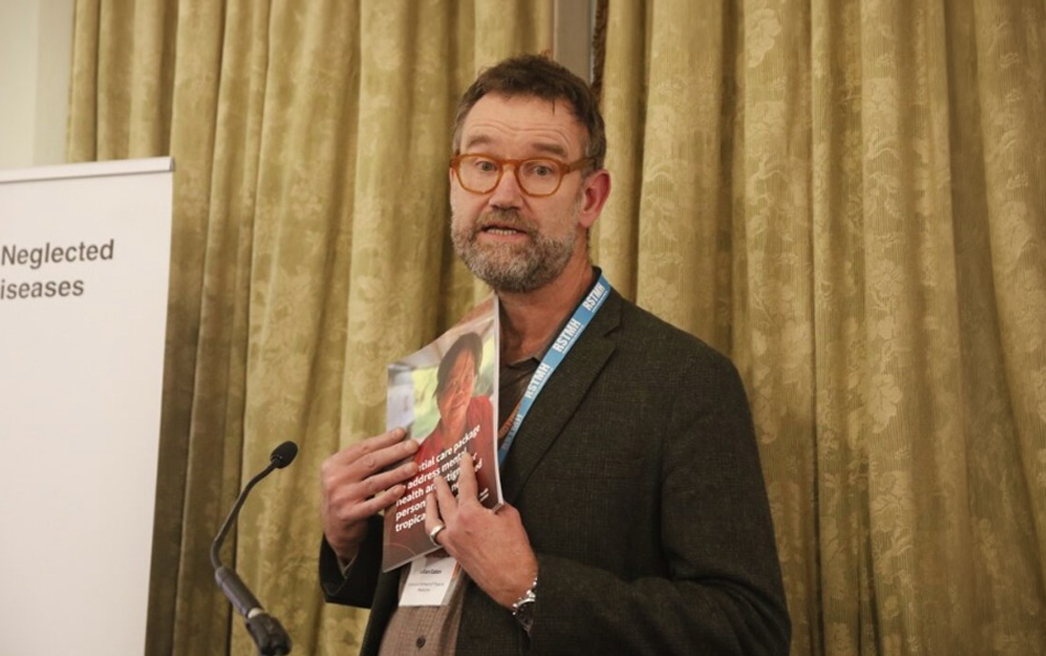 “If we want successful programs aimed at combating neglected tropical diseases, we need to take stigma and mental health seriously as part of meeting global health needs,” says psychiatrist Julian Eaton, Professor of Global Mental Health at the Liverpool School of Tropical Medicine in the UK | Image: courtesy of interviewee
“If we want successful programs to combat neglected tropical diseases, we need to take stigma and mental health seriously as part of meeting global health needs—and not as a separate issue.”
The statement summarizes a paradigm shift that psychiatrist Julian Eaton has championed throughout decades of work in health care settings across low-income countries.
British by nationality, Eaton was born in the Democratic Republic of the Congo (then Zaire) and has built an extensive career across several African nations. He is a Senior Professor of Global Mental Health at the Liverpool School of Tropical Medicine (LSTM) in the United Kingdom, one of the world’s leading institutions dedicated to studying and tackling diseases that affect populations in tropical and subtropical regions.
A physician by training, Eaton has focused much of his work on the intersection of mental health and neglected tropical diseases (NTDs), a group of infectious and parasitic conditions affecting more than one billion people worldwide, primarily in the world’s poorest countries.
His approach brings together clinical practice, research, and advocacy. He is widely regarded as one of the leading voices in the field when it comes to integrating mental health care into programs that have historically focused almost exclusively on the biomedical aspects of disease.
In 2025, the World Health Organization (WHO) published an unprecedented practical, evidence-based care package designed to address the mental health impacts of NTDs and the stigma associated with these conditions.
The document reflects a growing body of evidence showing that people living with neglected tropical diseases, such as leishmaniasis, experience significantly higher rates of depression, anxiety, psychological distress, and suicidal behavior than the general population. These outcomes are driven not only by the direct effects of the diseases themselves, but also by the inherent discrimination and social exclusion.
In an interview with Science Arena, Eaton discusses the structural mechanisms underlying this “double neglect,” the most effective strategies for reducing stigma and fostering inclusion, and the central role of poverty—and efforts to address it—in any response aimed at bringing about meaningful and lasting change.
Science Arena – The relationship between neglected tropical diseases and mental health has historically received little attention. What structural factors help explain this long-standing disregard?
Julian Eaton – For those working with people affected by neglected tropical diseases such as leprosy, lymphatic filariasis, and Buruli ulcer, the suffering associated with these conditions has always been apparent.
Many of these individuals face social exclusion, something that has long been linked to diseases such as leprosy, which has been documented since biblical times. Even so, for many years the care provided remained largely rooted in a biomedical model.
Only recently has research begun to quantify the psychological consequences of exclusion and shed light on the mechanisms through which stigma affects mental health.
Tropical diseases and mental health are historically poorly prioritized. What we are facing is double neglect.
What are the essential steps for establishing an integrated mental health care pathway?
Most of the problems we observe are related to depression and anxiety, considered common mental health conditions. Today, it is widely recognized that many of these cases can be managed outside specialist services.
In resource-poor settings, task-sharing approaches are often used, involving community health workers and members of the community itself.
More severe cases, such as severe depression or suicidal ideation, require referral, although many of these areas face a shortage of mental health professionals.
The recommended interventions are typically basic psychological therapies, with medication needed for only a minority of patients. Through its Mental Health Gap Action Programme (mhGAP), the World Health Organization seeks to integrate this type of care into primary health services.
How can communication strategies help reduce stigma and encourage people to seek care?
There are two main reasons to invest in communication and community engagement. The first is to encourage people to seek care. In many countries, mental health problems are still viewed as spiritual issues or personal failings rather than as health conditions.
It is important to normalize these responses to social exclusion, pain, and chronic symptoms, demonstrating that seeking support is appropriate. The second reason is to reduce stigma.
The evidence shows that simply sharing information is not enough. What truly changes attitudes is direct contact with people who have been affected.
Personal accounts shared by people who have experienced leprosy, for example, can help humanize these experiences and reduce prejudice.
How should different stakeholders coordinate their efforts to transform the mental health landscape in this context?
The first step is to recognize that mental health is an integral part of the neglected tropical disease agenda. In recent decades, important progress has been made in research, prevention, and disease elimination targets, but the mental health dimension has yet to be fully integrated into these efforts.
WHO guidelines already exist, but now they need to be applied at the national level, engaging ministries of health and civil society organizations, which play a central role both in service delivery and in advocating for the rights of affected populations.
Which cross-sector strategies are most effective for promoting inclusion, quality of life, and well-being?
Experience has shown that providing mental health services alone is not enough to transform people’s lives. Poverty has a profound impact on both quality of life and stigma. That is why income-generating initiatives are so important.
When people are able to support their families, keep their children in school, and live with dignity, their social standing changes—even if physical limitations remain. Tackling poverty, therefore, is one of the most effective ways to reduce exclusion and alleviate suffering.
How should the evidence on mental health impacts inform changes in public policies and health services?
Public policy is the natural starting point, and we have already seen progress in this regard. Countries such as Liberia, Nigeria, and Ghana have begun incorporating mental health into their strategic plans for neglected tropical diseases.
This can help expand the capacity of frontline health workers to identify conditions such as depression and anxiety and provide more humane, comprehensive care—addressing not only the physical manifestations of disease but also patients’ mental well-being.
Neglected Tropical Diseases: What they are and which are most common
-
1. Definition
-
Neglected tropical diseases (NTDs) are a group of infectious and parasitic conditions that primarily affect people living in poverty in tropical and subtropical regions. According to the World Health Organization, more than one billion people worldwide are affected.
Below are some of the major NTDs frequently discussed in the context of mental health.
-
2. Leprosy
-
A chronic bacterial infection caused by Mycobacterium leprae. It affects the skin, peripheral nerves, and mucous membranes. Historically associated with severe social exclusion, it has been documented since ancient times. Although curable with multidrug therapy, the stigma may persist long after treatment is completed.
-
3. Lymphatic Filariasis
-
Caused by parasitic worms transmitted by mosquitoes, lymphatic filariasis damages the lymphatic system and can lead to elephantiasis—severe swelling of the limbs and genitals. These visible deformities often intensify social isolation and psychological distress.
-
4. Buruli Ulcer
-
A skin disease caused by the bacterium Mycobacterium ulcerans. It produces destructive ulcers affecting the skin and soft tissues, frequently leaving scars and deformities. Predominant in countries across West and Central Africa.
-
5. Leishmaniasis
-
Caused by protozoan parasites transmitted by sand flies, leishmaniasis can affect the skin, mucous membranes, or internal organs. Its visceral form, known as kala-azar, can be fatal if left untreated.
-
6. Chagas Disease
-
Transmitted by triatomine bugs (commonly known as kissing bugs), Chagas disease is endemic to Latin America. It can cause chronic cardiac and digestive complications and is among the neglected tropical diseases prioritized by the WHO.
*
This article may be republished online under the CC-BY-NC-ND Creative Commons license.
The text must not be edited and the author(s) and source (Science Arena) must be credited.
Interviews
#Interviews
 #Interviews
 #Interviews