 #Interviews
#Interviews
30.06.2026
What motivates early-career researchers to communicate science?
Lennart Banse discusses why symbolic recognition of science communication does not always translate into concrete support
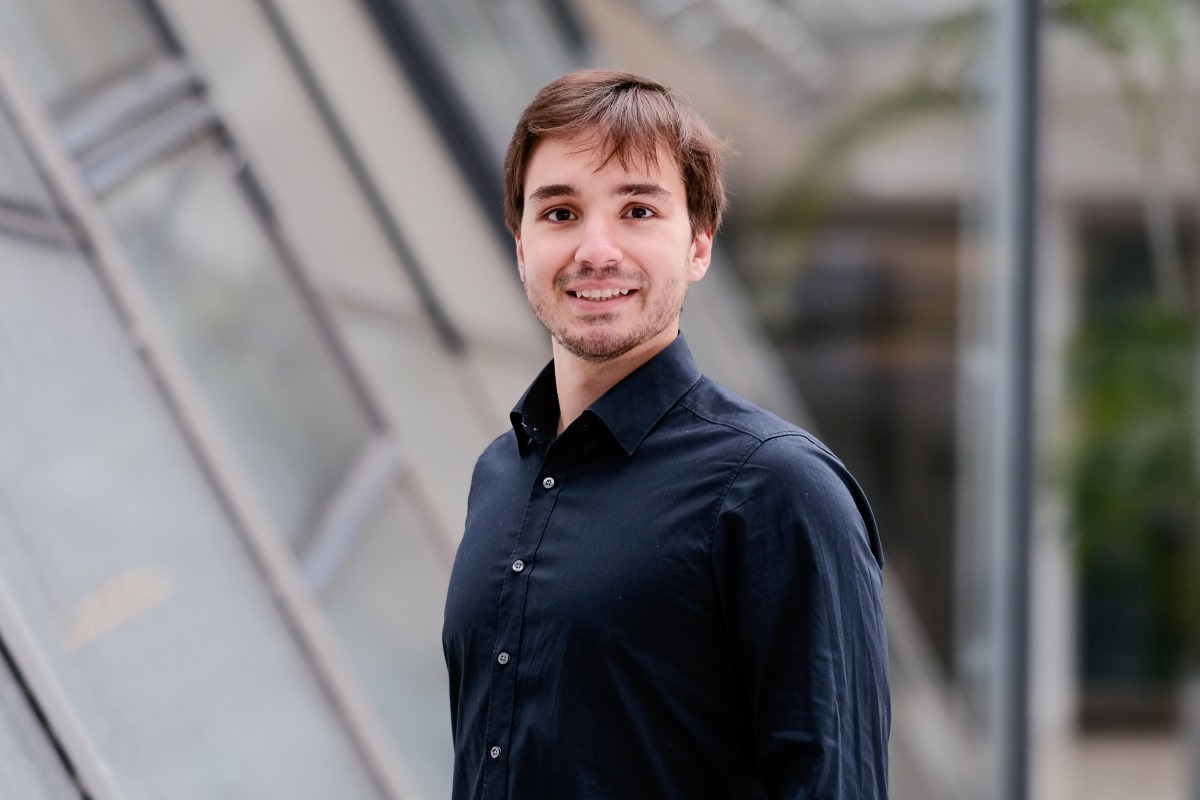
 In an interview with Science Arena, Lennart Banse discusses the challenges faced by scientists who also see themselves as communicators | Image: Personal Archive
As science communication increasingly becomes a part of a researcher’s professional responsibilities, one question persists: who is actually encouraging engagement among early-career scientists?
An article published in the Journal of Science Communication (JCOM) this year investigated this question through interviews with 24 early-career researchers in STEM fields (science, technology, engineering, and mathematics) from Germany, all of whom were regularly involved in science communication activities.
Authored by Lennart Banse, Fenja Heinke, and Friederike Hendriks, the paper showed that among young researchers with a strong identity as communicators, recognition and support tend to come more from personal networks, science communication communities, and audiences than from their academic institutions.
According to the authors, the academic environment is generally perceived as less decisive (and in some cases merely permissive) in the shaping of these communication role identities.
Lennart Banse, the paper’s lead author, is a postdoctoral researcher at the Institute for Communication Science at Technische Universität Braunschweig in Germany. During his PhD, he investigated the roles and identities of science communicators, with an emphasis on how factors within research organizations influence the perceptions and concepts of their professional role.
In an interview with Science Arena, Banse discussed the challenges faced by early-career researchers interested in science communication, the limits of institutional support, the role of supervisors, funding agencies, and professional communication teams, and the risks of treating science communication as merely a means of gaining visibility.
The central issue, he says, is not about simply increasing science communication output. “The research system needs a deeper and more meaningful integration of science communication into existing career paths, professional structures, and scientific institutions.”
Science Arena – The article published in the Journal of Science Communication (JCOM) shows that STEM PhD candidates in Germany who are already involved in science communication identify strongly with the role, sustained primarily by personal networks, science communication communities, and audiences. At the same time, institutional support is weak and often merely permissive. What does it mean to have a “strong communication role identity” within the scientific community?
Lennart Banse – This is one of the central issues that my colleagues in the junior research group fourC and I have worked on intensively over the past four years, using a range of studies and methodological approaches within the German academic system.
We were interested in how scientists define themselves in their profession and how science communication as a newly emerging professional role might relate to these self-definitions.
To give a brief answer: in our recent study (the one you are referring to), as well as in a second in-depth study with experienced professors in Germany, we found that a notable proportion of the interviewed scientists held self-concepts, or identities, in which they understood themselves in certain situations as communicators, rather than solely as occupants of the traditional scientific roles, such as researchers or teachers.
Although these communicator role identities were closely connected to the role of the academic researcher, they were associated with distinct internalized goals, motives, values, norms, and social contexts.
How so?
For instance, many scientists described themselves as bridge builders or interfaces between their scientific disciplines and wider audiences. In these situations, their goals shifted from the production of new knowledge toward making existing knowledge accessible and meaningful from the perspective of lay audiences.
We found that some early-career researchers even identified more strongly with these communicator roles than with the classical academic roles.
However—and this is an important point to emphasize—scientists who are highly identified with communication remain an absolute minority within the German science system.
Their strong communicator identification often stems from personal predispositions and an early interest in creative and communicative formats, frequently dating back to before they entered academia.
What are the main challenges faced by these scientists?
Because these strongly communication-oriented scientists constitute such a small minority, they often perceive considerable challenges in managing and integrating their identities as both researchers and communicators simultaneously.
This is mainly due to the fact that the support and reward structures of the traditional scientific profession in Germany—and similarly in many other countries worldwide—have increasingly begun to symbolically acknowledge and praise engagement in science communication.
However, when it comes to providing truly sustainable incentives and meaningful structural support, most scientists perceive little real prioritization of communication activities.
You and your colleagues interviewed 24 PhD students working in STEM fields (science, technology, engineering, and mathematics) and found that for early-career researchers, the primary motivation to engage in science communication is having a strong support network of colleagues, supervisors, friends, and family. What kind of support does this network provide to these young researchers?
For almost all interviewed scientists, the primary motivation for engaging in science communication was rooted in intrinsic motivation. Most of them reported that they genuinely enjoyed planning, designing, and delivering communication formats and frequently described feelings of joy and fulfillment while engaging in these activities.
Importantly, we are therefore not talking about scientists who were pushed or pressured into communication roles. Rather, these were individuals who were already intrinsically motivated to—mostly voluntarily—take on roles as science communicators.
Did the motivation stem from this network of family, friends, etc.?
Social relationships did not create this motivation, but they played a crucial role in shaping, structuring, and sustaining it. Different networks of support, expectations, and appreciation contributed to the development of sometimes very different identities as “communicating scientists.”
The most important relationship for scientists identified in the interviews was with their audiences and followers. Continuous feedback, interaction, and perceived appreciation—whether in event-based formats such as science slams or through digital communication channels—acted as a kind of motor that fueled their existing motivation and contributed to the development of a deeply internalized communicator identity.
In this sense, audience engagement and the experience of having a visible and tangible impact on lay audiences’ lives appear to be key components in sustaining long-term communication motivation among scientists.
At the same time, a very clear pattern emerged regarding institutional support within the academic system, right?
Almost all interviewees reported a lack of meaningful support for their science communication activities, and in some cases even perceived active constraints.
Examples included PhD supervisors who discouraged public engagement and expected doctoral researchers to prioritize research output and administrative duties, as well as organizations or communication departments that sought to tightly control external communication through guidelines and restrictions, thereby limiting scientists’ autonomous communication efforts.
And what does that mean?
It points to a central structural issue within the current German academic system. Because these scientists already identified strongly as communicators, they actively sought validation and recognition for their communicative identities outside academic institutions.
Some turned to personal networks, such as friends, family members, or partners. Others became involved in an emerging community of science communicators in Germany, where they found a sense of belonging within a new community of practice rather than within traditional academic environments.
However, when young scientists primarily anchored their communicator identities in these external contexts, they often began to explicitly separate them from their professional identities as academic scientists.
As a consequence, science communication activities in these cases increasingly revolved around personal branding or “having fun with like-minded people,” and gradually drifted away from core academic values such as factual accuracy, objectivity, and the pursuit of truth.
Interestingly, it was precisely the small number of scientists who reported genuine institutional support and recognition for their science communication activities who were most successful in integrating classical academic values and identities into their communicator roles.
One possible implication of this finding is that there is considerable untapped potential in establishing sustainable support and recognition structures for science communication within academic organizations themselves.
Support for communicator identities still comes more from private support (family, friends, etc.) than from research institutions. What does this mean from the perspective of how researcher performance is assessed in academia?
The early-career STEM scientists interviewed did indeed report that supervisors often prefer to see time, effort, and engagement invested in classical research activities and outputs.
Consequently, they tend to view extensive involvement in science communication roles with skepticism or even disapproval. However, this strongly depends on the attitude of the individual supervisor.
On a broader, systemic level, the issue is rooted in the way academic success is measured in Germany—similarly to many other countries.
Career advancement for scientists is still largely evaluated on the basis of quantifiable outputs, particularly peer-reviewed publications and the acquisition of external research funding.
These criteria continue to play a decisive role in determining who ultimately secures one of the few highly competitive permanent professorships, despite ongoing efforts to broaden evaluation frameworks to include aspects such as teaching quality or societal impact.
Does the same logic apply at the organizational level?
Yes. Universities and research institutions are themselves assessed using performance indicators such as research output, third-party funding, and student enrollment numbers.
Future funding allocations are often at least partly tied to the achievement of these targets. As a result, these measurable indicators tend to take priority in everyday decision-making—a dynamic that is, from a human and organizational perspective, entirely understandable.
At the same time, science communication and societal impact have increasingly been framed as part of academia’s so-called “third mission” and are now more strongly demanded in political and public discourse, as well as supported through dedicated funding schemes.
What are the consequences of this in Germany?
German research organizations have become increasingly interested in demonstrating visible engagement in external science communication. This is most evident through professional communicators working in central and decentralized communication units within universities, who increasingly focus on formats that highlight scientific content.
In another study within the project—a nationwide survey—we found that these professional communicators depend on scientists within their organizations for certain areas of external science communication, most notably for the generation of new scientific content and for formats that require direct interaction with non-scientific audiences.
Thus, research organizations have begun to establish internal networks and incentive structures aimed at integrating scientists into external communication activities when needed. However, our two interview studies indicate that these structures are currently perceived as largely superficial.
Why?
The interviewees reported that they see little long-term career relevance in participating in such activities and experience limited sustainable support.
In summary, while research organizations do appear to value science communication activities by scientists at a symbolic level—at least when these activities serve organizational interests—this appreciation often remains shallow.
Importantly, many scientists seem to be acutely aware of this discrepancy.
In Brazil, some of the leading research funding agencies require researchers to submit communication plans when applying for project funding. There are also cases in other countries where agencies require researchers to be involved in communication initiatives to increase the social impact of science. How do research funding agencies in Germany approach this issue?
In Germany, funding agencies have also increasingly sought to promote science communication directly within research projects, often under the umbrella of social impact.
Some major funders, such as the German Research Foundation (DFG), allow scientists to apply for optional add-on modules dedicated to public outreach and science communication.
Other funding schemes—most prominently those associated with the Excellence Strategy—include mandatory components related to public outreach, knowledge transfer, and science communication.
Across several studies, as well as through informal conversations with researchers and professional science communicators, we identified a recurring problem.
While financial support for science communication has clearly increased, and communicative components are sometimes explicitly required, these activities are rarely evaluated in a systematic and consistent way across different dimensions of success—such as societal impact, scientific relevance, or learning outcomes.
What is the impact of this in practice?
In practice, this often leads both scientists and professional communicators to frame their final reports on science communication activities in a highly selective manner, with a strong focus on—sometimes overstated—positive outcomes.
In this sense, we again observed a certain degree of superficiality in how science communication is treated.
For some researchers, communication activities are primarily perceived as a means to increase visibility or to strengthen future funding prospects, while the communication subprojects themselves are not always pursued with sustained engagement or long-term commitment.
How can we change this?
My personal interpretation is that science communication will only become a genuine priority in scientists’ everyday professional lives if there are truly sustainable, career-relevant incentive and support structures in place.
These structures would need to be capable of adequately capturing and rewarding high-quality science communication—rather than merely communication frequency or audience reach.
There is currently considerable effort underway within the German science system to develop such frameworks. However, based on our empirical findings, these approaches do not yet seem to have fully translated into everyday academic practice.
In what ways can the lack of institutional support be detrimental to early-career researchers who are interested in communicating science?
That is a multi-layered question. A straightforward initial answer is that early-career scientists with only an average interest in science communication are unlikely to engage with it at all if they perceive neither expectations nor support from the professional environments that matter most to them.
At the same time, this raises a more fundamental question: Is it actually desirable, from a societal perspective, for all scientists to actively engage in science communication? Within the research literature, there are strong counterarguments to this idea.
Most notably, there is a systemically grounded assumption that scientists’ primary responsibility is to produce new knowledge as objectively as possible and to focus their everyday work on this core task.
From my personal perspective, however, the situation is more complex. Societal and political expectations regarding external transfer and public engagement are clearly present, and early-career scientists have to engage with these expectations in some form.
In particular, scientists like those in our interview study, who already bring a high level of intrinsic communication motivation, experience pronounced role conflicts when they perceive no support or appreciation for their communication activities, or in the worst case even encounter resistance from their professional environments.
What risks are associated with this?
One potential risk in such situations is that these scientists may continue to communicate nonetheless, but with less attention to classical academic professional standards. For audiences, it is often not immediately clear whether a young scientist is speaking in their role as a professional scientist or as a private individual when addressing scientific topics in public.
Norm violations in these contexts can, over time, undermine trust in science more broadly.
For this reason, I believe it would be sensible to place greater emphasis on making early-career scientists aware of how they are perceived by different audiences and stakeholder groups in public communication.
Moreover, rather than attempting to encourage ever larger numbers of scientists to engage in often superficial forms of science communication, greater efforts should be made to more effectively support and institutionally integrate those scientists who already identify strongly as communicators.
One key takeaway from all our studies within the overall project is that the system does not necessarily need more science communication output.
What it needs instead is a deeper and more meaningful integration of science communication into existing career paths, professional structures, and scientific institutions.
Ultimately, such an approach would benefit research organizations, the scientists involved, and most likely the broader public too.
*
This article may be republished online under the CC-BY-NC-ND Creative Commons license.
The text must not be edited and the author(s) and source (Science Arena) must be credited.