 #Interviews
#Interviews
25.02.2026
Physician-scientist career still faces barriers in Brazil
Fiocruz physician discusses the challenges of a dual career, the lack of sustained funding, and the strategic role of research in the Brazilian public health system (SUS)
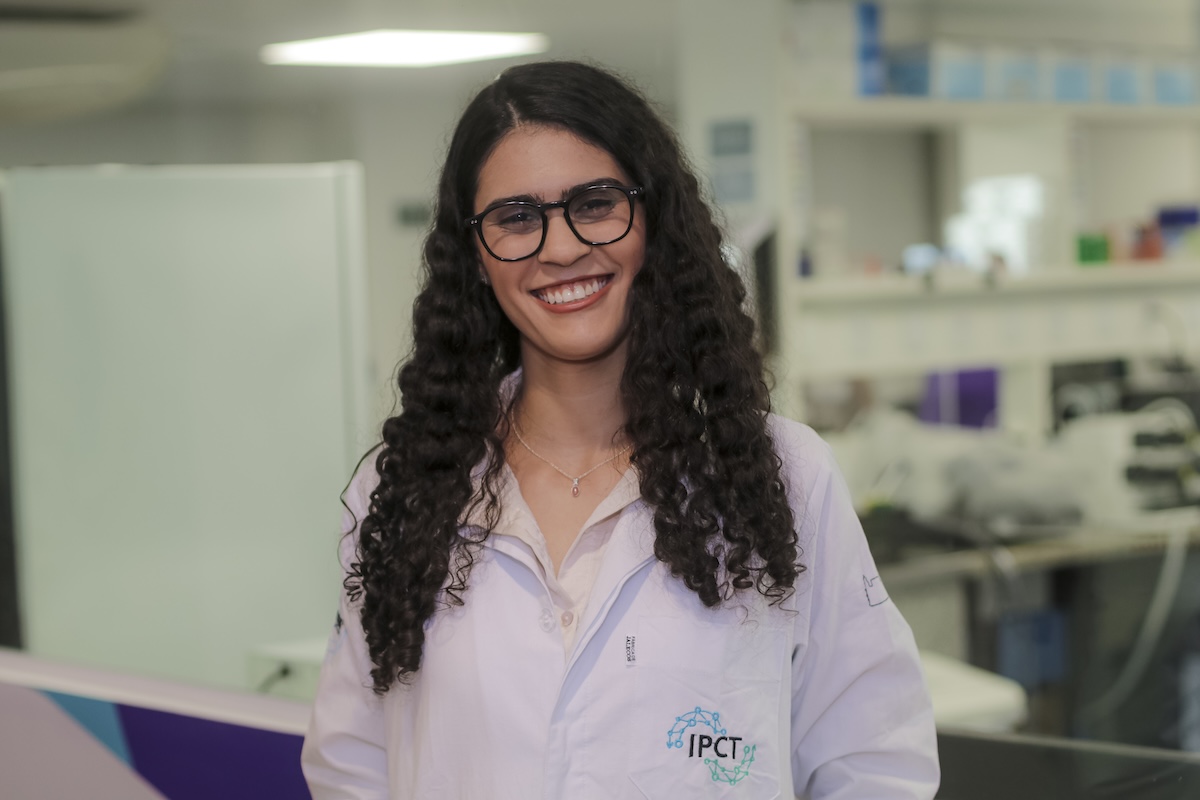 "In Brazil, patient care consumes almost all of a physician’s working hours, leaving research to be carried out on a 'second shift'," says Dr. Beatriz Barreto-Duarte of Fiocruz | Image: Personal Archive
“We need to understand that investing in the physician-scientist career is not a cost—it’s a development strategy,” says physician and researcher Dr. Beatriz Barreto-Duarte of the Clinical and Translational Research Laboratory at the Oswaldo Cruz Foundation (Fiocruz) in Bahia.
Having earned a doctorate in clinical medicine from the Federal University of Rio de Janeiro (UFRJ), Duarte has developed a career that combines medical practice and scientific research—no small decision, especially among younger professionals.
In low- and middle-income countries, the challenge of pursuing a dual career is even greater, according to an article published in PLOS Global Public Health by Duarte and other authors from Brazil and South Africa in 2025.
The article suggests that although physician-scientists (professionals who combine clinical practice with scientific research) are essential for translating scientific evidence into patient care improvements, the path to becoming a physician-scientist in low- and middle-income countries is extremely difficult.
The obstacles include long and arduous training, medical curricula that do not emphasize research or evidence-based medicine, and inadequate financial incentives.
The study also highlights a significant underrepresentation of women, who face challenges such as balancing their career and motherhood and a lack of supportive policies.
As a result, professionals capable of integrating clinical reasoning with scientific investigation are particularly rare in the very context where they could generate the greatest impact.
“Physician-scientists play a key role in transforming everyday clinical observations into research questions capable of guiding more effective public policies,” says Duarte, who is also head of the Institute for Research on Priority Populations (IRPP), a group associated with the MONSTER Institute in Bahia.
Over the course of her career she has received several distinctions, including the title of junior researcher from Regional Prospective Observational Research for Tuberculosis (RePORT) International, an honorable mention from the Carolina Bori Award for Women in Science (Girls in Science category), and a research grant from the US-based Civilian Research and Development Foundation (CRDF) Global.
For Duarte, investing in the training of physician-scientists means investing in concrete results: measurable impact, sustainable innovation, and a smarter, more responsive healthcare system. “When we demonstrate in practice what science can achieve, no one doubts its value anymore,” she says.
In an interview with Science Arena, the physician and researcher discusses the structural obstacles of the dual career, the role of evidence in formulating public health policies, and the importance of strengthening more equitable, collaborative, and sustainable research networks.
Science Arena – What are the main personal and institutional challenges in balancing clinical practice with research?
Beatriz Barreto-Duarte – The biggest challenge is the lack of time. In Brazil, patient care consumes almost all of a physician’s working hours, leaving research to be carried out on a “second shift” at night or on weekends.
This leads to burnout and stops physicians from being able to continue with their scientific career. There is also very little infrastructure and almost no institutional incentive.
[CITAÇÃO DESTACADA] We still treat physician-scientists as exceptions, rather than as an essential part of the healthcare system.
Your article states that the system still prioritizes “eminence” over “evidence.” How does this manifest in daily practice?
Medicine is still largely guided by hierarchies and traditions, and this is reflected in both patient care and research. Clinical decisions and even health policies are often made based on prestige, seniority, or the opinion of someone “with a name” rather than on the best available scientific evidence.
This culture allows outdated practices to persist simply because “that is how it has always been done,” creating an environment where questioning anything is seen as disrespectful.
It takes courage for young physicians or scientists, especially women, to propose new ideas, even when they are backed by science. This emphasis on authority over data is one of the greatest obstacles to the development of evidence-based medicine, because it prevents science from advancing within the healthcare system and drives away professionals who could contribute to innovation.
I believe that authority and experience are extremely valuable, but they need to go hand in hand with continuous learning and a commitment to evidence.
True leadership in science and medicine should not be about who speaks the loudest, but about who seeks the best answers to provide better care.
In Brazil, it is still difficult to secure sustained funding for clinical research. What type of public policy or investment could change that?
Physician-scientists need formal career paths, protected time, and continuous funding, as is already the case in other countries. We currently rely on short and uncertain calls for proposals.
High-quality science requires consistency. The importance of the physician-scientist role needs to be recognized, with transition grants and real integration between universities, hospitals, and the public health system (SUS).
During your research, you identified countries that have managed to advance the physician-scientist career path. Are there any examples that stand out?
In the United States, the National Institutes of Health (NIH) have been offering MD-PhD programs for decades, ensuring scientific training from the undergraduate level, protected research time, and sustained funding.
In the United Kingdom, the National Institute for Health and Care Research (NIHR) funds physicians at different stages of their careers within the healthcare system, ensuring scientific production is closely linked to patient needs.
In low- and middle-income countries, there are also promising models showing that progress is possible even amid scarcity. The Consortium for Advanced Research Training in Africa (CARTA), for example, supports young African scientists through training, mentoring, and institutional support aimed at transforming local universities into sustainable research hubs.
In Latin America, initiatives such as the Latin American Network for Education in Health Research (LANEHR) are attempting to bridge the gap between research and clinical practice, with a focus on developing regional leadership.
Are there any aspects of these models that could be adapted to the situation in Brazil, especially in the public health system and public universities?
Absolutely. In fact, this is one of the most important points. We need to understand that investing in the physician-scientist career is not a cost—it’s a development strategy.
When a country creates the structure, stability, and incentives for physicians to continue producing science within the public system, it becomes cost-effective in the medium and long term.
I often use sports as an analogy: Brazil only started achieving significant results at the Olympic Games when it began offering athletes salaries, infrastructure, and structured training routines. Perhaps it is time we considered something similar for science.
Physician-scientists transform data into real impacts, improve diagnoses, reduce costs, and guide public policy. We need to present these results in a clear and measurable way.
What motivates you to continue conducting research, despite the difficulties?
The purpose. The certainty that science can transform lives. I continue doing research because I believe that every study, every project, and every new piece of evidence can have a real impact: improving care, reducing inequalities, and giving visibility to people who have long gone unheard.
Promoting gender equality in science is also central. Women still face invisible barriers, from a lack of representation to the difficulty of balancing multiple roles.
I want young women scientists to see that it is possible to occupy leadership positions and produce high-level science while remaining true to their values.
Science Arena – What does it take to become a physician-scientist in a low- or middle-income country?
You need a clear sense of purpose, persistence, and the ability to transform clinical practice issues into research questions. It is also essential to build a strong collaborative network to overcome structural limitations, such as a lack of protected research time and funding.
Creativity and social commitment are also important. Above all, finding a good mentor and role model makes the journey much easier and more achievable.
*
This article may be republished online under the CC-BY-NC-ND Creative Commons license.
The text must not be edited and the author(s) and source (Science Arena) must be credited.