 #News
#News
#News
05.08.2026
Cholera: scientists seek more effective vaccine for young children
Article published in NEJM reports that conjugate vaccines can enhance and prolong protection among children under five
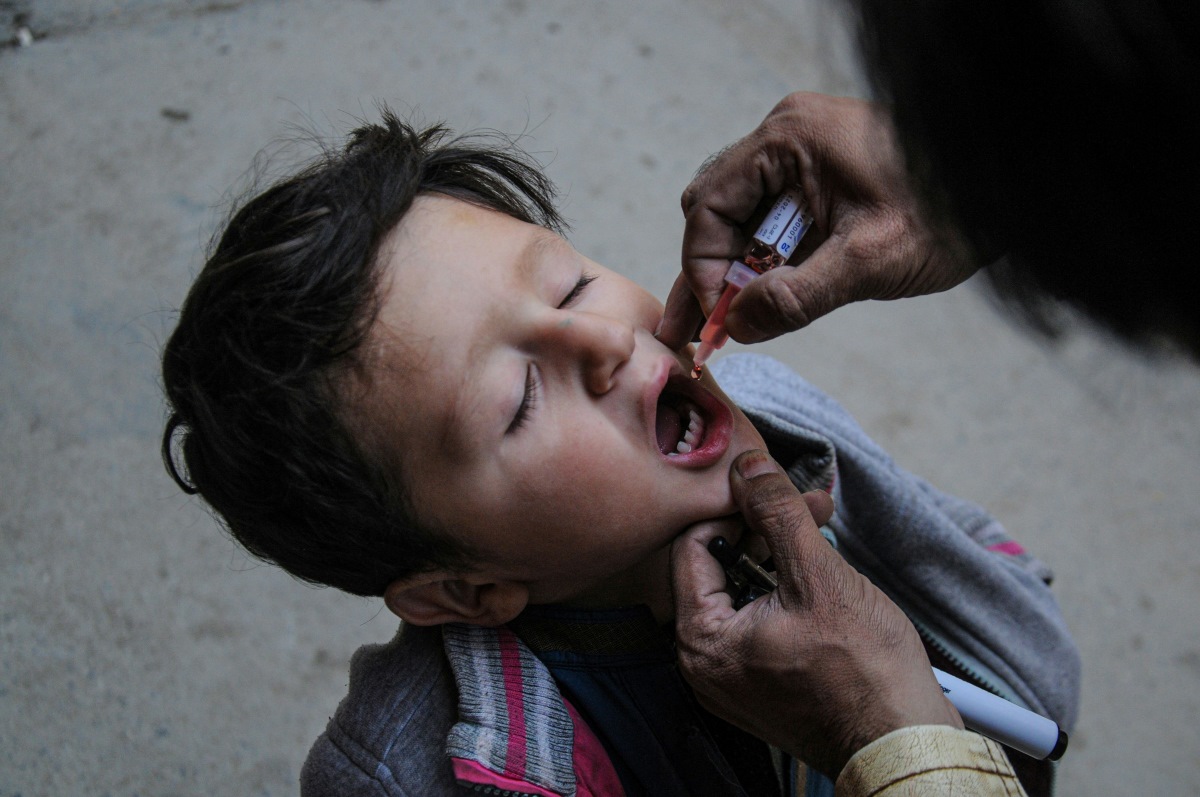 Experts call for the development of more effective and longer-lasting vaccines for children under five, a group that responds less well to the currently available cholera vaccines| Image: Unsplash
Although access to safe drinking water and basic sanitation is essential for eradicating cholera, the current outbreak will only be controlled through the development of more effective vaccines, argues an opinion article published in June in the New England Journal of Medicine (NEJM), coauthored by three infectious disease experts from the USA, Bangladesh, and South Korea.
According to the authors, one of the biggest obstacles to containing the seventh cholera pandemic, ongoing since 1961, is developing effective vaccines for children under five, who respond less well to the oral cholera vaccine (OCV) currently in use.
A study published in 2024 in Nature Medicine showed that around one-third of under-fives in an endemic region of Bangladesh are infected by the bacterium every year.
Among adults, the protection provided by the vaccine is also limited, ranging from 50% to 85% efficacy and lasting a maximum of five years, making it difficult to achieve a long-lasting herd immunity effect.
After being ingested, generally through water or food contaminated with feces, the bacterium Vibrio cholerae adheres to the small intestine and produces cholera toxin, responsible for intense watery diarrhea that can develop within 24 hours.
If left untreated, the infection causes rapid fluid loss, potentially leading to severe dehydration, hypovolemic shock, and death.
OCV is administered orally and stimulates the B lymphocytes, which bind to polysaccharides that coat the surface of the bacterium, conferring partial immunity.
However, the vaccine does not activate T lymphocytes—immune defense cells that recognize protein antigens but do not identify sugars such as bacterial polysaccharides, thus compromising a more robust immune response.
Children under 5 represent the biggest challenge for cholera immunization: the currently available oral vaccine does not activate the immune defense cells required for longer-lasting protection.
The solution: conjugate vaccines
For the article’s authors, the answer lies in conjugating these polysaccharides with proteins capable of inducing T-lymphocyte activity, ensuring a more robust and long-lasting immune response.
The strategy, known as a conjugate vaccine, is already used successfully against other bacteria, such as pneumococcus, which causes severe respiratory infections.
Currently, several research teams are working on the development of conjugate versions of the cholera vaccine.
It is estimated that 120 million doses are needed per year to prevent transmission in endemic areas or areas subject to periodic outbreaks of the disease.
How a conjugate vaccine works
-
1. Isolation of the polysaccharide
-
The O-specific polysaccharide (OSP) that coats the surface of the bacterium Vibrio cholera is extracted.
-
2. Conjugation with a carrier protein
-
The polysaccharide is chemically linked to a protein (such as fragments of tetanus toxin) recognized by T lymphocytes.
-
3. Activation of a dual immune response
-
The carrier protein recruits T lymphocytes, which help B lymphocytes produce a stronger, longer-lasting antibody response.
-
4. Formation of immunological memory
-
Unlike the current oral vaccine, the response to the conjugate vaccine generates memory cells, extending the duration of protection, including in young children.
A pandemic with no signs of slowing down
According to the authors of the NEJM article, the current cholera pandemic, now endemic in around 50 countries, is unlikely to subside any time soon.
There are millions of new cases and tens of thousands of deaths each year, concentrated mainly among the poorest populations and those without access to safe drinking water and sanitation.
Genomic microbiological analysis suggests that the current pandemic has spread in repeated waves of global dissemination, generally originating in the Bay of Bengal, in the Indian Ocean.
This region contains an endemic environmental reservoir of the bacterium, which lives freely in the brackish river water and feeds on plankton without necessarily infecting people.
Because it inhabits the natural environment, Vibrio cholerae cannot be eradicated; the only way to prevent the disease is by preventing its passage from the water to human beings.
Water and sanitation remain essential
Over the past decades, the main international strategy for combating cholera has been to expand access to safe drinking water, basic sanitation, and hygiene practices, an approach known internationally by the acronym WASH, (from water, sanitation, and hygiene).
According to the World Health Organization (WHO), at least 2 billion people still lack access to safe drinking water, while over 3 billion live without adequate sanitation, around 350 million of whom have no suitable toilet facilities.
The World Bank estimates that investments of around US$1.4 trillion (R$7.5 trillion), six times the amount currently invested, are needed to meet the WHO Sustainable Development Goals for water and sanitation by 2030.
Over the next 50 years, the global population is expected to grow from around 8 billion to 10 billion people, an expansion concentrated in African and Asian countries where cholera is endemic and access to water is limited, a scenario likely to favor proliferation of the bacterium.
The fight against cholera will depend on a combination of two complementary strategies: expanding universal access to safe drinking water and basic sanitation, and developing more effective vaccines, especially for young children.
For the authors, it is this combination, and not just one of the two approaches in isolation, that may, in fact, bring the seventh cholera pandemic to an end, more than sixty years after it began.
*
This article may be republished online under the CC-BY-NC-ND Creative Commons license.
The text must not be edited and the author(s) and source (Science Arena) must be credited.