 #News
#News
#News
31.07.2026
Designer proteins mark new era in biotechnology
Artificial intelligence and computer modeling are accelerating the search for molecules able to bind to specific biological targets
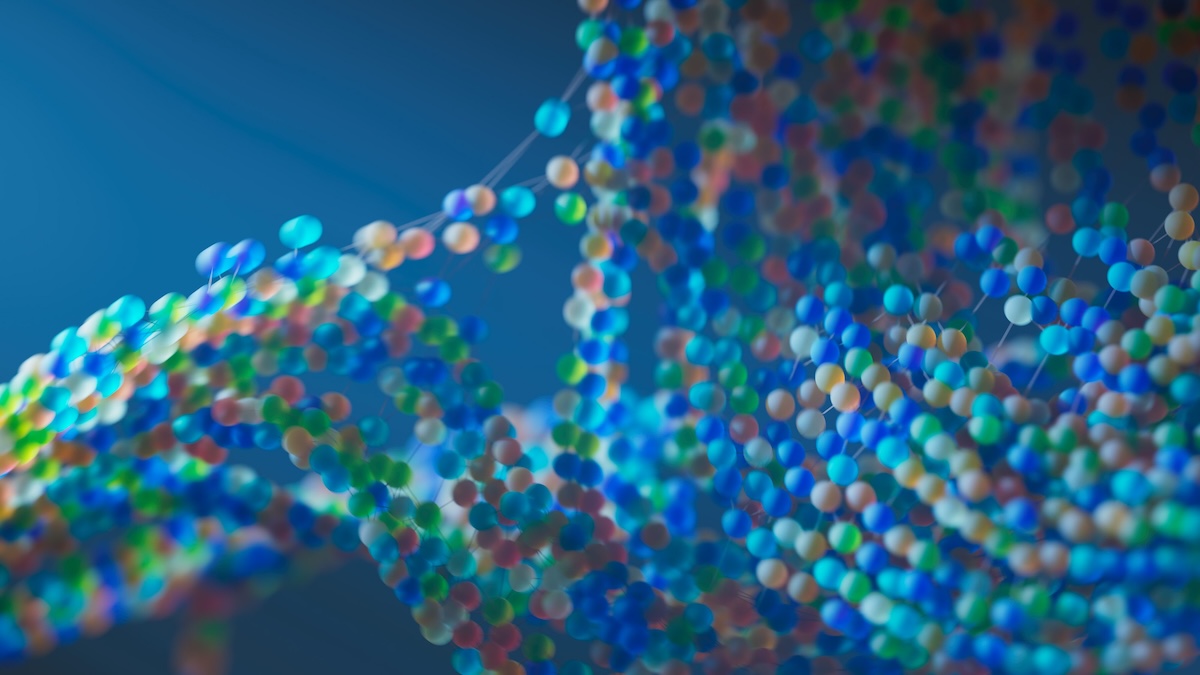 Advanced software tests billions of amino acid combinations to find the sequence most likely to fold into the ideal three-dimensional structure—a key step in AI-driven new protein design. | Image: Pexels
For millennia, humanity’s relationship with biology was largely one of observation and adaptation. When medicine needed a compound to treat a disease, naturalists and scientists searched plants, fungi, and bacteria in the hope of discovering a useful molecule shaped by evolution.
That paradigm is rapidly changing. Driven by computational tools and artificial intelligence (AI), the field of de novo protein design has ushered biotechnology into a new industrial era: scientists can now seek tailored solutions for different biological problems.
This shift in thinking gained global recognition in 2024, when the Nobel Prize in Chemistry honored biochemist David Baker for pioneering protein design, alongside Demis Hassabis and John Jumper for their breakthroughs in predicting three-dimensional protein structures.
Rather than starting with a naturally occurring protein and attempting to modify it—often a slow and imprecise process —researchers first define the biological function they want a molecule to perform and then design the optimal protein structure from scratch.
The lock-and-key principle behind protein design
To understand this shift, we need to revisit the basic role of proteins. Simply put, proteins function much like a lock and key: they act by fitting precisely with other molecules.
If the “lock” is a receptor on a virus or a tumor cell, the scientific challenge lies in designing the exact “key” needed to block or activate it.
In protein design, amino acids serve as virtual building blocks. Advanced software evaluates billions of possible combinations to identify the chemical sequence capable of folding into the precise three-dimensional structure required to form the ideal “key.”
“The only real limitation in protein design is your imagination, because the range of possibilities is vast,” said Helder Veras, a researcher at the Brazilian Center for Research in Energy and Materials (CNPEM) in an interview with Science Arena.
AI is shortening development timelines
In the past, finding these solutions required decades of painstaking laboratory work. Today, algorithms such as RoseTTAFold and other AI-based systems have dramatically accelerated the process.
These tools do not replace laboratory experiments, but serve as ultrafast filters, narrowing billions of candidate molecules to a manageable pool of roughly 1,000 to 10,000 variants with genuine functional potential.
This automation has addressed one of the field’s greatest bottlenecks—and one of science’s more broadly: time.
Research groups that once devoted an entire PhD project to generating a single novel antibody can now design hundreds of new proteins each year.
A constraint once imposed by biology itself appears to have been overcome, ushering in the era of tailor-made molecules.
*
This article may be republished online under the CC-BY-NC-ND Creative Commons license.
The text must not be edited and the author(s) and source (Science Arena) must be credited.