 #News
#News
#News
01.07.2026
El Niño 2026 raises concerns in Brazil
Technical note predicts a high likelihood of the phenomenon developing in the second semester, putting extreme heat, droughts, flooding, and Brazil’s public health preparedness in the spotlight.
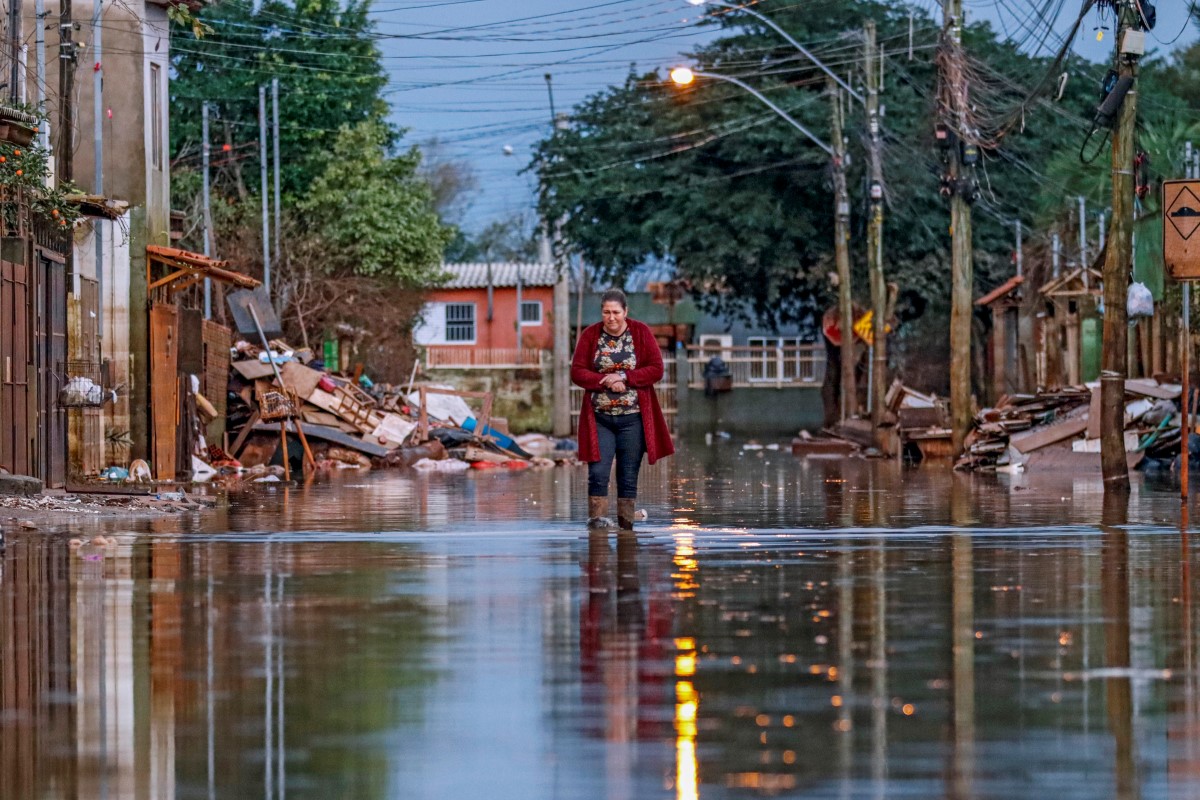 Flooded street in Rio Grande do Sul during the 2024 inundations. A technical report issued by INPE and partner institutions warns that the El Niño event forecast for the second half of 2026 could increase the likelihood of above-average rainfall in southern Brazil, raising the risk of storms and flooding while underscoring the need for preparedness across the country's healthcare system, civil defense agencies, and urban infrastructure. | Image: Bruno Peres/Agência Brasil
The likelihood of an El Niño event developing in the second half of 2026 has raised concerns across multiple sectors in Brazil, including public health. A joint technical note released Tuesday (June 30) by Brazil’s National Institute for Space Research (INPE), the National Institute of Meteorology (INMET), the Ceará State Foundation for Meteorology and Water Resources (FUNCEME), and the Amazon Protection System Management Center (CENSIPAM), estimates a greater than 95% probability that the phenomenon will develop and persist over the coming months, potentially extending into early 2027.
Although its intensity remains uncertain, the report points to favorable conditions for a strong to very strong event, particularly from the late southern hemisphere winter (July/August) onward. El Niño is the warm phase of the El Niño‒Southern Oscillation (ENSO) phenomenon, characterized by anomalous warming of surface waters in the equatorial Pacific Ocean.
This shift alters atmospheric circulation, moisture transport, and rainfall and temperature patterns in different parts of the world. In Brazil, the technical report projects distinct regional impacts:
- A trend toward below-average rainfall across the North and parts of the Northeast;
- A greater likelihood of above-average rainfall in the South;
- More variable effects in the Southeast and Central-West, including rising temperatures and a greater likelihood of more frequent and prolonged heatwaves.
The term “super El Niño” has been used in public discourse to describe exceptionally intense events, but the World Meteorological Organization (WMO) notes that the term is not part of its official operational classification system.
According to a statement released on June 2 by the agency, there was an 80% probability that El Niño would develop between June and August 2026, with a 90% or higher likelihood of the phenomenon persisting through at least November.
Health impacts
In the Brazilian report, public health is identified as one of the sectors likely to be affected by climate extremes associated with the phenomenon. Although the document does not provide specific epidemiological projections, it notes that extreme weather events can disrupt water supplies, food security, mobility, and public health.
In the nine-state Legal Amazon region, falling river levels could hinder access to essential services—including healthcare—for riverside and remote communities.
Higher temperatures and low humidity could also increase the risk of wildfires across the North, Northeast, and Central-West regions. In Southern Brazil, above-average rainfall may heighten the risk of flooding.
Brazil’s response to these public health challenges is already taking shape. On June 30, the Ministry of Health announced an expansion of the National Health System’s nationwide response force (Força Nacional do SUS), with eight new operational bases strategically located across the country.
According to the ministry, the teams will be able to reach any emergency within 12 hours and begin an appropriate response within 72 hours. The package was introduced as part of broader efforts to strengthen SUS capacity to respond to the impacts of El Niño and other extreme weather events.
The measures also include establishing Health and Climate Information Centers in each of Brazil’s five geographic regions, along with the launch of the National Panel for Monitoring and Forecasting Excess Heat and Health Equity.
The centers are designed to integrate epidemiological, demographic, socioeconomic, and climate data to monitor risks in real time, issue early warnings, and support decision-making by health authorities and healthcare professionals.
The panel, in turn, provides daily forecasts for all 5,570 Brazilian municipalities up to five days in advance, cross-referencing meteorological data with socioeconomic vulnerability indicators.
Climate anxiety and extreme heat
The issue also aligns with others previously covered by Science Arena. In a feature on extreme heat, researchers explained that high temperatures can overwhelm the body’s thermoregulatory mechanisms, increase cardiovascular risk, worsen respiratory conditions, and disproportionately affect older adults, children, people with chronic illnesses, pregnant women, outdoor workers, and athletes.
Another feature explored climate anxiety, highlighting how droughts, floods, wildfires, and the perceived threat of environmental change can take a toll on mental health, particularly among young people and socially vulnerable populations.
Integrating data
Preparations for El Niño also underscore the importance of integrating climate science, epidemiological surveillance, and health data systems.
In an interview with Science Arena, Alan Dangour, director of Climate and Health at the Wellcome Trust, advocated for the development of digital platforms capable of integrating climate and health data to predict disease risks and support faster, more targeted public health responses.
This approach is also reflected on the Mayo Clinic Platform, which brings together institutions including the Einstein Hospital Israelita and the Seoul National University Hospital to make health data interoperable using advanced analytics and artificial intelligence.
As Science Arena previously reported, one of the initiative’s central goals is to combine health and meteorological data to support international networks focused on climate-related infectious disease surveillance, the health impacts of extreme heat, and the sustainability of healthcare systems.
*
This article may be republished online under the CC-BY-NC-ND Creative Commons license.
The text must not be edited and the author(s) and source (Science Arena) must be credited.