 #News
#News
#News
06.07.2026
In vivo CAR-T: therapy produces anti-cancer cells in the body
Experimental approach uses viral vectors and nanoparticles to reprogram immune cells directly within the body, eliminating the need to manufacture cells in a lab
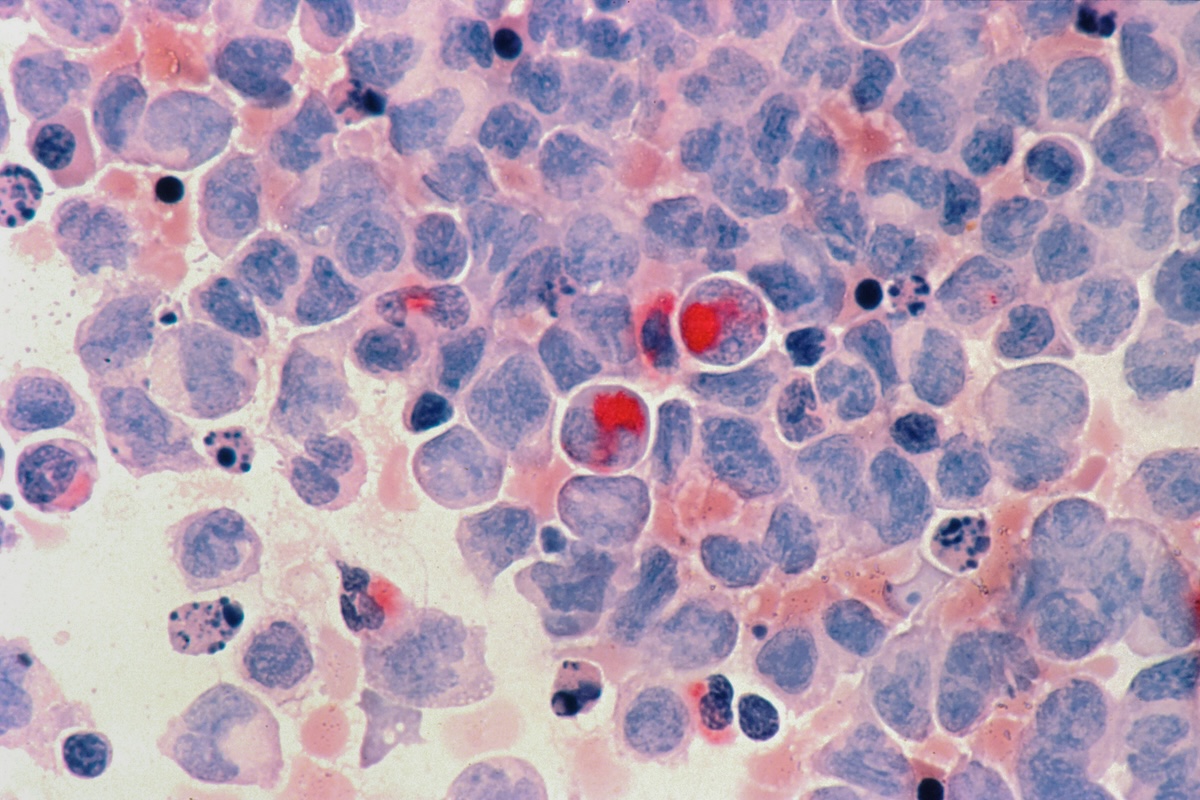 Conventional CAR-T therapy has proven successful at improving blood cancer survival rates, but cell production still requires lab work that scientists are seeking to eliminate with in vivo approach | Image: National Cancer Institute/Unsplash
Therapies using CAR-T cells (T lymphocytes modified to express a chimeric antigen receptor) have proven capable of increasing survival and progression-free time in patients with blood cancers.
Currently, all approved CAR-T products are manufactured outside the patient’s body in a process known as ex vivo production: T cells are collected from the patient’s blood, activated and genetically modified in a laboratory to express CARs, expanded, and then reinfused into the body.
Despite the clinical benefits of the process, there are some well-known limitations, including long manufacturing times, short product shelf life, the need for prior chemotherapy to reduce the patient’s immune cells (known as lymphodepletion), and high costs.
One alternative currently under development is the production of CAR-T cells directly within the patient’s body, an approach known as in vivo production.
Several strategies are being tested for generating CAR-T and other immune cells directly within the body, with preclinical findings suggesting that the approach could open a new pathway for cancer immunotherapy.
This is the conclusion of a literature review published in the journal Cancer Research by researchers from City of Hope National Medical Center and the University of California, Irvine (UC Irvine), who analyzed current strategies for in vivo engineering of CAR immune cells.
The review focused on the types of vectors used and the methods employed to target genetic modification at specific cell types.
Incipient technology
According to the authors, the technology is still in its early stages: the first human clinical trials using the strategy were carried out recently, involving cases of relapsed or refractory multiple myeloma and severe systemic lupus erythematosus resistant to conventional treatments.
Challenges related to the accurate, safe, and efficient delivery of CAR genes still need to be overcome.
One of the main obstacles is the absence of lymphodepletion. Without this preparatory step, used in conventional therapies to stimulate CAR-T cell expansion and reduce tumor burden, cells generated directly within the body may find it more difficult to expand and remain active for a sufficient time.
Even so, studies in non-human primates have produced encouraging results.
In one, a single infusion of a lentiviral vector targeting the CD3 protein, found on the surface of T lymphocytes, was able to stimulate the expansion of CAR-T cells in the body and maintain B-cell depletion for up to ten weeks, without the need for prior lymphodepletion.
Another promising aspect of the technology is its potential for reprogramming immune cell types that are currently difficult to manipulate using conventional lab techniques, such as short-lived neutrophils, innate lymphocytes, and specialized dendritic cell subtypes.
These cells play important roles in immune system regulation and disease progression but have remained beyond the reach of traditional CAR platforms.
Safety under review
One concern regarding these therapies is their toxicity, which varied across the clinical trials analyzed by the authors. In a study involving a candidate known as ESO-T01, developed for multiple myeloma, all four patients experienced acute reactions after infusion.
Three patients required vasopressor medication to stabilize blood pressure and three developed grade 3 cytokine release syndrome (CRS), a potentially severe inflammatory condition associated with CAR-T therapies. All cases, however, were successfully managed with glucocorticoids.
In a trial of experimental therapy HN2301, designed for refractory systemic lupus erythematosus, no severe cases of CRS or immune effector cell-associated neurotoxicity syndrome (ICANS) were reported among the five patients treated.
Some experienced increases in inflammatory markers such as C-reactive protein and interleukin-6, three of whom were given tocilizumab to manage mild CRS symptoms.
According to the authors, the findings suggest that although infusion-related toxic effects may occur with in vivo CAR-T therapies, they tend to be manageable with currently available medical interventions and do not, for now, appear to represent a major barrier to the technology’s advancement.
The advancement of therapies that produce CAR-T cells directly within the body depends upon the development of more precise genetic delivery methods, strategies to improve treatment safety, and approaches capable of prolonging the functionality of modified T cells, the authors wrote.
The researchers argue that as in vivo CAR-T therapies progress onto new clinical trials, it will be essential to establish robust regulatory frameworks and ethical guidelines to ensure the safe and effective incorporation of these innovations into clinical practice and, in the long term, expand access to more patients.
How are CAR-T cells produced?
-
1. Ex vivo (currently approved model)
-
T cells are harvested from the patient’s blood, activated and genetically modified in a lab to express the CAR receptor, then expanded and reinfused—a process that can take weeks and requires prior chemotherapy (lymphodepletion).
-
2. In vivo using viral vectors
-
Modified viruses (such as lentiviral vectors) are injected directly into the patient and deliver the CAR gene to T cells already circulating in the body, without the need for blood sampling or expansion in a lab.
-
3. In vivo using nanoparticles
-
Lipid nanoparticles carry messenger RNA molecules containing CAR instructions and deliver them to T cells within the body, leading to temporary expression of the receptor. This approach is particularly useful for autoimmune diseases, for which a permanent effect is not always needed.
-
4. No lymphodepletion required
-
By making use of the patient’s existing T cells, the in vivo approach eliminates the preparatory chemotherapy step used in conventional treatment—at least among those currently being studied.
-
5. Safety monitoring
-
Because the technology is new, participants in ongoing clinical trials are being closely monitored for infusion-related reactions and signs of excessive inflammation.
*
This article may be republished online under the CC-BY-NC-ND Creative Commons license.
The text must not be edited and the author(s) and source (Science Arena) must be credited.