 #News
#News
#News
18.05.2026
From single cells to precision medicine
Using single-cell RNA sequencing, the Human Cell Atlas is redefining our understanding of human cellular diversity and opening new doors for precision medicine
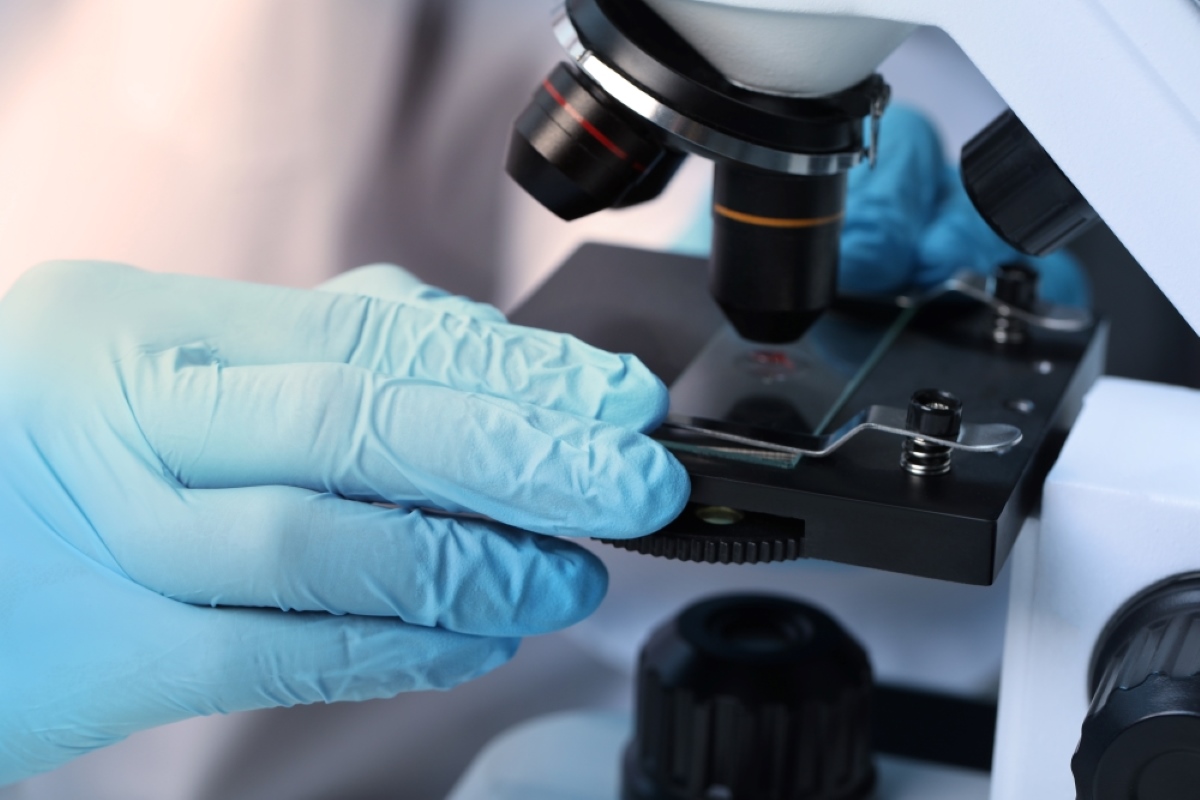 The Human Cell Atlas’s greatest potential lies in redefining our understanding of the human body from the perspective of cellular and molecular diversity, with profound implications for biomedical research, diagnostics, and personalized therapies. | Image: Shutterstock
The development of single-cell RNA sequencing has had a dramatic impact on biology research, allowing for a detailed analysis of which genes are active in each individual cell.
Although nearly every human cell contains the same DNA, each expresses a specific combination of genes, producing different proteins and carrying out distinct functions in the body.
Since 2010, advances in single-cell sequencing technology have made it possible to map the cellular diversity of human tissues with unprecedented precision. In 2016, a global consortium called the Human Cell Atlas began using the technique to catalog all the cells in the human body, establishing a molecular reference map of healthy cells.
Studies of single cells revealed a much greater heterogeneity than previously thought. Even single tissues carry distinct cellular subpopulations that are morphologically identical but perform specialized functions.
The project, featured in a 2024 Science Arena report, uses single-cell RNA sequencing to identify gene expression patterns, thereby classifying cells by molecular affinity rather than solely by traditional anatomical criteria.
Accessible data
Conceived as an open science initiative, the project makes its data freely available to scientists and physicians worldwide, establishing an international collaborative infrastructure that covers bioinformatics, cell biology, and translational medicine.
By 2024, the consortium comprised thousands of researchers from over a hundred countries, including Brazil, where molecular biologist Patricia Severino, one of the project’s representatives in Latin America, leads the project at Einstein Hospital Israelita, focusing on cancer biology.
“Collaboration among Latin American researchers has yielded strong results, including the so-called Single Cell Notebooks, which aim to democratize access to training in single-cell analysis and spatial transcriptomics through free multilingual educational materials available on an open and reusable platform, contributing at a global scale,” says Severino.
This scientific collaboration resulted in an article, published in Nature Genetics in May of this year, describing how reducing language and technology barriers improves global capacity building and fosters more inclusive and equitable genome research.
Working together
Across various countries, this collaborative network has strengthened scientific capabilities not only by expanding sample collection, but also by training teams in sequencing, computational analysis, and biomedical innovation.
“Technological capacity has advanced rapidly, increasing from a few hundred cells sequenced per experiment to tens of thousands possible today,” says Patricia Severino.
As a result, the project faces new challenges related to the storage, standardization, and processing of massive volumes of biological data.
According to Severino, the Atlas’s primary scientific value lies in creating a reference map to offer insight into physiological cellular states and use comparisons to detect changes associated with diseases.
Advances in the research are expected to lead to increasingly precise molecular diagnoses and the identification of new therapeutic targets, paving the way for personalized treatments, including a better understanding of metastasis and breakthroughs in the treatment of neglected infectious and tropical diseases.
Biomedical impact
During the COVID-19 pandemic, data from the Human Cell Atlas helped identify cells expressing the ACE2 receptor, contributing to research on infection mechanisms and highlighting potential treatments.
The project has also strengthened scientific capabilities in regions such as Latin America and Asia, not only by expanding sample collection, but also by training teams in sequencing, computational analysis, and biomedical innovation.
Globally, the project has already mapped more than 70 million cells from more than 11,000 donors, supporting 530 projects at more than 1,900 research institutions across 103 countries.
However, its greatest potential lies in redefining our understanding of the human body from the perspective of cellular and molecular diversity, with profound implications for biomedical research, diagnostics, and personalized therapies.
Since 2025, the Atlas has been working in partnership with UNESCO to promote open science and improve access to the benefits of genomics on a global scale.
“At the cellular level, we already understand why some patients or populations resist certain treatments,” Severino points out. This shows that the data generated by the project are already being used for practical applications, she says.
“There are no clinical trials yet, but the accumulated knowledge could also be used for that type of development.”
The biggest challenges currently faced by the project include integrating and managing data obtained in different countries, which would reduce technology costs, increasing representation of the global population, and expanding potential clinical applications.
Although genetic diversity has been a concern since the early stages, the consortium now has a group dedicated to equity and diversity to ensure that diverse populations are studied using data that reflect their specific genetic backgrounds, something that is often lacking in Latin America.
Computational studies
After characterizing healthy cells, the Atlas researchers are now seeking to understand why morphologically similar cells behave differently in different parts of the same tissue—a question considered fundamental to the development of new treatments and medications.
Virtual cells—AI-assisted computational models that simulate the functioning of real cells—are being used with the data generated so far to identify patterns that traditional analysis techniques have missed.
“Virtual cells allow us to analyze large volumes of biological data and study how genes contribute to disease without needing to conduct so many laboratory experiments, which can greatly reduce the cost and time needed to develop new drugs,” says the Einstein researcher, who believes that the ecosystem surrounding this technology will make precision medicine even more precise.
In one study now in its final stages, the Latin American team is building a cellular map of gene-expression profiles for healthy immune cells from diverse Indigenous and mixed-ancestry populations in the Americas. The results are set to be published in the second half of 2026.
The Atlas also organizes its work around “biological networks,” progressively releasing preliminary datasets, continuously updated as new donors and populations are added.
Annotations of cell types and states are improved over time, while the use of AI-based data harmonization is on the rise.
After a decade of research, the Human Cell Atlas will hold its annual meeting in Boston, USA, in June, focusing on the impact of its studies on global health and medicine, and emphasizing how scientists and physicians can use AI to benefit patients worldwide.
*
This article may be republished online under the CC-BY-NC-ND Creative Commons license.
The text must not be edited and the author(s) and source (Science Arena) must be credited.