 #News
#News
#News
07.05.2026
Experienced researchers frequent among authors in predatory journals
Pressure to publish and loopholes in Qualis favor journals that forgo peer review and guarantee quick publication
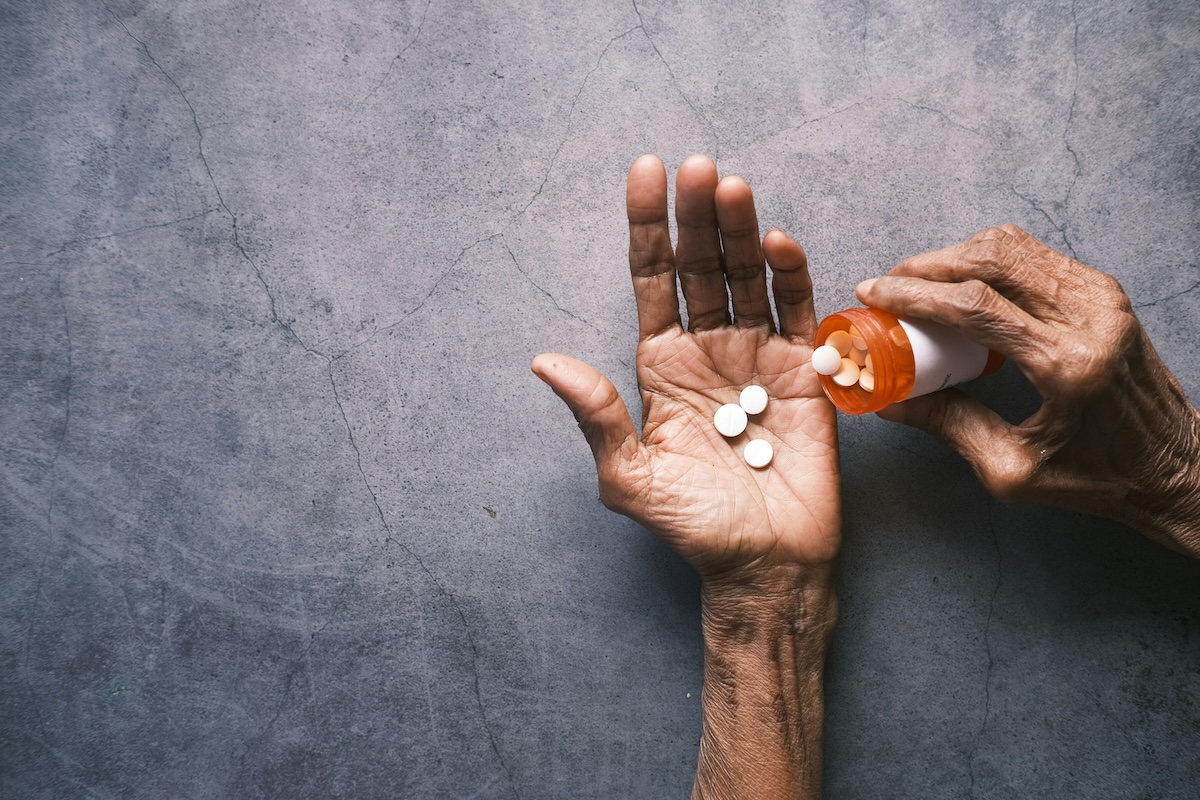
 Amid pressure for output and the ease of getting published in predatory journals, many researchers end up submitting manuscripts to publications of questionable quality | Image: Unsplash
Between January 2024 and November 2025, a Brazilian scientific journal published 7,138 articles, an average of 300 manuscripts per month. According to Jesús Mena-Chalco, a professor at the Federal University of ABC (UFABC), a high volume of publications, publication fees, and an aggressive policy of soliciting submissions by email are characteristics of predatory journals. The name of the journal is not disclosed in this report at the request of the researcher, for fear of retaliation.
The most relevant finding of Mena-Chalco’s analysis, however, is not the volume of articles published, but the profile of their authors. PhDs account for around 35% of the journal’s authors, a higher percentage than masters (17%) and bachelors (12%).
Furthermore, 82% of the published manuscripts had at least one PhD among their authors. “They are not inexperienced,” says the professor at UFABC.
How to verify whether a journal is predatory
Accurately defining what constitutes a predatory journal is not a simple task. One of the first responses from the scientific community was to create “blocklists,” but the approach has its limitations. “What are the criteria, and who defines them? In some of these lists, you might find a journal from an emerging country that may not be the best publication or not have the best website, but it is not trying to deceive anyone,” says Lorraine Estelle, a collaborator with the Think.Check.Submit initiative.
The initiative chose a different approach: a guide with questions to help researchers evaluate a journal before submitting a manuscript. If the answer to most of the questions is yes, the likelihood of it being a predatory journal is low.
Think.Check.Submit CHECKLIST
-
Question 1
-
Do you or your colleagues know the journal?
-
Question 2
-
Can you easily identify and contact the publisher?
-
Question 3
-
Is the journal clear about how the peer review process works?
-
Question 4
-
Are articles indexed and/or archived in dedicated services and databases?
-
Question 5
-
Is it clear what fees will be charged?
-
Question 6
-
Are guidelines provided for authors on the publisher website?
-
Question 7
-
Is the publisher a current member of initiatives or organizations in the field of scholarly publishing?
“We always think that early-career researchers may be more vulnerable. But there have already been cases of high-level academics who have contacted us and said: ‘I was tricked. I published in a predatory journal’,” says Estelle.
Author profile contradicts predominant perception
The idea that predatory journals mainly attract novice researchers is backed by scientific literature, but is has been challenged by more recent studies.
A 2015 article analyzing 324 manuscripts in seven journals considered predatory concluded that most of the authors were ”young and inexperienced researchers from developing countries.” Later analyses reached different conclusions.
Another study, which examined over 2 million Brazilian publications between 2000 and 2015 and cross-referenced data from the Lattes platform with information from bibliometric lists and indexes, such as the Directory of Open Access Journals (DOAJ), the Journal Citation Reports (JCR), and the Scimago Journal & Country Rank (SJR), identified significant participation by experienced scientists in predatory journals.
The conclusion: the longer the interval between the PhD defense and the publication date, the greater the probability that the article was published in a fraudulent journal.
Marcelo Perlin, a professor at the Federal University of Rio Grande do Sul (UFRGS) and coauthor of this latest study, acknowledges that it is still difficult to identify the exact profile of authors who publish in predatory journals, but highlights pressure and incentives as central factors.
“In Brazil, experienced researchers are often under pressure to maintain high levels of output to secure productivity grants and funding, while also dealing with heavy bureaucracy and teaching loads. Predatory journals—which offer rapid and guaranteed publication—can end up acting as an escape valve for maintaining the metrics required by the system,” Perlin explains.
Mena-Chalco, of UFABC, suggests that the pressure begins as early as during graduate studies. “In many graduate programs, students need to demonstrate that they have published in a journal before being able to defend their dissertation,” he explains. “In general, publishing in prestigious journals takes time and rarely happens on the first attempt. Therefore, faced with this pressure and the ease of publishing in predatory journals, individuals submit manuscripts to this type of publication.”
Risks to science and gaps in regulation
The proportion of predatory publications in Brazil is still low. In the study by Perlin, it did not reach 1% of total national publications. But Fhillipe Campos, a researcher at the Brazilian Institute of Information in Science and Technology (IBICT), warns that the problem should not be measured solely by volume.
“For example, the lack of peer review [an essential stage in the evaluation of manuscripts, waived by most predatory journals] represents a direct risk to the integrity of scientific production,” he warns.
“It may be that just a few predatory journals handle a large number of articles precisely because of the ease of accepting submissions. This could be a problem,” adds André Appel, also from IBICT.
The sector is essentially self-regulated by the scientific community, according to Campos. In Brazil, Qualis—the journal evaluation system maintained by the Brazilian Federal Agency for Support and Evaluation of Graduate Education (CAPES)—was intended to function as a quality filter. However, the system has shown flaws.
The historical Qualis model prioritized the volume of publications and used bibliometric databases, such as Scopus and Google Scholar to measure impact. Predatory journals that publish a lot of articles could therefore accumulate favorable metrics.
The journal analyzed by Mena-Chalco exemplifies this: according to information published on the journal’s website, it received an A2 classification, the second-highest tier in Qualis, in the evaluation for the 2017–2020 four-year cycle.
Consulted for the report, CAPES acknowledged that the historical model was based on past practices related to each evaluation cycle, and admitted to the growing difficulty of separating legitimate journals from predatory ones, given that “journals from the same publishing group behave very differently in terms of editorial practices.”
Since 2025, the model has been revised. The new Qualis focuses on the quality of articles, rather than journals. Publications in journals with predatory characteristics, such as the promise of rapid publication, lack of information on peer review, and aggressive marketing, are now automatically classified in category C, the lowest tier.
*
This article may be republished online under the CC-BY-NC-ND Creative Commons license.
The text must not be edited and the author(s) and source (Science Arena) must be credited.