 #News
#News
#News
05.06.2026
Predatory journals exploit pressure on Brazilian researchers to publish
A study of more than a thousand researchers shows how questionable journals exploit the “publish or perish” culture to attract submissions
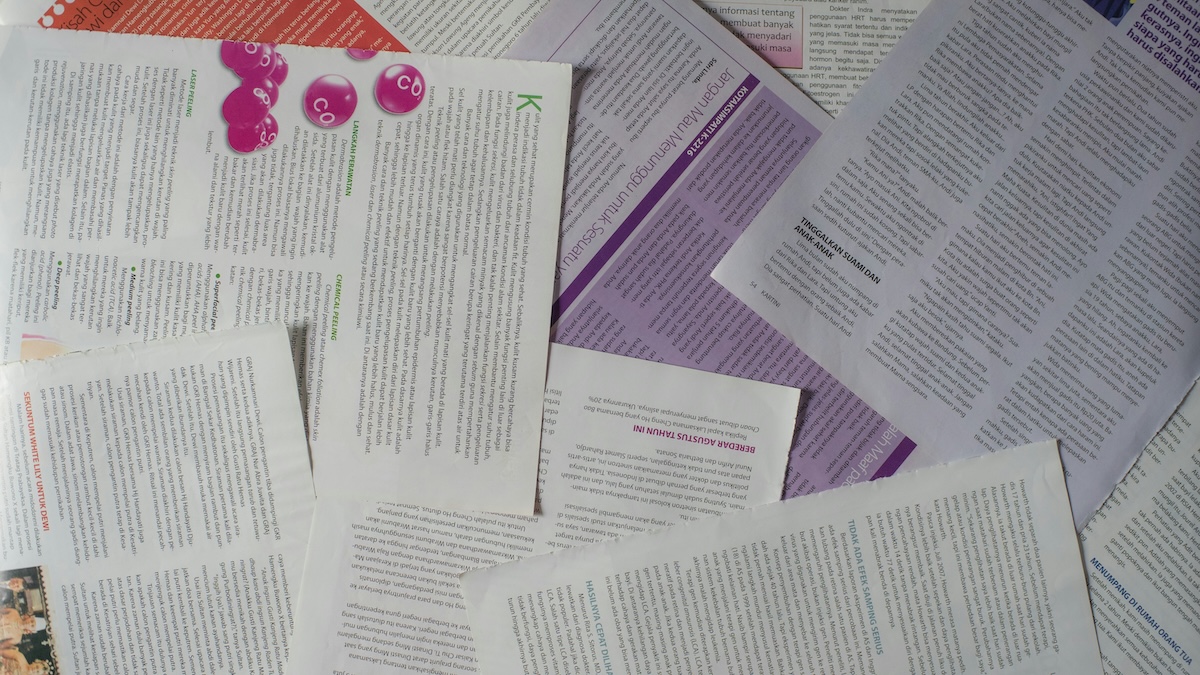
 Researchers working within the “publish or perish” culture are more vulnerable to approaches from predatory journals, which promise rapid publication and inclusion in Qualis | Image generated by AI
“Invitation to publish your valuable research in our high-impact international journal.” “Opportunity for quick publication with guaranteed acceptance.” Messages like these are common in the inboxes of researchers targeted by predatory journals—scientific publications that exploit pressure to publish in order to attract manuscript submissions without subjecting them to proper peer review.
The term was coined in 2010 by US librarian Jeffrey Beall to describe journals that prioritize profit over academic integrity. In practice, these publications charge processing fees without conducting peer review, make false claims about impact factors and indexing, and run aggressive email campaigns to attract submissions.
The consequences extend beyond a researcher’s résumé: studies published in predatory journals can contaminate the scientific literature, as illustrated by the circulation of flawed studies on the use of chloroquine to treat COVID-19.
This market is fueled by the “publish or perish” culture: if they don’t publish scientific articles in academic journals, researchers are unable to advance in their careers.
Predatory journals exploit this structure by offering open access, quick turnaround, and Qualis ratings, a scientific veneer that conceals deficient or nonexistent editorial processes.
A study published in the journal Scientometrics in April 2026 sought to systematically map this phenomenon in Brazil. The study, which the authors describe as the most comprehensive ever conducted on the topic in Brazil, evaluated Brazilian researchers’ perceptions of predatory journals based on three pillars:
- Reasons for publishing in these journals;
- Patterns of awareness of the phenomenon by region;
- The relationship between international experience and the ability to identify suspicious publications.
Pressure to publish and vulnerability
The authors collected 3,067 responses, of which 1,065 were validated after a screening process that verified, through the Lattes Platform of the Brazilian National Council for Scientific and Technological Development (CNPq), that each respondent had at least one formally recorded publication.
The main finding was that researchers who feel pressured to publish have more experience with predatory journals.
Among the 15.3% of respondents who reported having been exposed to predatory journals, the perceived pressure to publish was significantly higher than among those who had never had such exposure.
The study identified important differences by career stage—contrary to what might be expected, senior researchers with PhDs showed greater concern about publication costs (15.1%) compared to master’s degree holders (10.3%) and undergraduates (10.8%).
The authors attribute this to Brazil’s research funding structure: PhD holders tend to occupy leadership positions and are responsible for managing budgets and paying the article processing charges (APCs), while students focus on writing manuscripts.
The concern about institutional metrics (Qualis and impact factor) was uniformly high across all academic degree levels, exceeding 90% at each stage. These findings suggest that the national evaluation system has a leveling effect on the strategic priorities of researchers throughout their careers.
By field, Engineering (76% without institutional support) and Linguistics, Literature, and the Arts (78%) have the highest proportion of researchers who report not receiving guidance from their academic community on how to identify and avoid predatory journals.
Type of institution and regional distribution
Researchers affiliated with federal institutions tend to have more experience with predatory journals than those associated with state or private establishments. Municipal institutions, although representing a small sample in the study, showed the highest percentage of experience with predatory practices (36%).
The study did not find a significant difference between regions of Brazil—a result which, according to the authors, reflects a homogeneous academic landscape shaped by national guidelines such as those of the Brazilian Federal Agency for Support and Evaluation of Graduate Education (CAPES) and the CNPq.
Other factors, such as academic experience, field of study, and institution type, appear to carry more weight than geographical location.
International experience and selection ability
Time spent at overseas institutions makes a difference: researchers with international experience were better prepared to select appropriate journals than those without such exposure.
The type of experience also matters: researchers in PhD exchange programs reported the highest level of awareness of predatory practices, reaching 32% among those who had spent time abroad.
The authors highlight the importance of exchange grants and warn that, even with international experience, some researchers have published in predatory journals, indicating that overseas exposure alone does not eliminate vulnerability. The knowledge acquired abroad should be shared with peers.
The analysis of open-ended responses from researchers who reported having experience with predatory practices revealed the most frequent patterns of approach used by predatory journals.
The most recurrent terms were “persistent invitations” and “repeated emails” from unknown journals, followed by references to article processing charges (APCs) and the use of metrics such as Qualis as a selling point to attract submissions.
Expressions such as “need to publish” and “opportunity to publish” also appeared frequently, showing that institutional pressure is being actively exploited by these journals.
What guides the choice of where to publish
The thematic analysis of open-ended responses about the article submission process (a sample of 819 participants) identified five dominant themes in decision-making in journal selection:
- Speed of the publication process: response time and efficiency are decisive criteria in journal selection, reflecting pressure for quick publishing in evaluation systems that monitor productivity.
- Publishing costs and model: processing charges and open access are structural concerns, especially for researchers outside of institutions with more funding, which may lead them to consider alternative journals, including predatory ones.
- Guidance from peers and mentors: decisions are rarely made in isolation: advisors, professors, and colleagues exert a strong influence on journal selection—which can perpetuate inappropriate practices if the community is not well informed.
- Reputation of the journal and publisher: researchers associate large publishing companies with greater credibility, but this dependence on “established brands” may overshadow legitimate independent journals.
- Thematic alignment and impact factor: Alignment between the article’s topic and the journal’s scope, combined with bibliometric indicators, emerges as a recurring criterion, reflecting the dual pressures of academic evaluation and intellectual relevance.
How to protect researchers from predatory journals
The authors argue that predatory journals always exploit the gaps left open by institutions: insufficient training, a lack of clear policies, and evaluation metrics favoring quantity over quality. As countermeasures, they recommend:
- Workshops on publishing ethics: regular training teaching researchers how to identify warning signs in invitations and suspicious journal submission platforms.
- Clear institutional guidelines: formal policies backed by reference lists such as the Directory of Open Access Journals (DOAJ) and Scimago to guide submissions.
- Including scientific ethics courses in graduate programs: inclusion of content on publishing integrity as a mandatory part of master’s and PhD programs.
- Review of productivity evaluation criteria: discussion of how metrics such as Qualis can be manipulated and how alternative qualitative evaluation systems can reduce this perverse incentive.
*
This article may be republished online under the CC-BY-NC-ND Creative Commons license.
The text must not be edited and the author(s) and source (Science Arena) must be credited.