 #News
#News
#News
08.04.2026
What’s next for Latin American science? Experts gather in São Paulo to discuss the future
Organized by Einstein, “Voices of Latin American Science” examines innovation, science policy, and the challenges facing research in the region
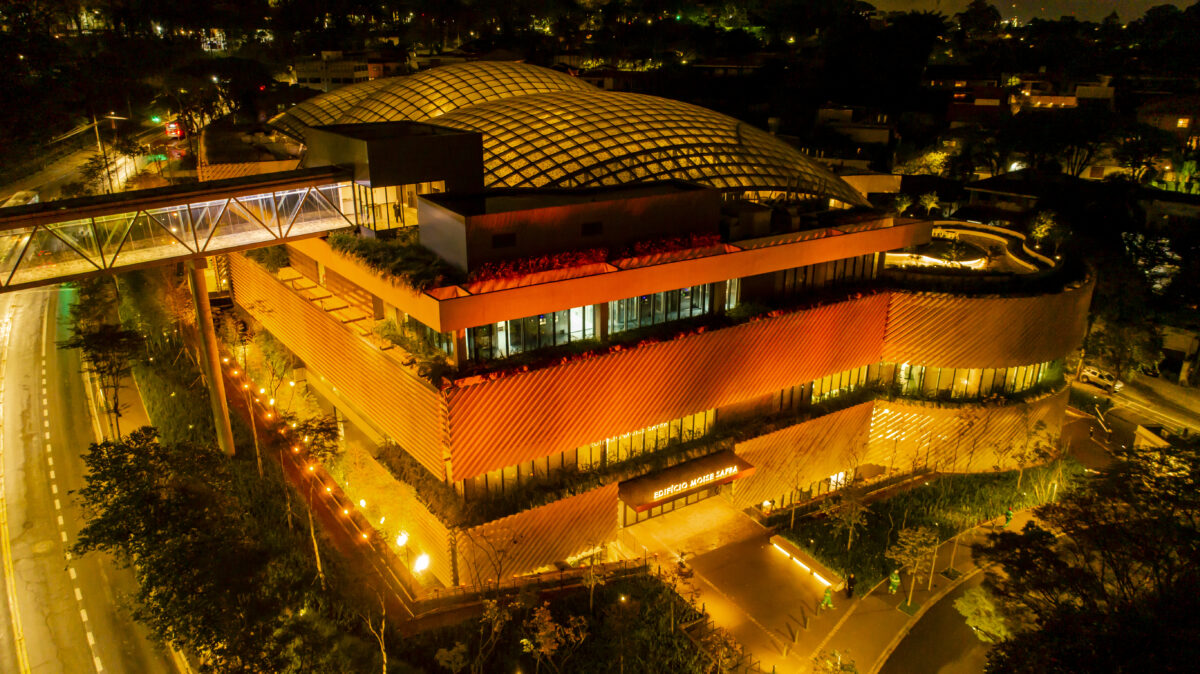
 To be held at Einstein on May 6, the event brings together scientists to discuss the future of scientific research and international cooperation in Latin America | Image: Publicity
São Paulo’s Einstein Hospital Israelita will host the event Voices of Latin American Science on May 6, starting at 9 a.m. (BRT). The initiative aims to reflect on the future of scientific research in the region and its role in addressing contemporary global challenges.
Aimed at researchers, healthcare professionals, and scientific leaders, the event seeks to promote dialogue among different stakeholders involved in knowledge production, with a focus on international cooperation, innovation, scientific development, and career perspectives.
The goal is to connect Latin American experiences and perspectives with global agendas, particularly in healthcare.
The event will bring together leading figures from Brazil, other Latin-American countries, and the global scientific community to chart new pathways and explore fresh ways of shaping the future of research in the region.
The agenda includes panel discussions, presentations, and opportunities for networking among participants. The initiative aims to promote the exchange of ideas and stimulate new scientific partnerships, reinforcing Latin America’s role in developing solutions to complex problems.
The event will take place in person at the Centro de Ensino e Pesquisa Albert Einstein on the Cecília and Abram Szajman Campus, in São Paulo. Participants will also be able to follow the event online.
Participation is free with prior registration.
Why attend?
Voices of Latin American Science is a valuable opportunity for those who follow and help drive scientific progress in the region. Participants will be able to:
- Connect with leading figures in science;
- Build international connections and explore new collaborative opportunities;
- Exchange ideas and innovative perspectives;
Simultaneous interpretation
The event will feature simultaneous interpretation in three languages: Portuguese, English, and Spanish. It will be an inclusive and accessible experience, fostering open dialogue among different scientific communities and broadening the impact of the discussions.
Confirmed Speakers
- Esper Kallás – Infectious disease specialist and Full Professor in the Department of Infectious Diseases and Tropical Medicine at the University of São Paulo School of Medicine, (on leave). He is the Director of the Butantan Institute.
- Antonio José Roque da Silva – Director-General of the Brazilian Center for Research in Energy and Materials (CNPEM) and Full Professor at the University of São Paulo’s Institute of Physics (IF-USP). He holds bachelor’s and master’s degrees in Physics from the University of Campinas, and a Ph.D. from the University of California, Berkeley, where he also completed postdoctoral training, before undertaking further postdoctoral work at the University of California, Los Angeles. He is a member of the Brazilian Academy of Sciences (ABC), the São Paulo State Academy of Sciences (ACIESP), and The World Academy of Sciences (TWAS). He was awarded the National Medal of the Order of Scientific Merit (Commander rank) and serves on the National Council for High-Impact Technology Projects under the Ministry of Science, Technology, and Innovation (MCTI). He represents Brazil on the Science Policy Committee of CERN, and received the Almirante Álvaro Alberto Award in 2025.
- Peter Libby – a cardiologist at Mass General Brigham and Mallinckrodt Chair Professor of Medicine at Harvard Medical School. He served as Chief of Cardiovascular Medicine from 1998 to 2014. His clinical expertise includes general and preventive cardiology, while his research centers on the role of inflammation in vascular diseases such as atherosclerosis. Dr. Libby has translated his basic laboratory findings into pilot studies and large-scale clinical trials on cardiovascular outcomes.
- Juliana Cassataro – Senior Researcher at Argentina’s National Scientific and Technical Research Council (CONICET) and Associate Professor at the National University of San Martín (UNSAM), Argentina, where she heads the Laboratory of Immunology, Infectious Diseases, and Vaccine Development at the Institute for Biotechnology Research. Her work has contributed significantly to vaccine development against brucellosis, and she pioneered the use of bacterial protease inhibitors as vaccine adjuvants, resulting in international patents and major global funding. She led the development of ARVAC, Argentina’s first recombinant COVID-19 booster vaccine, now approved and in use, and has received several prestigious awards, including the Bunge y Born Award, the Bernardo Houssay Award, and the L’Oréal-UNESCO For Women in Science Award.
- Vinicius Maracaja-Coutinho – Public health researcher at Fundação Oswaldo Cruz (FIOCRUZ) Bahia, Associate Professor at the University of Chile, and Principal Investigator at the Advanced Center for Chronic Diseases (ACCDiS) in Chile, where he leads the Advanced Genomics Unit. His work focuses on computational methods for integrating multi-omics data, with an emphasis on transcriptomics, epitranscriptomics, and single-cell genomics. His research is applied to the study of chronic diseases, genetic diversity in human populations, and pathogen genomics. He was the first president of the Chilean Society of Bioinformatics and currently serves on the Board of Directors of the International Society for Computational Biology (ISCB), also contributing to working groups within the Human Cell Atlas initiative and has served as a consultant on missions conducted by the UN-affiliated International Atomic Energy Agency (IAEA).
- Monica Felts de La Roca Soares – Pharmacist, scientist, and public-sector leader in science, technology, and innovation. She currently serves as Scientific Director at the Brazilian National Council for Scientific and Technological Development (CNPq), part of the Ministry of Science, Technology, and Innovation (MCTI). She previously served as Director of Science and Technology at Brazil’s Ministry of Health. She is an Affiliate Member of the Brazilian Academy of Sciences and the Pernambuco Academy of Sciences. Ms. Soares is also an Associate Professor in the Department of Pharmaceutical Sciences at the Federal University of Pernambuco (UFPE), and a researcher at Brazil’s National Institute of Science and Technology in Pharmaceutical Innovation (INCT iCEIS). Her scientific work focuses on pharmaceutical technology and biotechnology applied to the development and incorporation of strategic medicines into Brazil’s Unified Health System (SUS).
Or copy and paste the link into your browser: https://eventos.ensinoeinstein.com/vozes-da-ciencia/
*
This article may be republished online under the CC-BY-NC-ND Creative Commons license.
The text must not be edited and the author(s) and source (Science Arena) must be credited.