 #News
#News
#News
20.05.2026
Why Zika has nearly disappeared in Brazil—and why scientists are still concerned
With microcephaly cases still being reported, Brazilian researchers have been mapping advances since 2015, hypotheses for the decline of Zika, and as-yet unanswered questions
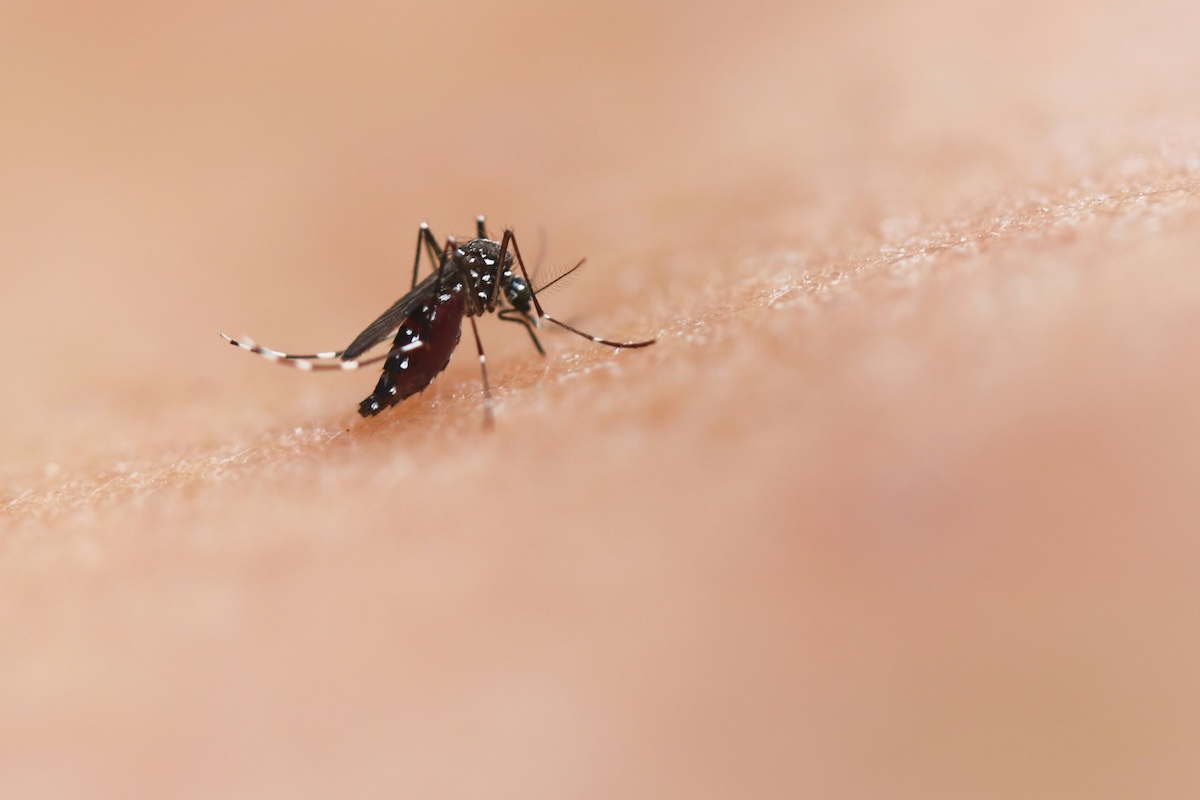 Aedes aegypti, the vector for Zika, dengue, and chikungunya, remains endemic in Brazil—and the persistence of the virus, albeit of low incidence, reinforces the need for ongoing surveillance | Image: Unsplash
Ten years after the biggest Zika epidemic ever recorded, the incidence of the virus has declined markedly in Brazil. In 2024, while dengue reached the highest number of cases in history, with nearly 6 million confirmed cases according to DataSUS, Zika accounted for only 1,981 cases—1,561 confirmed by laboratory tests and 389 by clinical-epidemiological criteria.
The contrast is striking: the two viruses share the same vector—the Aedes aegypti mosquito, which makes it unlikely that vector control alone explains the difference.
Researchers have not yet reached a consensus on what caused this decline, but point to a combination of biological and epidemiological factors.
A study by Felipe Yuji Sasazaki and colleagues from the NB3 Laboratory of Neuroimmunology at the Federal University of Santa Maria (UFSM), published in Virology Journal, examines the challenges already overcome and those that still need addressing in order to understand the virus and its long-term impacts.
The peak of the 2015 epidemic and the authorities’ response
The first infections by Zika were identified in Brazil in 2015, in samples collected that same year. The number of cases grew rapidly, and the number of children born with microcephaly increased at the same rate.
The connection between the virus and the malformation was formally confirmed on November 28, 2015. By the end of the decade, 178,516 confirmed cases had been recorded in Brazil, according to DataSus and the Pan American Health Organization (PAHO)—the highest number in the Americas.
In comparison, Puerto Rico, the second most affected country in the Americas, recorded fewer than 38,000 cases over the same period.
In addition to microcephaly, other clinical manifestations were identified in affected children, including auditory and visual impairments. This set of conditions led experts to adopt the term Congenital Zika Syndrome (CZS), first described in Brazil.
Important note: CZS does not always manifest as microcephaly at birth. Neurological damage may appear later, complicating early diagnosis and suggesting that the number of cases could be higher than recorded.
Faced with this situation, the federal government declared a National Public Health Emergency on November 11, 2015, which lasted for 18 months.
In 2016, it launched a widespread campaign against Aedes aegypti, including educational initiatives, training for healthcare professionals, and mobilization of the Armed Forces to eliminate mosquito breeding sites.
Most of the cases and Zika-associated microcephaly occurred in the Southeast and Northeast regions, with the latter being the most affected by the malformation.
Factors associated with the reduction in cases
The analysis identifies at least four hypotheses to explain the decline. The first involves mosquito coinfection: when Aedes aegypti carries Zika and chikungunya—or Zika and dengue—at the same time, its vector competence for transmitting Zika virus may decrease by 10%, according to a study published in the Journal of Infectious Diseases in 2021.
Although modest in isolation, this reduction may play an important role in a multifactorial context.
The second hypothesis points to herd immunity.
There is only one described serotype of Zika, which means that infection with any variant likely confers long-lasting immunity. With a significant portion of the population already exposed during the epidemic peak, viral circulation would naturally wane.
A third factor is structural underreporting: most Zika cases are asymptomatic or mildly symptomatic, which reduces the demand for medical care and, consequently, official reporting. Lastly, Wolbachia technology has advanced significantly.
Brazil has invested in the production and release of Aedes aegypti infected with the bacterium Wolbachia, which drastically reduces vector competence for Zika, dengue, and chikungunya. In 2025, the Ministry of Health inaugurated the world’s largest Wolbachia biofactory.
Outstanding questions: immunity, sylvatic cycle, and surveillance
Despite the decline, Zika has not disappeared. Between 2021 and 2023 (the most recent years with available data), Brazil recorded between 4 and 8 new cases of Zika-associated microcephaly per year.
The study highlights unanswered scientific questions, including the exact duration of immunity acquired after infection: some studies suggest it lasts around two years, while others report reinfections within as little as six months.
One point highlighted by the authors is the role of dengue antibodies in Zika dynamics. These can both neutralize the virus and facilitate its entry into cells.
The mechanism is known as ADE (antibody-dependent enhancement). The recent national dengue vaccination campaign may alter the population’s immunological profile and interfere with Zika transmission. The researchers recommend monitoring this effect carefully.
The article also warns of the possibility of a sylvatic cycle of Zika: one study detected viral RNA in populations of Ae. albopictus and Haemagogus leucocelaenus collected in areas with little human interference in Rio de Janeiro between 2018 and 2019, a period during which urban cases had already declined.
This suggests that the virus may continue circulating off the radar of conventional surveillance, possibly involving non-human primates as reservoirs.
There is no licensed vaccine for Zika, although inoculation candidates are in phase 1 and 2 clinical trials. Nor is there an approved antiviral; antiviral candidates must demonstrate they have no teratogenic risk (the likelihood of birth defects), which makes development even more complex.
The authors recommend expanding vector surveillance, improving diagnosis, and ensuring long-term support for the families affected by CZS.
Social and diagnostic advances
In addition to vector control, Brazil has made progress on other fronts. The federal government established financial compensation for families affected by CZS through Law No. 15.156, of July 1, 2025, and in 2020 approved a lifetime benefit for affected children.
The public health system also offers medical follow-up for pregnant women with suspected Zika virus infection.
In the field of diagnostics, considerable progress has been made since 2015. Multiplex kits for the simultaneous detection of Zika, dengue, and chikungunya have been developed in Brazil and distributed to the 27 Central Public Health Laboratories (LACEN), which has increased the capacity for laboratory confirmation across all regions of the country.
The main challenge currently is the cross-reactivity between Zika and other flaviviruses circulating in Brazil, especially dengue, which compromises the specificity of serological tests.
Factors associated with the decline in Zika cases in Brazil
-
1. Vector coinfection
-
The simultaneous presence of Zika and dengue or chikungunya in the same mosquito may reduce Aedes aegypti’s ability to transmit Zika virus by up to 10%.
-
2. Herd immunity
-
There is only one described serotype of Zika. After the 2015–2016 epidemic peak, a significant portion of the population had already developed antibodies, which tends to reduce viral circulation over time.
-
3. Structural underreporting
-
Most infections are asymptomatic or present with mild symptoms, which reduces the demand for medical care and, consequently, official reporting. This means that the reported numbers underestimate the actual circulation of the virus.
-
4. Vector control and Wolbachia
-
The 2016 national campaign mobilized the Armed Forces and healthcare professionals to eliminate mosquito breeding sites. At the same time, Brazil increased the use of Aedes aegypti infected with Wolbachia, a bacterium that reduces vector competence for Zika, dengue, and chikungunya. In 2025, the Ministry of Health inaugurated the world’s largest Wolbachia biofactory.
-
5. The effect of dengue antibodies (ADE)
-
Antibodies generated by dengue infection or vaccination may interfere with Zika virus dynamics through antibody-dependent enhancement (ADE), by neutralizing or enhancing infection depending on host and viral factors. The recently launched national dengue vaccination campaign makes this monitoring even more urgent.
-
6. Sylvatic cycle
-
Studies have detected Zika RNA in sylvatic mosquito populations in Rio de Janeiro, even after the decline in urban cases. This suggests that the virus may persist in areas of low human interference, possibly in non-human primates, without being detected by conventional surveillance methods.
*
This article may be republished online under the CC-BY-NC-ND Creative Commons license.
The text must not be edited and the author(s) and source (Science Arena) must be credited.