 #Careers
#Careers
11.05.2026
How to involve early-career researchers in the management of scientific projects
A European case study describes structures and practices that promote the active participation of early-career researchers in research consortia
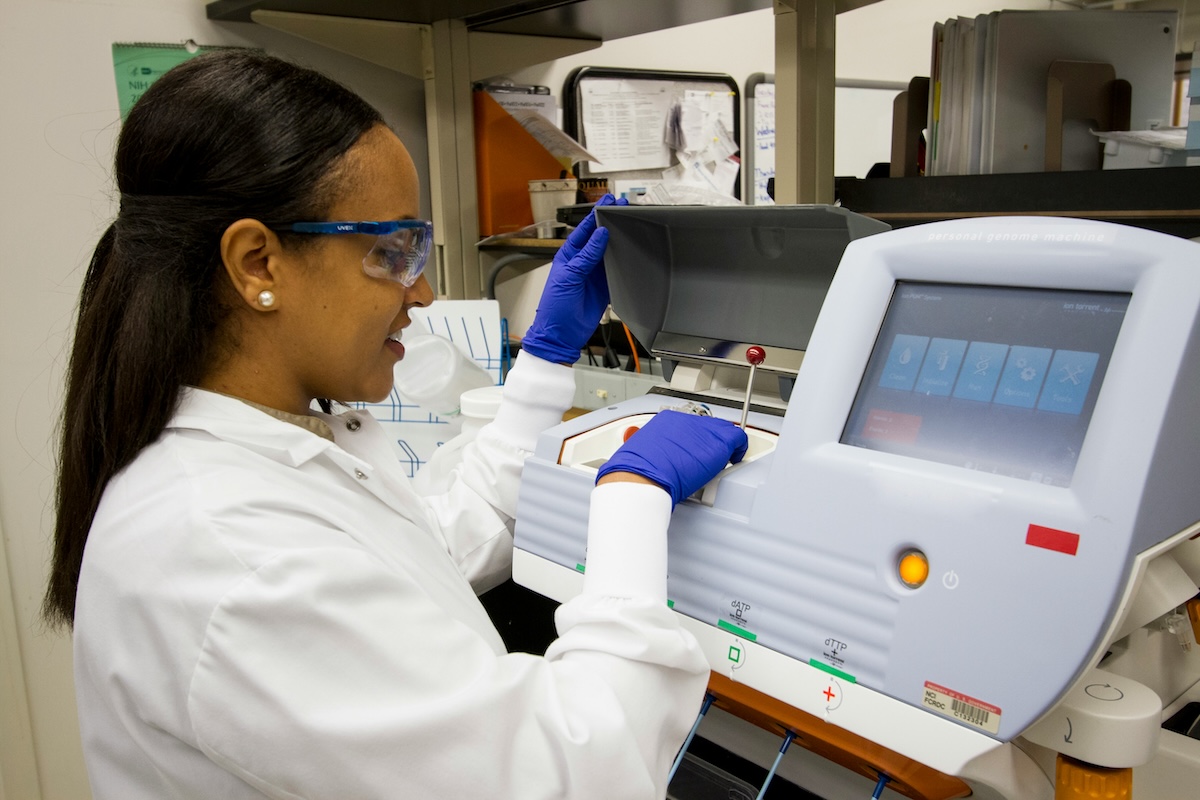 Participatory structures that give early-career researchers a genuine voice benefit not only their individual careers, but also the quality of the project as a whole | Image: Unsplash
Early-career researchers make up a significant portion of the workforce in collaborative scientific projects, but there is little guidance on how to engage them meaningfully—not merely as task executors, but as active participants in management.
A recent case study from the MYRIAD-EU project, a European consortium focused on systemic disaster risk management, offers a concrete example: with 30% of the team composed of Early-Career Researchers (ECRs), the project documented which structures and practices made this group’s active participation possible.
The ECR Council: a structure integrated from the proposal stage
The main mechanism adopted by MYRIAD-EU was the creation of an Early-Career Researchers Council, which was planned during the project proposal phase rather than implemented later as an adjustment.
The council periodically rotated members and included an elected representative integrated into the consortium’s central management team.
In day-to-day practice, more advanced ECRs assumed leadership or co-leadership roles in working subgroups.
Project meetings also set aside time for all early-career researchers to present their work and receive feedback from senior researchers. According to the authors, this generated mutual benefits: the ECRs gained visibility and feedback, while the project benefited from new perspectives, additional resources, and greater external recognition of the consortium.
The inclusion of early-career researchers in governance structures from the very outset of the project—rather than as an afterthought—is what distinguishes symbolic participation from genuine participation.
The second pillar of empowerment in MYRIAD-EU was the organization of events. The central example was the DRR Academy, a summer school co-organized by a team of five early-career researchers from four distinct European projects, with support from a senior researcher.
Instead of relying on lectures, the group designed an interactive format featuring workshops, problem-solving sessions, and a full day dedicated to writing research proposals, which was a need identified by the participants themselves during the planning phase.
Some of the proposals developed at the Academy resulted in actual collaborative projects. The initiative was so successful that it will have a second edition in 2025, organized by a new group of ECRs.
The organizers gained experience in event management and decision-making, while the participants expanded their networks and developed skills that, under normal circumstances, are acquired only at more advanced stages of their careers.
The third pillar was the active building of professional networks that extended beyond the consortium. Over the course of four years, the ECRs evolved from project contacts into research collaborators: they co-authored articles, including one published in the journal iScience, co-organized sessions at the European Geosciences Union (EGU) General Assembly, and conducted research stays at partner institutions.
The starting point, according to the authors, was the informal dinners organized by the ECRs before each project general assembly—with no formal agenda, but with a clear purpose: to build enough trust so that, later on, asking more experienced researchers for connections and opportunities would no longer feel like an imposition.
Factors underpinning empowerment
Based on their experience with MYRIAD-EU, the authors identified three interdependent factors that underpin what they call empowerment—a research culture in which ECRs feel they have “the authority and opportunity to contribute meaningfully.”
The first is the advisory support provided by mentors and supervisors, which goes beyond technical guidance. This includes regular meetings, availability for one-on-one conversations, and explicit recognition of ECRs’ contributions beyond direct research activities.
The study revives the expression “pay trust forward” to describe the responsibility of mentors who received support early in their own careers to pass that support on to the next generation, creating a chain of support sustained by reciprocity rather than hierarchy.
The second factor is the researcher’s own agency: a willingness to step outside one’s comfort zone, initiate conversations with senior researchers, defend positions, and actively communicate what one wants to learn. The authors acknowledge that these situations can generate friction, but they describe them as an expected and productive part of the process, rather than as obstacles to be avoided.
The third factor lies outside the individual: the structure of the project itself. The distribution of ECRs across different career stages within the consortium (MYRIAD-EU included 30 early-career researchers and 11 senior researchers among a total of 133 participants from 19 institutions), the availability of flexible funding, and the explicit recognition by the coordination team that time dedicated to development activities does not compete with scientific outputs were decisive in ensuring that empowerment moved beyond mere rhetoric.
The authors issue a warning: in today’s “publish-or-perish” climate, ECRs are particularly vulnerable to burnout and exploitation.
Empowerment structures not accompanied by concrete safeguards against these risks may end up adding obligations without adding rights.
Where to start: from simple actions to permanent structures
The authors propose a progression of measures organized according to the level of investment required. The most accessible entry point is also the most immediate: reserving time during project meetings for ECRs to present their work and connect with peers. This is a low-cost action with a strong symbolic impact.
From there, the path advances toward the structuring of formal mentorship programs and, with greater institutional investment, the creation of a community that connects ECRs from different projects, thereby expanding networks and references beyond their home consortium.
The authors make a specific recommendation to funding agencies: to incorporate the participation of ECRs into proposal evaluation criteria and periodic project reports.
The message is that responsibility for empowerment does not rest solely with individual projects, but also with the funding system that shapes them.
The debate in Brazil
This topic still occupies a limited place on the agenda of Brazilian science policy. While, in the European context, the term “Early Career Researchers” (ECRs) functions as an institutionalized category, guiding funding, guidelines, and evaluations, its closest equivalent, translated from Portuguese, “young researcher,” refers to age rather than career stage, thereby limiting its analytical and political scope.
The Brazilian literature concerning this group tends to focus on training conditions at the graduate level and on precarious working conditions.
The issue of integrating these researchers into collaborative projects as active participants in management—rather than merely as scholarship recipients or implementers—still lacks a dedicated agenda of its own.
*
This article may be republished online under the CC-BY-NC-ND Creative Commons license.
The text must not be edited and the author(s) and source (Science Arena) must be credited.