“When you want to do research without being confined to theory, the field of health is a great intersection.”
Einstein Hospital Israelita researcher analyzes Brazil’s public health system, supports clinical research, and formulates public policy based on her business background
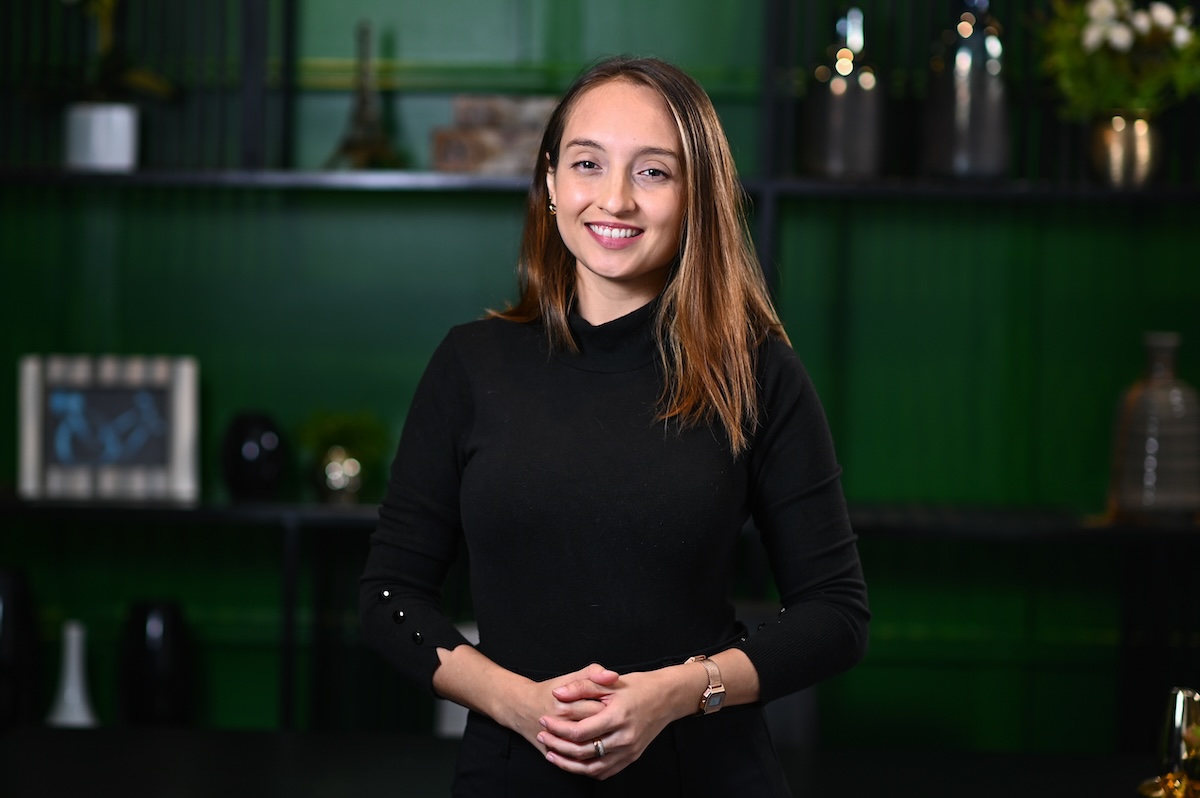
 "When you want to do research without being confined to theory, the field of health is a great intersection," says Marina Martins Siqueira, a researcher at Einstein Hospital Israelita | Image: Personal archive
Conducting research in public health without being a healthcare professional requires balance. It requires an understanding of how Brazil’s public health system (SUS) works and involves engaging with physicians, interpreting public data, and ensuring that analyses do not become overly theoretical or disconnected from practice.
It was in this space between two worlds that Marina Martins Siqueira, a researcher at Einstein Hospital Israelita, built her career. With a degree in business administration from the Federal University of Piauí (UFPI), she did not initially plan to work in public health policy.
Her path was shaped by an interest in academic research and a drive to understand complex systems.
“Although today I see myself more as a public policy specialist and researcher, I know that my background in business is fully intertwined with what I do.”
She was first exposed to health studies during her master’s degree at the Business School of the Federal University of Rio de Janeiro (UFRJ). While working alongside professors who were studying health, Siqueira found a field where research was not limited to theory.
“When you want to do research without staying confined to theory, the field of health is a great intersection,” she explains.
For her master’s thesis, she chose to study organ donation and transplantation. At first glance it may seem like a narrow topic, but in practice, it is a system that depends on rigorous coordination and defined workflows, dealing with limited resources and complex regulatory decisions.
There is an element of logistics—her initial study focus—but applied to a complex environment with a direct impact on people’s lives.
Her research combined theoretical reviews, document analysis, interviews, and a quantitative efficiency assessment to understand how the transplant system works and where it could be improved.
This was where one of the main challenges of working across the two fields arose. With no medical training, how could she understand clinical practice without firsthand experience in a hospital?
To overcome that obstacle, she worked closely with medical colleagues—especially one intensive care physician involved in organ transplants.
“Having him around was a great help. Although he did not have the academic and theoretical background that I had, he had 100% of the practical, clinical experience,” explains Siqueira.
From a master’s degree to the World Bank: crossing academia and politics
After her master’s degree, Siqueira went straight into a program at UFRJ’s Business School, where she obtained a doctorate of science (DSc) in Business Administration in 2020. Her thesis was on the performance of organ donation and transplant services in Brazil.
During this period, she spent a year at Duke University, USA, and in her final year, worked as a short-term consultant on projects for the World Bank. The pace was faster, with a focus on answering specific questions about different countries.
The work still involved reviewing literature and analyzing data and legislation, but with tighter deadlines and more practical objectives.
Siqueira then joined the Institute for Health Policy Studies (IEPS) in São Paulo, where she furthered her studies in systems analysis and engagement with policymakers.
The experience reinforced a concern she carries to this day: keeping research from becoming too abstract.
“The hardest part is translating empirical issues into study designs, to obtain useful information for frontline professionals and policymakers.”
Creating CEPPS at Einstein
In 2022, Siqueira joined Einstein Hospital Israelita to help create a center focused on public policy.
“The idea was to create a think tank, a research center focused on public policy, within Einstein,” she says. “We had to design the center completely—what it would be and what it would do. It was all very new.”
The Center for the Study and Promotion of Health Policies (CEPPS) at Einstein now works both on supporting clinical research and analyzing public data.
The work involves mapping how the SUS is organized, evaluating how procedures and resources are distributed, and helping physicians translate their practical experience into structured research.
“By supporting and encouraging clinical research at Einstein, we can bring all of our combined academic history together with the empirical knowledge that only specialists, doctors, surgeons—those on the front lines—can offer.”
Results beyond scientific articles
The work of CEPPS is not limited to publishing scientific articles. The center produces different types of content tailored to audience and objective, including institutional reports, analyses for policymakers, and peer-reviewed publications.
There is also a focus on translating knowledge into more accessible formats and materials.
Three recent research projects illustrate the breadth of the center’s work:
- A study on SUS hospitalizations for congenital infections between 2008 and 2024, published in the journal Antimicrobial Stewardship & Healthcare Epidemiology, identified 194,000 hospital admissions among infants under 12 months, highlighting a significant increase in cases of congenital syphilis, persistent regional inequalities, and gaps in the management of maternal and infant healthcare.
- An analysis of surgical data quality from SUS outpatient and hospital settings, published in Cadernos Gestão Pública e Cidadania (FGV) (“Annals of public policy and citizenship”), showed that in 2023, 76.6% of 20.9 million outpatient surgeries were recorded without an ICD-10 code, indicating data completeness and specificity problems that impact management of the healthcare system.
- A study of mortality in colorectal cancer surgery, published in the ANZ Journal of Surgery in March 2026, analyzed public hospitalizations in São Paulo between 2000 and 2023, finding that age and admission type (emergency vs. elective) are the main predictive factors for death.
Alongside her research, Siqueira has also begun working in education. She is the coordinator of several postgraduate courses and has been an assistant professor for the public policy module of Einstein’s Business degree since 2024.
She also supervises undergraduate research students and strives to maintain a link between theory, data, and institutional practice.
Although Siqueira no longer works in business administration, she believes her broad training was crucial to allowing her to navigate complex systems, multiple stakeholders, and decisions that impact different fields.
She did not plan her career path in detail. “One thing led to another and I found myself deeply engaged and really enjoying it.”
*
This article may be republished online under the CC-BY-NC-ND Creative Commons license.
The text must not be edited and the author(s) and source (Science Arena) must be credited.