 #Columns
#Columns
29.04.2026
Can AI use affect learning?
Study of more than one thousand participants suggests that AI improves immediate performance, but the technology should complement—rather than replace—active problem-solving effort
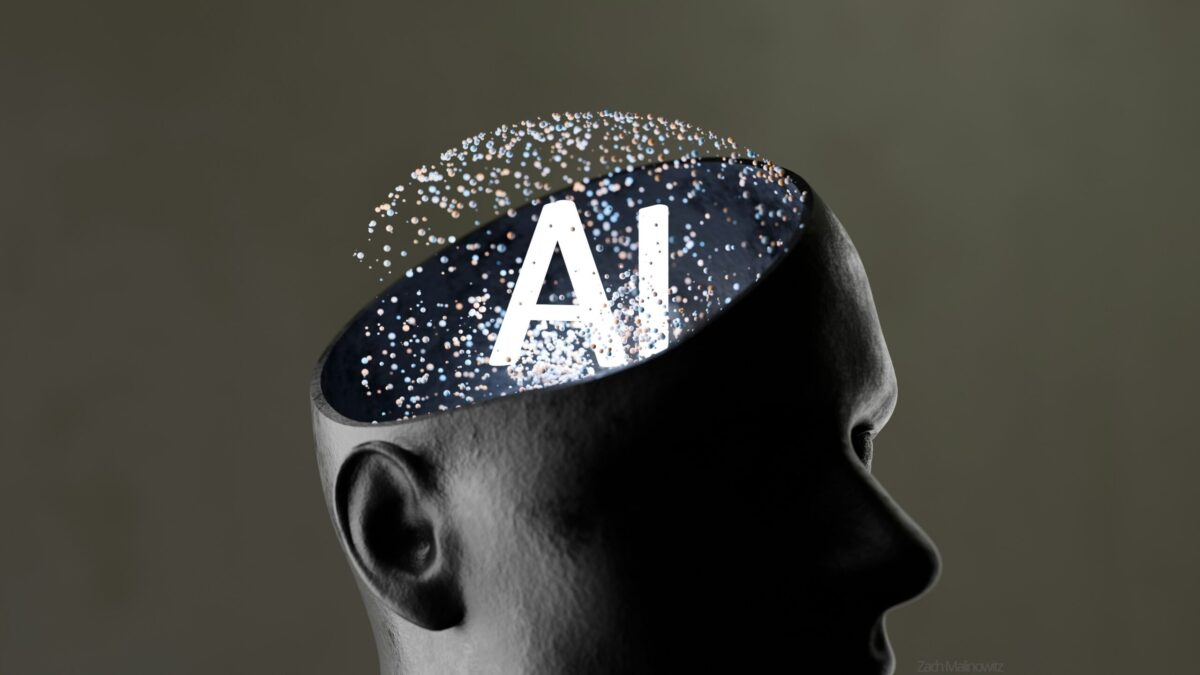
Helder Nakaya, a senior researcher at Einstein Hospital Israelita, discusses a study involving more than a thousand participants that provides evidence on how the use of artificial intelligence (AI) during learning can affect users’ behavior and performance.
According to the paper “AI assistance reduces persistence and hurts independent performance”, published on the arXiv preprint platform at Cornell University, participants completed a series of math and reading-comprehension tasks of increasing difficulty.
Divided into two groups, one was allowed to use AI tools while learning and solving exercises, while the other was not.
During the assisted phase, the group using AI demonstrated better immediate performance—they answered more questions correctly with the tool’s help.
However, when scientists evaluated participants on subsequent tasks without access to AI, the picture changed: those who had used AI showed less persistence, leaving more questions unanswered and performing worse than the group that had never used the tool.
The Einstein researcher emphasizes that how AI was used made a difference. Within the group that had access to the tool, some participants requested ready-made answers, others used AI to ask for hints and explanations, and some chose not to use it at all.
Those who used AI only as an explanatory aid or for hints showed greater effort in attempting to solve problems on their own and achieved better results than those who requested ready-made answers.
According to Nakaya, the study shows that AI can be an excellent resource for answering queries, explaining concepts, and guiding study, but it should not replace the learner’s active attempt to solve problems.
Using it as a shortcut to ready-made answers, however, tends to reduce persistence and may compromise long-term learning.
Watch the video to see the data, the charts comparing the groups, and the researcher’s detailed explanation of how to integrate AI into study without sacrificing essential skills.
Opinion articles and videos do not necessarily reflect the views of Science Arena or Einstein.
*
This article may be republished online under the CC-BY-NC-ND Creative Commons license.
The text must not be edited and the author(s) and source (Science Arena) must be credited.