 #Columns
#Columns
09.06.2026
Global health challenges and their impacts on innovation and equity
A funding proposal aimed at the development of vaccines, diagnostics, and accessible therapies seeks to put the Global South at the forefront of health innovation
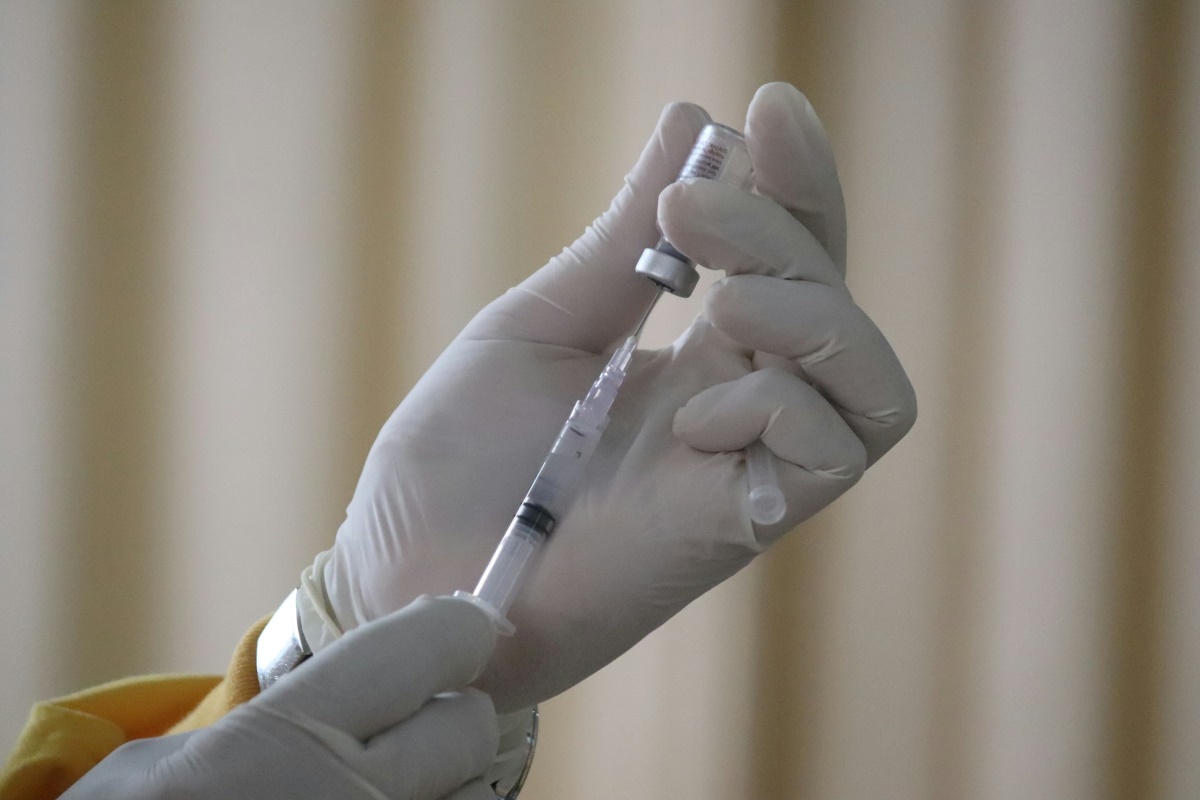 Research, development, and innovation in the production of vaccines and new drugs across different countries provide an opportunity for the Global South to take a leading role in health and medicine | Image: Shutterstock
Innovation in health tech is still widely driven by high-income countries, meaning that lifesaving technologies reach low- and middle-income countries much later.
In the Global South, I have observed that R&D efforts also tend to lack sustained funding—promising ideas stall before advancing to the final stages of development or manufacturing.
Only 10% of research in health sciences is directed toward issues that affect 90% of the world’s population—the so-called 10/90 gap. This imbalance is one of the clearest indicators of the profound disparities in health and healthcare capacity between rich and poor countries. (Source: OECD, G-Finder)
I have also noticed that the lack of strategic planning, private investment, and solid partnerships further complicates these challenges.
As a result, many countries remain dependent on external suppliers and highly vulnerable during health emergencies—a weakness that the COVID-19 pandemic made painfully evident.
Open innovation
During Rio Innovation Week (RIW) in August 2025, alongside the International Vaccine Institute (IVI)—a United Nations-affiliated organization based in Seoul, South Korea—I presented a proposal to accelerate open innovation in health, with Brazil playing a leading role in research.
This proposal led to the signing, in March 2026, of a letter of intent between Brazil and the IVI for the creation of the BRIGHT (Bridging Research Investment in Global Health Technology) Fund, focused on the Global South. The government of Indonesia then signed the letter of intent in April 2026.
The idea launched at RIW, during the panel “Beyond Borders: How Vaccination Transforms Societies,” presented an unprecedented proposal in Brazil for the creation of an Innovative Health Technology Fund. As a scientist working with vaccines I had the opportunity to present this initiative alongside Jerome Kim, Director-General of the IVI.
In the discussion, I showed that in the context of a highly competitive market, open innovation can challenge paradigms, and is considered a global trend.
During a moment of crisis in global health and significant cuts in R&D investment, this crisis can be turned into an opportunity through leadership and innovation—and I believe this leadership can come from Brazil.
The proposal is based on proven experiences of Innovative Health Technology Funds, pioneered in Asia over a decade ago, with clear benefits for the global population, resulting in products being approved and distributed to those who need them most, at affordable prices. This model ensures access and equity.
Health strategy
As examples, I cite the pioneering GHIT (Global Health Innovation and Technology Fund) in Japan—of whose scientific council I am a permanent member—and the RIGHT (Research Investment for Global Health Technology Foundation) in South Korea, with which the IVI collaborates.
The aim is to boost the development of diagnostic tests, vaccines, medications, and digital health innovation in the host country and in partner countries of the projects that receive funding.
The GHIT Fund, created in 2013, and the RIGHT Foundation, set up in 2018, are based on partnerships between government, philanthropists, and the private sector.
The RIGHT Foundation, for example, brings together South Korea’s Ministry of Health and Welfare, the Gates Foundation, and the Korean life sciences industry, in a partnership facilitated by the IVI.
This consortium has already raised over US$200 million, fostered collaboration among more than 20 countries, and advanced critical technologies for low- and middle-income countries, a strategy that has helped position South Korea as a global leader in health innovation.
Platform with leadership from the Global South
The BRIGHT Fund is a new multi-donor funding platform, led by the Global South, established to advance the development, production, and equitable access to vaccines, therapies, diagnostics, and health innovations.
The fund also seeks to strengthen health sovereignty and improve preparedness for future pandemics.
The BRIGHT Fund emerged as an initiative aimed at increasing investment in health innovation, strengthening regional research centers, and expanding manufacturing capacity in the Global South.
Guided by the leadership of Global South countries themselves, the fund seeks to address long-standing gaps in the global health ecosystem—ensuring that innovations respond to the real needs of the most affected populations and that scientific advances are distributed more equitably.
Supported by economies that are consolidating their industrial capacity, the BRIGHT Fund is a platform conceived in and for the Global South. With facilitation from the IVI, member countries and creators of the fund are working to establish its governance structure and define investment areas.
Just as the GHIT and RIGHT invest in neglected diseases, specifically focusing on areas such as tuberculosis, malaria, schistosomiasis, leishmaniasis, and Chagas disease, and more recently in diseases with pandemic potential, the BRIGHT Fund intends to follow a similar strategy.
To ensure sustainable impact, we have structured the BRIGHT Fund on a diversified and transparent funding model capable of mobilizing resources at scale.
• Target: US$300 million over the first five years, with US$60 million disbursed annually;
• Diversified funding sources: contributions will follow a balanced 50:25:25 model: public investment, philanthropic institutions, and private investment, including industry;
• Disbursement: funds will be allocated based on the achievement of defined milestones, ensuring accountability, transparency, and measurable progress.
Global access commitment
All BRIGHT Fund investments are subject to a mandatory global access commitment, ensuring the open sharing of generated knowledge and timely access to resulting products at affordable prices for low- and middle-income countries, through licensing and technology transfer.
Researchers and institutions from member countries will receive additional, specialized support for capacity building in R&D, with a guaranteed outcome if products are able to overcome the so-called “valley of death” and obtain approval.
I believe that the BRIGHT Fund represents a milestone in sustainable research and development, contributing to solutions for global health challenges. For this reason, we shall continue to follow the progress of this fund in support of science and health closely.
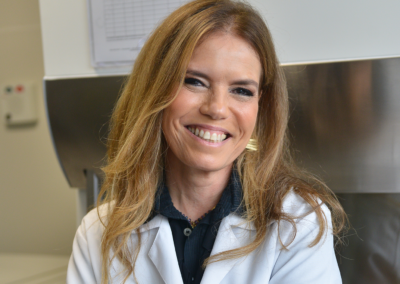
Sue Ann Costa Clemens is a professor in the Department of International Health at Johns Hopkins University, head of the Institute for Global Health at the University of Siena—where she is a professor of pediatric infectious diseases and directs the Master’s Program in Vaccinology and Drug Development—as well as a faculty member and international scientific coordinator at the Carlos Chagas Institute. She is a senior advisor to the Gates Foundation and a member of international scientific boards and committees, including the International Vaccine Institute, the GHIT Fund, VaxThera, Ourofino, and Clover Biopharmaceuticals. She was a full professor of global health and clinical development at the University of Oxford, where she created and directed the Oxford Latam Vaccines Group, and was a member of the WHO expert group on vaccine access and information (TAG-MI4A). In a career spanning more than 25 years, she has contributed to the development of over 20 globally licensed vaccines and medicines, including three COVID-19 vaccines as principal investigator. She was appointed Commander of the Order of the British Empire (CBE) by HM Queen Elizabeth II for services to public health and is also a Commander of the Federative Republic of Brazil in the Order of Rio Branco and the Order of Medical Merit.
Opinion articles and videos do not necessarily represent the views of Science Arena or Einstein Hospital Israelita.
*
This article may be republished online under the CC-BY-NC-ND Creative Commons license.
The text must not be edited and the author(s) and source (Science Arena) must be credited.