 #Interviews
#Interviews
22.04.2026
Harald Gaski: “Indigenous peoples can also have journals of excellence”
Former editor of the only scientific journal written entirely in an Indigenous language and indexed in DOAJ discusses language preservation, academic decolonization, and the limits of international recognition
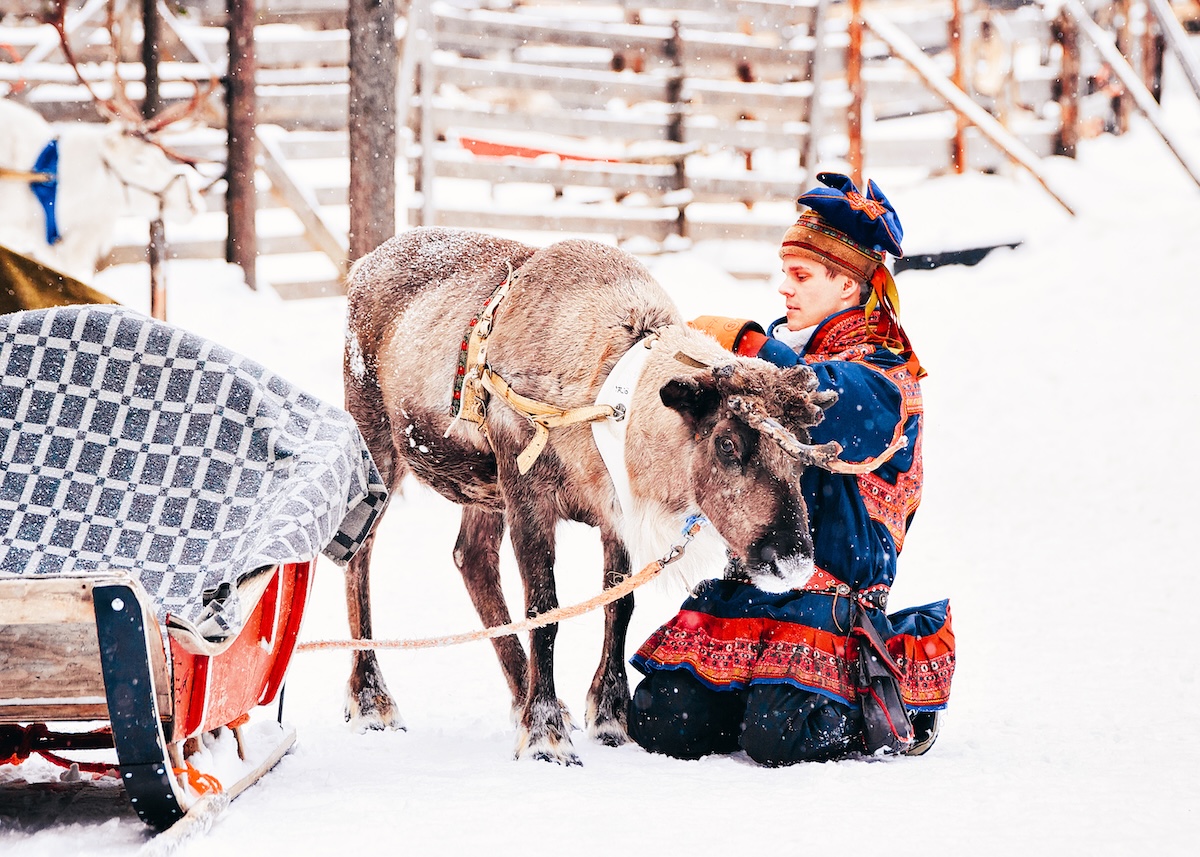 Reindeer herding is one of the core cultural practices of the Sami people, who inhabit northern Norway, Sweden, Finland, and Russia. In the photo, a man in traditional Sami clothing kneels beside a reindeer in Finnish Lapland in winter. Rovaniemi, Finland, March 3, 2017 | Photo: Roman Babakin/Shutterstock
“It may seem utterly foolish to create a journal in a somewhat restricted Indigenous language, spoken by only about 30,000 to 50,000 people, and then distribute it worldwide.” This consideration comes from Harald Gaski and encapsulates the paradox that defines his life’s work.
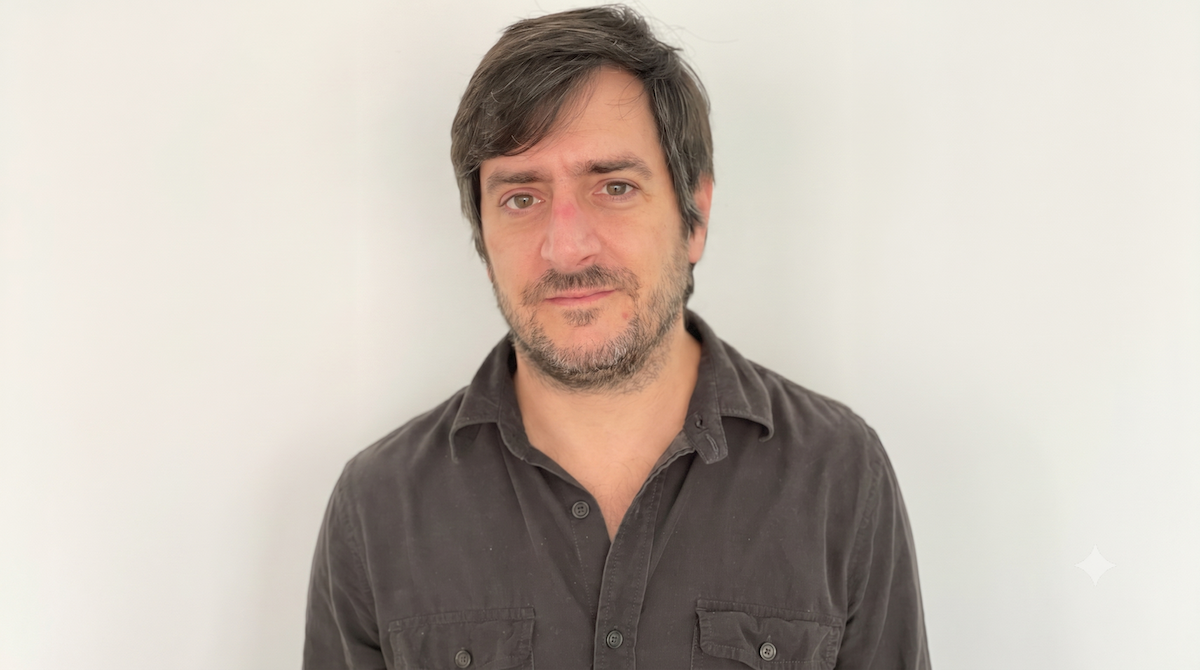
Born in 1955 in Tana (Deatnu), in far northern Norway, Gaski is one of today’s most influential Sami intellectuals, and has played a key role in establishing his people’s literature as a recognized field, both within and beyond academia.
A retired professor of Sami literature, he taught at the Arctic University of Norway (UiT) and the Sami University of Applied Sciences (Sámi allaskuvla). His research has compared Sami writing with that of other Indigenous peoples, and he has translated Sami poetry into Norwegian and English.
The author of landmark works on Sami literature—including studies of epic poetry and collections of proverbs—he has also received the Gollegiella Language Award, the most prestigious Nordic honor for promoting and developing Sami languages.
In 2020, Gaski became editor-in-chief of Sámi dieđalaš áigečála, (The Sami Scientific Journal), an interdisciplinary journal published entirely in Sami languages and maintained by UiT in partnership with Sámi allaskuvla.
On his retirement in 2025, he left behind a historic achievement: the journal’s inclusion in DOAJ (the Directory of Open Access Journals), making it the only publication in the directory penned exclusively in an Indigenous language—underscoring his ambition to position Sami-produced knowledge on the global scientific stage.
In an exclusive video interview with Science Arena, Gaski discusses language preservation, the limits of institutional recognition, and what it means to do science in a language the Western world has long overlooked.
What is DOAJ and why does indexing matter?
-
What is it?
-
The Directory of Open Access Journals (DOAJ) is an international index of peer-reviewed, open-access scientific journals. Inclusion is voluntary and requires meeting rigorous editorial quality standards.
-
Greater visibility
-
Being indexed in DOAJ increases a journal’s visibility among researchers, libraries, and funders worldwide, expanding the reach of the knowledge it produces.
-
A historic milestone
-
Since May 2025, the Sami Scientific Journal (Sámi dieđalaš áigečála) has been the only publication in the directory written entirely in an Indigenous language—a milestone for science in minority languages.
-
Sami languages
-
Sami languages are spoken by approximately 30,000 to 50,000 people across northern Europe (Norway, Sweden, Finland, and Russia) and are among the few Indigenous languages with active, formalized academic production.
-
Benchmark
-
For researchers from other Indigenous communities, the journal’s indexing may serve as both a model and an incentive to create scientific publications in their own languages.
Science Arena – When was the Sami Scientific Journal created, and what were its main objectives?
Harald Gaski – It was founded in 1994, at which time the Norwegian government was either pressured into supporting the initiative or chose to do so. From the late 1960s onward, there was a broad revitalization of Indigenous cultures around the world. In the mid-1970s, for example, the World Council of Indigenous Peoples was established.
This period also had a strong cultural dimension, which extended into academia—universities, students, and researchers—much like elsewhere in the world.
Because language has always been such a central part of Sami culture, it became essential to provide a better learning experience in Sami for students. Authorities were increasingly pressured to support Sami education, with the goal of offering formal instruction from kindergarten through university.
Within this broader process, we recognized the need for an academic journal exclusively in Sami. The Arctic University of Norway (UiT) and the Sami University of Applied Sciences collaborated to make it happen.
The idea was to have a publication consisting solely of essays and articles written in the people’s own language—not translations. The goal was to strengthen the language itself.
Can this initiative also be seen as political?
All Indigenous revitalization processes involve politics, culture, and research—more closely intertwined than in the Western world. That does not mean the research itself is politicized, but political support for cultural and educational initiatives has been crucial. In that sense, it was natural for policymakers to support a journal like this.
What is the significance of having a publication aimed at a relatively small audience included in a global database like DOAJ?
It may seem like crass foolishness to create a journal in a language spoken by only a few tens of thousands of people and distribute it globally. But the idea is, in fact, political and cultural.
It is important to have an Indigenous journal recognized at this level, because it strengthens representation and shows that Indigenous peoples can also produce academic journals of the highest quality.
Can the Sami Scientific Journal and its inclusion in DOAJ be seen as a form of decolonization in scientific publishing?
That is certainly the hope, although I tend to be modest about it—I do not expect a revolution to result from this journal or from its inclusion in DOAJ.
However, indexing increases visibility. People may ask, “Why is this journal part of a global directory? There must be something special about it,” and that curiosity may lead them to explore it further.
It may also have an impact in other countries, encouraging Indigenous communities to say, “Look, this journal is included in DOAJ and publishes in its own language—why can’t we do the same?” Of course, funding remains a major challenge. We need much more support.
What role do different stakeholders play in creating a journal like this?
Ideally, Indigenous peoples themselves would lead these initiatives and have the resources to fund them independently. That would ensure full autonomy. But this is not yet the reality for most Indigenous communities.
We still depend on some kind of external support from whatever source. My hope is that demonstrating the success of the Sami journal—and its compliance with all the standards of an academic publication—will serve as evidence to universities and authorities that this model is viable.
Are there similar initiatives?
Yes, there is AlterNative. I served on its editorial board for a time, and we discussed including at least one article in an Indigenous language in each issue. That is another way of getting it out there.
[Officially, AlterNative states on its website that it “publishes articles in English but also accepts submissions in Indigenous languages, including papers originally published in those languages and later translated into English”.]
That said, this approach can also be questioned.
Academic journals are based on written formats, while many Indigenous cultures are primarily oral. One alternative could be podcasts, where people can discuss topics more naturally if they do not feel comfortable writing.
This could be another way to share knowledge about Indigenous peoples.
Still, I would like to see Indigenous journals, books, and publishers operating on the same level as those in the Western world. That would help overcome reductive and often prejudiced views of Indigenous peoples.
*
This article may be republished online under the CC-BY-NC-ND Creative Commons license.
The text must not be edited and the author(s) and source (Science Arena) must be credited.