 #Interviews
#Interviews
13.04.2026
“Without data, renewal in science becomes just rhetoric”
A researcher at the Federal University of ABC mapped the academic age of faculty members across the country and identified limited renewal at the foundation of graduate programs.
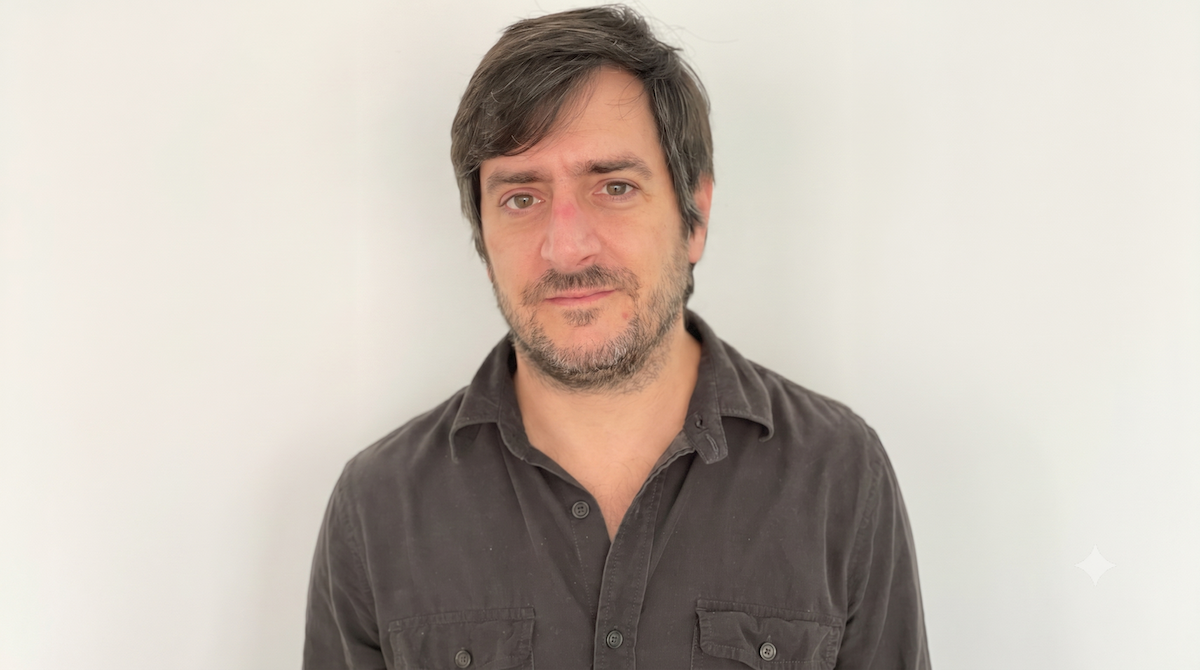
 “The younger cohort is quite narrow,” says Jesús Mena-Chalco, a researcher at the Federal University of ABC who specializes in bibliometrics | Image: Unsplash
“Without data, renewal becomes rhetoric. With data, it can become strategy.” The statement neatly captures what drives Jesús P. Mena-Chalco, a professor and researcher at the Federal University of ABC (UFABC in São Paulo State) who specializes in bibliometrics and the analysis of academic data.
In a recent survey based on the Lattes Platform—shared on his LinkedIn profile—Mena-Chalco mapped, on a national scale, the so-called academic age of faculty affiliated with Brazilian graduate programs: the time elapsed since each researcher’s first scientific publication.
The results point to a mature system, though with limited renewal at its base. The average academic age of faculty in these programs is 27 years; only 1 percent have been active for less than a decade; and 17 percent have more than 35 years of experience.
In the most prestigious programs—those rated 6 and 7 by the Brazilian Federal Agency for Support and Evaluation of Graduate Education (CAPES)—the concentration of senior researchers is even more pronounced.
In this interview with Science Arena, Mena-Chalco discusses what this snapshot reveals, the risks it poses in the medium and long term, and what would be required to plan meaningful renewal.
Science Arena – How was this analysis conducted using the Lattes Platform, and what methodological criteria were used to map the academic age of faculty affiliated with graduate programs?
Jesús P. Mena-Chalco – The study was built from two public and complementary datasets. On the one hand, I used records of faculty affiliated with graduate programs in Brazil, as reported in databases associated with CAPES reports and the Sucupira Platform, including permanent, collaborating, and visiting faculty. On the other, I used the Lattes Platform to reconstruct these researchers’ publication trajectories.
From there, for each faculty member listed in a graduate program, I conducted a systematic review of their Lattes résumé and identified the year of their first formal publication. I considered four main types of output: journal articles, conference papers, book chapters, and books—vehicles that broadly represent an academic career.
This made it possible to estimate the so-called academic age for each researcher, defined as the number of years since their first publication up to the present.
This is a nationwide study involving a large volume of data. Analyses of this kind are relatively uncommon precisely because they require integrating multiple databases and processing information at scale. The goal here is not to examine individual cases, but to understand the system as a whole.
Why is academic age—measured from a researcher’s first publication—more revealing for understanding the dynamics of Brazilian graduate education than chronological age?
That is an important question. Academic age matters because, when it comes to understanding the dynamics of graduate education, it is often more informative than chronological age.
Chronological age tells us how old a person is. Academic age, by contrast, tells us how long that person has been part of the scientific system—publishing, advising students, building networks, and accumulating experience.
Because we do not have—and should not openly have—access to the birth dates of all faculty members, which is sensitive information, we use academic age as a proxy.
This approach is quite common in studies within scientometrics. It is not a perfect measure—there are exceptions, late starts, and non-linear career paths—but, on aggregate, it provides a reliable picture of the system’s level of maturity.
Brazilian graduate education is mature—and that is an achievement. But the data show that the younger cohort is small and that a significant share of faculty are at an advanced stage in their careers.
The study shows that the average academic age of faculty in graduate programs is 27 years, that only 1 percent have fewer than 10 years of experience, and that 17 percent exceed 35 years. What does this snapshot reveal about the current state of graduate education in Brazil?
The findings point to an interesting picture. The average academic age of faculty in Brazilian graduate programs is approximately 27 years, which indicates a highly experienced scientific workforce. At the same time, when we look at the distribution, we see that only about 1 percent of faculty have fewer than 10 years of academic age—in other words, the younger cohort is quite narrow.
On the other end of the spectrum, about 17 percent have more than 35 years of scientific activity, indicating a group at a more advanced stage in their careers. What we see, then, is a system that is both highly experienced and only weakly renewed at its base.
This is not an immediate problem, but it is an important signal. It is a mature, well-established system—one that now needs to pay close attention to renewal.
What are the concrete risks of this aging faculty profile for Brazilian science over the next 5, 10, and 15 years?
The risks are not necessarily immediate, but they become clearer when we consider the medium and long term. In a shorter horizon—perhaps five years—the system is likely to continue functioning, but there may be increasing pressure on a relatively small group of faculty who concentrate supervision, leadership, and project coordination.
In ten years, these pressures may become more visible, with potential difficulties in replacing faculty in certain areas—especially in smaller or less central programs—and a possible loss of continuity in specific lines of research.
In fifteen years, if renewal is not planned, there may be a more structural slowdown—reduced supervisory capacity, less diversity of profiles, and greater difficulty in incorporating new research agendas.
I would approach this with caution. It is not a definitive prediction, but the data suggest that this is a plausible scenario if no action is taken.
What limitations and biases should be considered when using databases such as the Lattes Platform for this type of analysis?
The first point is that academic age is not the same as chronological age. It is an indicator of a career trajectory, not an exact biographical measure. Second, the Lattes Platform depends on researchers keeping their résumés up to date, so there may be variation in the quality and completeness of the data. Third, this is an aggregate analysis. The goal is not to evaluate individuals, but to understand the system.
Why do the most prestigious programs—especially those rated 6 and 7—tend to feature even more senior researchers?
To some extent, this is expected. Higher-rated programs—those with scores of 6 and 7—are programs that have consolidated over time. They were built on long-term trajectories, consistent output, and strong international engagement.
It is therefore natural that they concentrate more senior researchers. There is a cumulative effect: these programs attract and retain experienced scholars, and those scholars, in turn, reinforce the program’s standing.
This is not a problem. On the contrary, it is part of what explains their excellence.
The key question is whether, alongside this consolidation, there is also room for the entry of new faculty. That is the most important point.
What renewal policies could help reverse the aging of graduate programs?
The central idea is that renewal must be planned; it does not happen automatically. This may involve expanding opportunities for early-career PhDs, developing models of gradual incorporation, establishing institutional succession policies, and strengthening coordination between universities and funding agencies. But above all, it requires diagnosis. Without data, renewal becomes rhetoric. With data, it can become strategy.
Is it possible to design transition models that value the experience of senior researchers without blocking the entry of early-career PhDs?
Yes—and I would say this is the most appropriate path. Transition should not be a sudden replacement, but a planned process.
Senior researchers play a fundamental role in training, leadership, and institutional memory. The goal is not replacement, but coexistence across generations.
This can involve co-supervision, intergenerational research groups, and gradual succession in research lines. But again, this does not happen on its own—it must be deliberately designed.
What are the main methodological challenges in scientometrics in Brazil today?
If I had to highlight one main issue, I would point to the lack of integration among databases. There is a great deal of information available, but it is dispersed across different formats and systems, which makes broader analyses more difficult. There are also challenges related to standardization, updating, and data quality. So the issue is not a lack of data, but rather a lack of integration and structure.
What is the main warning this study offers for the future of Brazilian science?
Brazilian graduate education is mature—and that is an achievement. But the data show that the younger cohort is small and that a significant share of faculty are at an advanced stage in their careers.
So the question is not whether we have strong researchers—we do. The question is whether we are preparing the next generation with the same level of attention. This is not an immediate problem, but it is a clear signal that we need to plan the system’s renewal more carefully.
*
This article may be republished online under the CC-BY-NC-ND Creative Commons license.
The text must not be edited and the author(s) and source (Science Arena) must be credited.