 #Interviews
#Interviews
06.05.2026
“Science is a state program, not a government project,” says scientist among the 107 most influential Brazilians in the world
From vaccines to major epidemics, Maurício Nogueira has taken discoveries from the laboratory to public policy and is among the 107 most influential Brazilian scientists in the world
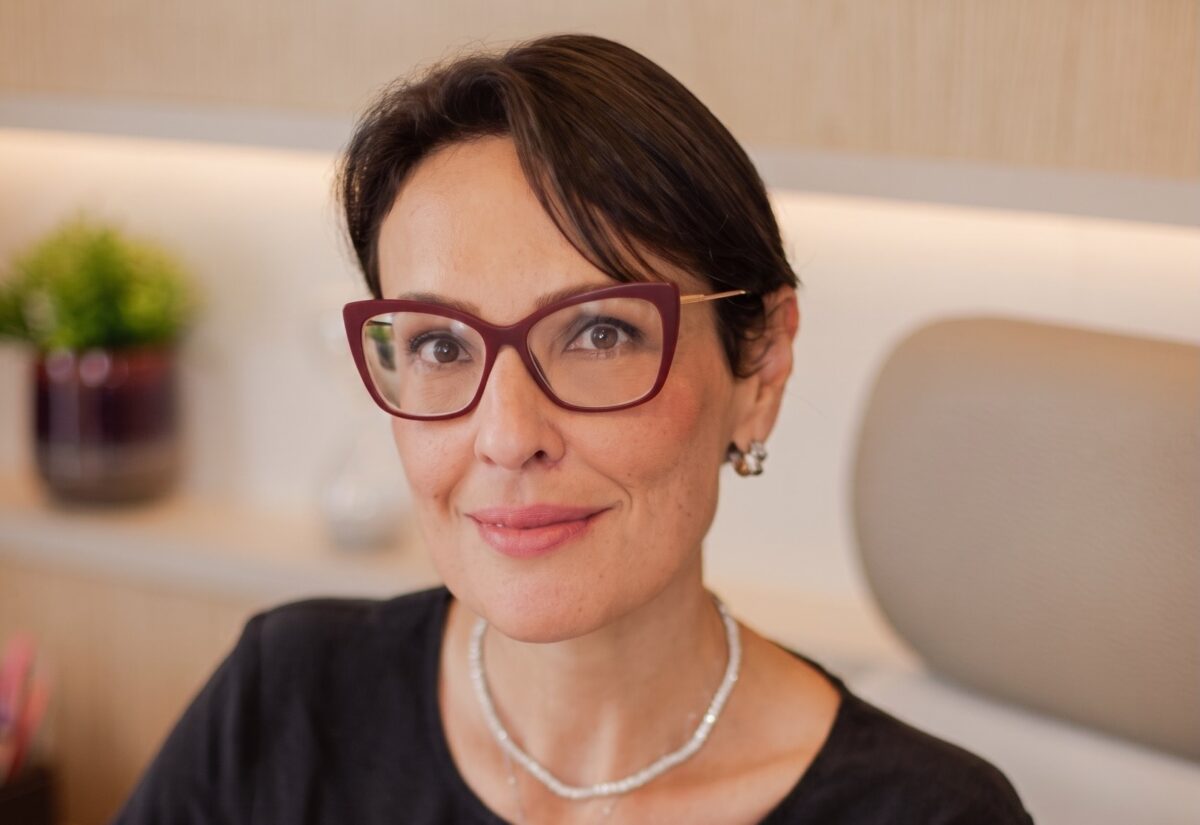
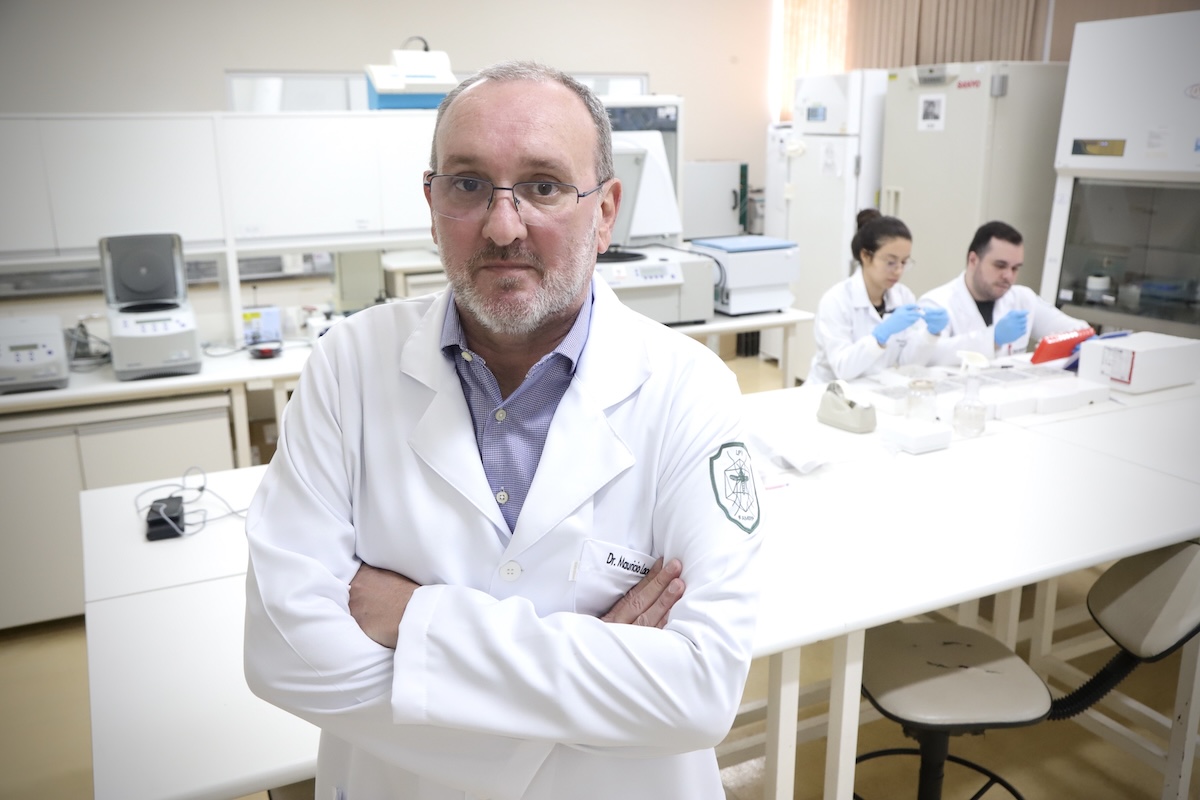 Maurício Lacerda Nogueira, a virologist at FAMERP, is among the 107 Brazilian scientists who most influence global health decisions | Image: Johnny Torres/FAMERP
In Brazil, few scientists manage to take a discovery from the laboratory bench all the way to a public policy capable of impacting millions of people. Rarer still is doing so repeatedly, across different epidemics. Virologist Maurício Lacerda Nogueira, a professor and deputy director of graduate studies at the São José do Rio Preto School of Medicine (FAMERP), is one of those exceptions—and has just added his name to another milestone in Brazilian science with the launch of the Butantan-DV dengue vaccine developed by Instituto Butantan.
This ability to transform scientific evidence into concrete public health decisions has placed Nogueira in a highly select group. His name appears on the list of the 107 Brazilian scientists with the greatest influence on decision-making worldwide, according to a report released by Agência Bori in partnership with Overton, which mapped researchers whose studies were cited in official documents, guidelines, and public policies around the world. He is part of a select group of 22 specialists in infectious diseases and vaccines who played a decisive role in responses to outbreaks of Zika, dengue, and COVID-19, in addition to influencing decisions related to Brazil’s National Immunization Program (PNI).
This international recognition comes alongside another recent distinction: the title of Distinguished International Fellow, awarded by the American Society of Tropical Medicine and Hygiene (ASTMH)—one of the highest honors in tropical medicine and global health. Maurício Nogueira also appears in a survey by Stanford University among the world’s most influential scientists, further reinforcing the international reach of his scientific work and the relevance of his contributions to virology and public health.
With a career shaped by the intersection of research, clinical practice, and public policy, Maurício Lacerda Nogueira has played a central role in responding to major epidemics in Brazil and abroad. He worked on studies during the Zika and COVID-19 crises, contributed to the development of new diagnostic techniques, and participated in the development of the dengue vaccine produced by Instituto Butantan—recently launched and considered one of the most important milestones in Brazilian public health science.
In an interview with Science Arena, he reflects on how science produced in Brazil can influence global health decisions, the structural bottlenecks that still limit innovation in the country, and the pathways for transforming scientific evidence into public policies capable of saving lives.
Science Arena: You have built a unique career in Brazil, combining cutting-edge science with influence on public policy. At what point did you realize that research needed to go beyond the laboratory to generate a real impact on public health?
Maurício Lacerda Nogueira – That was more a consequence than an intentional process. It was the result of work that has always been very closely connected to the healthcare system here in São José do Rio Preto. For the past 20 years, we have worked very closely with the local healthcare system and the local health department, providing information and transferring what we discover in the laboratory into public health practice. Over time, the projects become more complex and begin to influence policies, such as for vaccines. It was more a natural consequence of working closely with the healthcare system.
In your experience, what is currently the main bottleneck preventing scientific evidence from being transformed into concrete public health decisions in Brazil?
The main bottleneck is still the disconnect between healthcare services and academia. The COVID-19 pandemic showed that this was an absurd dichotomy and that we needed to work together. This has improved significantly in Brazil in recent years.
Epidemics such as dengue, Zika, and COVID-19 placed Brazil at the center of global science. What did these crises reveal about our institutional and scientific strengths and weaknesses?
Zika placed Brazil at the center of global science, and the country has very strong scientific capabilities: a highly qualified scientific community, young people engaged in science, motivated students who actively pursue opportunities, access to information, and infrastructure. But we also have enormous weaknesses, and the greatest of them is the complete lack of predictable funding. We remain heavily dependent on political circumstances, government priorities, and political transitions. We responded very effectively to Zika during a period of substantial funding, but we responded very poorly to yellow fever shortly afterward, because we were facing a period of extremely limited funding.
There is a lack of commitment among Brazilian politicians at all levels to maintaining scientific investment. We need to understand that science is a state program, not a government project.
Brazil’s response to the Zika epidemic received international recognition. What lessons from that period have we still failed to turn into lasting structural policies?
That is exactly the point: we have failed to turn them into permanent policy because we do not engage in long-term planning—everything is reactive and crisis-driven. When Zika began, the São Paulo Research Foundation (FAPESP) and the National Council for Scientific and Technological Development (CNPq), our major funding agencies, created programs and mobilized resources. Over time, these programs were scaled back. Then COVID-19 arrived, mobilizing resources again and creating new programs—including with private funding—but that also gradually disappeared. We do not have long-term strategic planning for science in Brazil.
During the COVID-19 pandemic, science became heavily politicized. How did that affect the dialogue between researchers, policymakers, and society?
The politicization of science during COVID-19 was the worst moment of all. In my 30 years of academic life in Brazil, that was the lowest point we reached. Scientists were persecuted, and there was a conflation of researchers’ personal identities and political views with the work they were carrying out. Scientists were targeted on social media and became victims of hate campaigns. This severely harmed communication and Brazil’s response, contributing to vaccine delays that ultimately cost lives.
Time, as politicians like to say, is the ultimate judge. We now see the news that Dr. Marcus Lacerda, probably the scientist most heavily attacked during the pandemic, was appointed (on January 15, 2026) director of the Special Programme for Research and Training in Tropical Diseases (TDR) at the World Health Organization—an extremely important position that demonstrates the significance of Brazilian science on the global stage. The person who faced the harshest attacks now occupies one of the most important positions held by a Brazilian scientist.
Is working in virology in a tropical country more of a constant challenge or a strategic opportunity for Brazil to establish itself as a global leader?
Working in Brazil is an enormous opportunity. Tropical diseases are part of our daily lives and our reality. It is a challenge because the demands are more urgent, but it is also an opportunity: we have the ability to remain very close to the problems and respond directly to those demands.
I remember a dinner several years ago at the American Society of Tropical Medicine and Hygiene, with researchers in the field of dengue. One said, “I conduct my research in Indonesia,” another said, “I always go to Colombia,” and another said, “I always go to Africa.” I joked, “I just cross the street—the hospital is right across from my laboratory.” That is a real advantage.
We face the structural problems inherent to Brazil: a lack of long-term funding and funding volumes that are far lower than what researchers in other countries can access. But we certainly do have strategic advantages.
You participated in the development of Butantan-DV, the dengue vaccine developed by Instituto Butantan. What does this experience reveal about the potential—and the limitations—of health innovation in Brazil?
The development of the Butantan vaccine is, in my view, one of the greatest achievements in the history of Brazilian science. It was a study that required substantial public investment, but it demonstrated Brazil’s ability to develop a vaccine and conduct a highly complex, long-term clinical trial. Instituto Butantan coordinated this effort with all participating centers, and we had the privilege of being part of it. This investment will have an enormous impact on public health in the coming years, as the vaccine reaches the Brazilian population and reduces the impact of dengue in Brazil.
Based on your international experience, how is Brazilian science perceived in global forums on virology and public health?
Brazil is highly respected in the fields of virology, public health, and tropical medicine. Proof of this is the appointment of Marcus Lacerda as director of the TDR. Until last year, I served as president of the American Committee on Arboviruses—meaning that a Brazilian was leading a committee within the American Society of Tropical Medicine and Hygiene. Brazil is consistently represented in organizations such as the Pan American Health Organization (PAHO), the World Health Organization (WHO), and the World Organization for Animal Health (WOAH).
Brazil and Brazilian scientists are internationally respected. We need a long-term policy framework that allows us to return that value more consistently to Brazilian society.
You are actively involved with international institutions, such as the University of Texas Medical Branch. How is Brazilian science viewed and received in those spaces?
It is highly regarded and recognized at universities abroad. At the same time, they are also aware of our shortcomings, especially the irregularity of funding. Working at the intersection between the Brazilian and international systems gives us a certain advantage.
What type of international collaboration do you consider most strategic today: large global consortia or more horizontal networks among countries facing similar challenges?
Both are important, each with its own characteristics. Large global consortia allow us to access resources and technologies that are not available through horizontal networks. Horizontal networks, meanwhile, connect us with countries facing similar challenges and problems—although, on the other hand, they also face the same resource limitations that we do.
Climate change tends to expand the reach of arboviral diseases. Is Brazil adequately preparing for this new epidemiological scenario?
Global warming and climate change have significantly affected the distribution of these arboviral diseases. We have seen dengue transmission in California, chikungunya in New York and France, and dengue in France and Japan—rising temperatures are leading to a wider spread of the mosquito and, consequently, of these diseases.
The same is happening in Brazil. Over the past two years we have experienced a major dengue epidemic in Porto Alegre, Rio Grande do Sul, in an area where there had previously been no circulation of the disease. What we are doing now is helping to train a generation of researchers, scientists, and public health professionals who were not prepared to work with these diseases because historically those diseases had not been present there.
Fortunately, we have the infrastructure, scientists, and public health professionals capable of providing that training—and that is exactly what has been happening.
Is Brazil’s surveillance system sufficient to anticipate outbreaks, or are we still operating reactively?
We are still very reactive. We have a good surveillance system, but for a variety of reasons it remains reactive. One example of this is that both the Sabiá virus (a highly lethal Brazilian virus) and SARS-CoV-2 (the virus that causes COVID-19) were first identified in the private healthcare system, rather than the public system. This shows that there are still gaps in public surveillance at certain times, primarily due to a lack of resources. COVID-19 brought funding and training, but the surveillance system still needs to be expanded.
What lessons from these major epidemics have still not been fully incorporated into surveillance and public health emergency preparedness policies?
The lessons were incorporated. The problem is that they are forgotten or cease to be priorities. All the collaborative work carried out between the public healthcare system and universities during the pandemic has been abandoned. This is a problem in Brazil—it is not about creating plans, but about maintaining them over time.
How can we balance excellence in research with urgent public health demands without compromising scientific quality?
The way to balance research excellence with urgent public health demands without compromising scientific quality is straightforward: funding. We need adequate resources to carry out work that addresses local demands. But that depends on sustained funding.
As deputy director of graduate studies, what type of researcher does Brazil need to train to address the public health challenges of the coming decades and strengthen the connection between science and public policy?
It is difficult to provide ready-made formulas. The researchers we train must be of the highest quality, capable of asking the right questions and responding to public health demands. The health challenges are enormous and our resources are limited, so we must train a generation of researchers who are deeply committed to public health, to sound science, and to addressing the country’s needs.
What advice would you give to us, young scientists, who want to see our research influence sound public health decisions?
Young researchers must not compromise on excellence in their work. That is a key point. Asking relevant questions, working with realistic demands, and producing high-quality science is the right path forward.
If Brazil had a robust national science policy focused on public health today, which areas would you prioritize to maximize social impact and international influence over the next 10 to 20 years?
It is difficult to prioritize a single area, although we must do so because resources are limited. Brazil has a unique characteristic: while we have tropical diseases—dengue, chikungunya—we also face problems typical of developed countries, such as an aging population and cardiovascular diseases.
Brazil needs to continue doing what it does best: creating major scientific infrastructures capable of driving significant change. We have centers such as the National Laboratory of Scientific Computing (LNCC), the Brazilian Synchrotron Light Laboratory (Sirius), and the future Biosafety Level 4 Laboratory (ORION)—highly advanced research infrastructures that will give Brazilian scientists the opportunity to conduct cutting-edge research across multiple fields of knowledge.
*
This article may be republished online under the CC-BY-NC-ND Creative Commons license.
The text must not be edited and the author(s) and source (Science Arena) must be credited.