 #News
#News
#News
22.07.2026
AI in education could become new “copy and paste”
Study argues that educators should teach students to identify errors, cross-check sources, and question answers generated by artificial intelligence
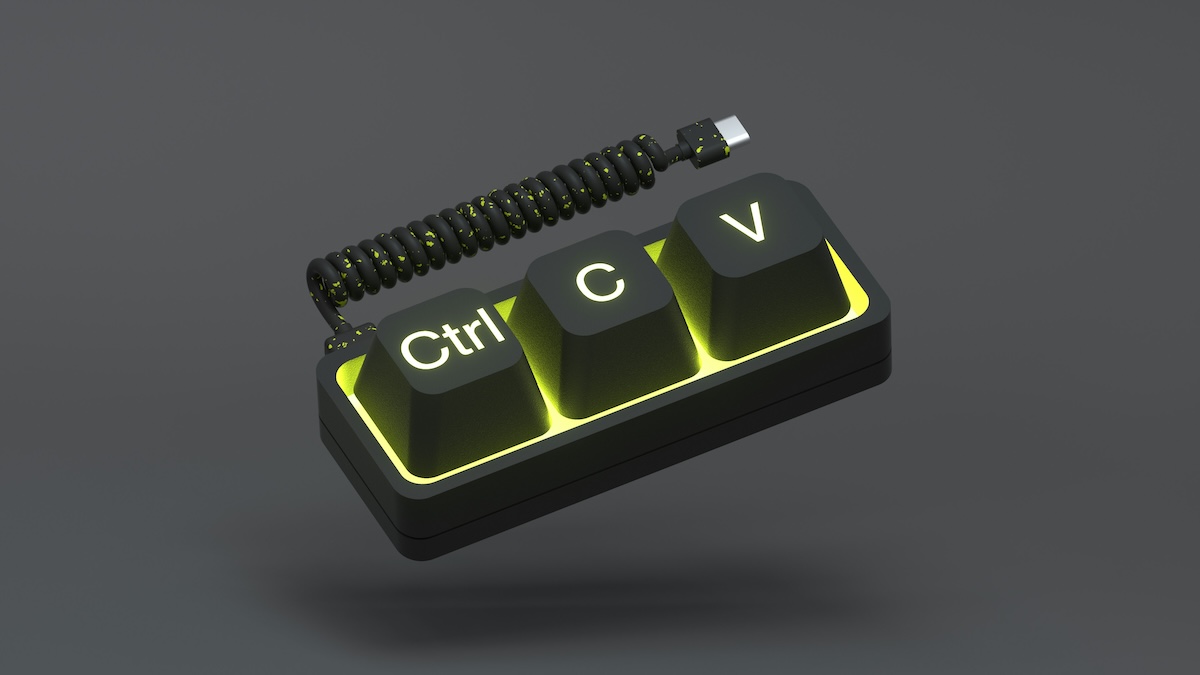 Without adequate training, teachers risk treating generative AI answers as fact, a study warns | Image: Unsplash
Enthusiasm and skepticism: these are the two feelings that generative artificial intelligence (GenAI) evokes in the classroom. The true risk to education, however, is not in the technology itself, but in the superficial way it can be used.
Without adequate teacher training, these tools risk becoming a modern version of the old “copy and paste,” a shortcut that erodes students’ cognitive effort and replaces the process of writing and reflection.
The warning comes from a study published in the journal Teaching and Teacher Education, which mapped tensions between students and teachers caused by the lack of pedagogical guidelines for dealing with these new technologies.
The survey revealed that although there is interest in using AI to save time or generate initial ideas, there is a legitimate concern that excessive and uncritical use leads to shallow learning and dependence on these platforms.
The challenge of checking the “answer machine”
One of the pillars of so-called digital literacy is understanding that AI models operate using statistical probability, not factual discernment.
This means that the tools are subject to hallucinations—the generation of false data—and the reproduction of biases present in the data used during their “training.”
For this reason, a teacher’s role is becoming even more analytical: they need to be trained to teach students to critically evaluate AI-generated results.
“When you need to verify information, you still have to do it the old-fashioned way: one source at a time, one piece of information at a time. This doesn’t change,” says Priya Panday-Shukla, author of the study.
If educators struggle to guide this verification process, AI ends up being accepted as absolute fact in the classroom, when in reality its potential lies in enhancing education, not undermining or dictating it.
From task automation to a catalyst for debate
The challenge of contemporary education is to transform AI from a task automation tool into a catalyst for debate.
Instead of using it to replace essay writing or solve a math problem, the idea is to use it as a counterpoint.
Teachers can, for example:
- Challenge students to find errors in an AI-generated text;
- Compare the machine’s responses with traditional bibliographic sources;
- Use the algorithms to formulate different research hypotheses.
In this sense, AI should serve as a starting point for questioning, not as the endpoint of learning.
Three ways to use generative AI without compromising critical thinking
1. Find errors: ask students to identify inaccuracies, hallucinations, or biases in an AI-generated text before accepting it as the final answer.
2. Compare sources: cross-check what AI produces against academic literature and primary sources, sticking to the “one source at a time” approach.
3. Formulate hypotheses: use the algorithms as a starting point for raising research questions, not as a substitute for the student’s own reflection.
Read the full report on this topic in Science Arena.
*
This article may be republished online under the CC-BY-NC-ND Creative Commons license.
The text must not be edited and the author(s) and source (Science Arena) must be credited.