 #News
#News
#News
04.05.2026
Bureaucracy, rigid hierarchies, and brain drain limit research in Brazil, study says
A survey of more than one hundred researchers from Brazil, China, Germany, and India maps the factors that drive (and hinder) scientific excellence
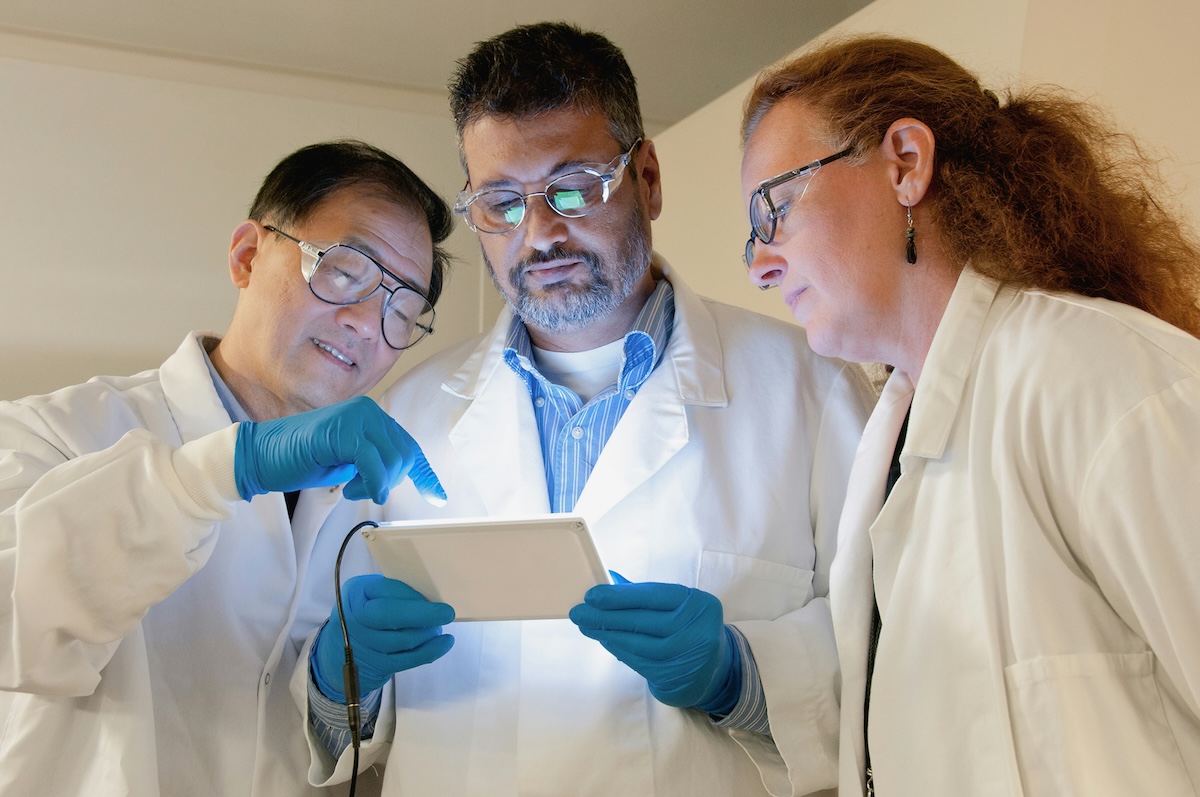 Excessive bureaucracy, rigid hierarchies, and brain drain are among the main obstacles to the development of science in Brazil, according to research by Elsevier | Image: Unsplash
The image of a lone scientist, immersed in books and experiments until they have a lightbulb moment, is a cliché in popular culture. In practice, excellence in scientific research does not depend solely on the talent of one person: it also requires a context that provides the foundation for fruitful work.
Based on this premise, Dutch publishing company Elsevier interviewed more than one hundred scientists from Brazil, China, Germany, and India at different stages and in different roles, from early-career researchers to university deans, and from funders to government officials, to identify which characteristics support the emergence of thriving research ecosystems and how the national context shapes the understanding of what drives this excellence.
The study begins by defining, together with the interviewees themselves, what scientific excellence is. The responses converged around three pillars: the impact or relevance of the study, the robustness of the findings, and recognition by the scientific community—whether through awards or other forms of external validation. The definition varies across countries and disciplines, but these central points were consistent.
The characteristic most frequently mentioned by interviewees from all four countries is leadership—understood not as hierarchical authority, but as the ability to guide, inspire confidence, and remove barriers so that people do their best work.
Talent thrives when there is strong leadership, a healthy culture, and collaboration across disciplines.
Bureaucracy, funding, and risk aversion
According to the study, the obstacles to this development are excessive bureaucracy, exaggerated control over researchers, and a funding model dominated by short-term competitive calls for proposals. This model induces risk aversion and fragments research agendas, a direct result of the constant pressure to secure funding.
The most telling figure: only 45% of those interviewed say they have enough time for research.
Only 45% of those interviewed say they have enough time for research. The rest of their time is consumed by reporting requirements, constant efforts to secure funding, and redundant administrative processes.
Collaboration between disciplines and institutions is increasingly seen as necessary to address more complex scientific and social issues. Institutional structures, however, frequently hinder this work. Siloed departments, misaligned incentives, and evaluation systems that do not recognize collective outputs hinder interdisciplinary research, even when institutions support it in discourse.
The Brazilian case: infrastructure, hierarchy, and brain drain
In Brazil, interviewees recognized improvements in research infrastructure, but pointed to persistent regional disparities, both in access to funding and in equipment maintenance. Salaries for Brazilian researchers do not vary according to research performance, a disincentive to dedicating oneself exclusively to science.
Bureaucracy appears as one of the main barriers, but not in isolation: the problem lies in the need for researchers to adapt to each institution’s system, having to relearn from scratch the ins and outs of each process for every new project or funding request.
Rigid hierarchies were also cited as an obstacle. According to those interviewed, researchers in prestigious positions concentrate power without necessarily supporting the academic freedom of those below them. This freedom exists at undergraduate level, but becomes progressively more controlled in graduate studies.
Brain drain completes the picture. Brazilian students who go abroad often do not return, weakening an ecosystem that is still struggling to become more attractive.
*
This article may be republished online under the CC-BY-NC-ND Creative Commons license.
The text must not be edited and the author(s) and source (Science Arena) must be credited.