 #News
#News
#News
18.06.2026
Experimental drug reduces risk of second stroke by 26%
International clinical trial involving Brazilian researchers tested asundexian in patients following ischemic stroke
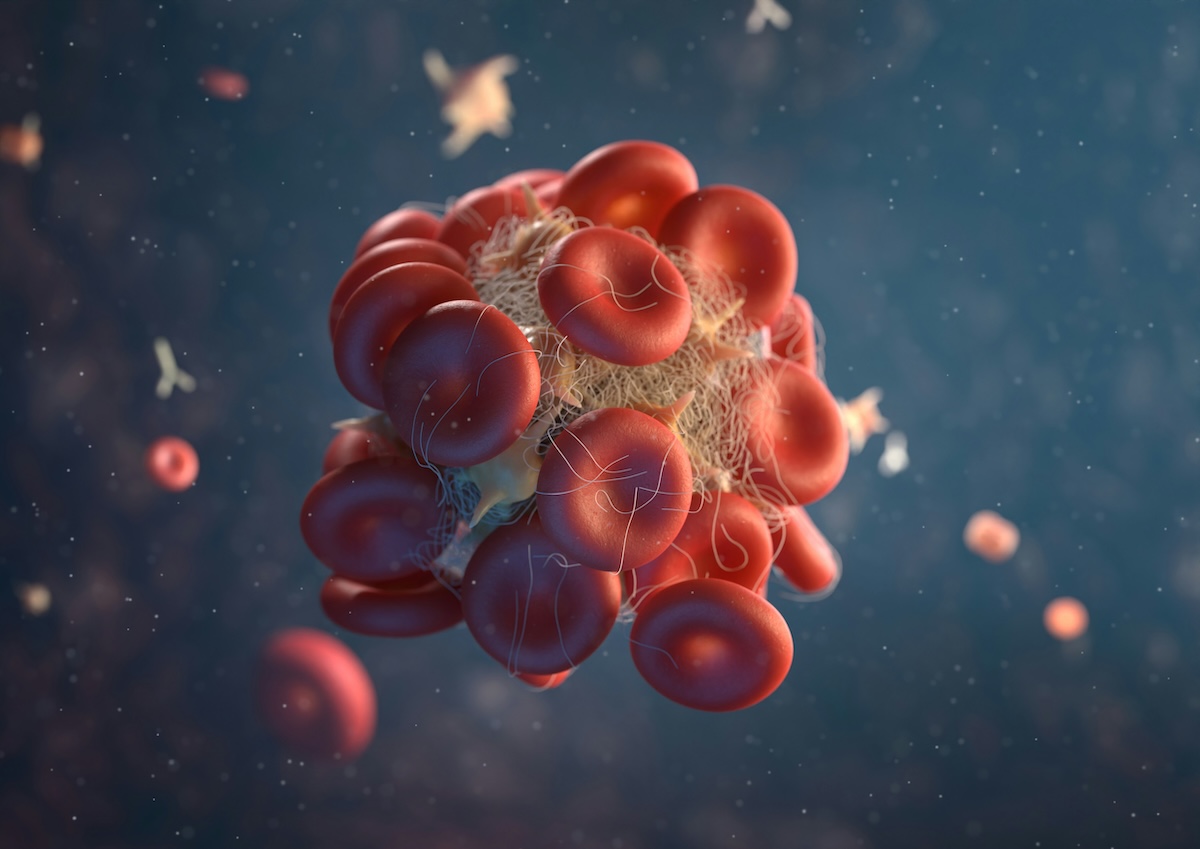 Illustration of a blood clot: red blood cells trapped within a network of fibrin and platelets. Asundexian targets factor XIa, a protein that amplifies the formation of this type of thrombus | Image: Unsplash
The novel therapeutic asundexian reduced the risk of a second stroke by 26% without significantly increasing the risk of bleeding, the principal side effect associated with antiplatelet medications, currently the standard treatment for the condition.
In an April 2026 article in The New England Journal of Medicine, researchers describe the OCEANIC-STROKE clinical trial, which demonstrated the drug’s effectiveness.
The study enrolled 12,327 participants from 37 countries including Brazil, with the participation of researcher Gisele Sampaio Silva, affiliated with Einstein Hospital Israelita and the Federal University of São Paulo (UNIFESP). Participants were divided into two groups: one received 50 milligrams (mg) of asundexian daily, while the other received a placebo.
Treatment began within 72 hours of the stroke, and patients were monitored for a median period of approximately 19 months. The drug’s benefit was consistent across the various groups analyzed: men and women, younger and older patients, and the major subtypes of ischemic stroke.
“It is essential to prevent a second stroke, which affects many patients and occurs when the organism is particularly vulnerable,” said neurologist Andrew Russman of the Cleveland Clinic in an interview with HCPLive.
Selective effect
“It was a welcome surprise to find that asundexian did not increase bleeding,” said the study’s lead investigator Mukul Sharma, of Canada’s McMaster University, in an interview with VJNeurology during the event to present the trial results. “Bleeding episodes can interfere with patients’ social lives, cause anxiety, and lead some of them to discontinue treatment.”
According to the researchers, the trial generated sufficient evidence to demonstrate the molecule’s efficacy, and its benefits extended beyond the prevention of recurrent strokes. The combined incidence of cardiovascular death, myocardial infarction, or stroke was also lower among patients who received asundexian.
Bayer, which develops the drug, announced in May 2026 that the FDA had accepted its application to register asundexian and granted the therapy Priority Review designation for the secondary prevention of stroke.
The new drug is intended for patients with non-cardioembolic ischemic stroke—strokes caused by atherosclerosis or by clots that form within the cerebral arteries themselves. It is not indicated for cardioembolic stroke, which originates from blood clots formed in the heart that can be triggered, for example, by atrial fibrillation.
According to the researchers, the drug acts selectively: it inhibits factor XIa, a protein that amplifies the formation of pathological blood clots but plays only a secondary role in hemostasis, the process that stops bleeding after an injury.
People with a congenital deficiency of this factor experience fewer ischemic strokes without facing a higher risk of cerebral hemorrhage, making the protein a promising target for new therapies.
Antiplatelet drugs, by contrast, have a broader mechanism of action, impairing platelet aggregation. As a result, they reduce the formation of both pathological thrombi and healthy blood clots.
For years, scientists tested a variety of drugs in combination with antiplatelet therapy to prevent recurrent stroke, but asundexian was the first to demonstrate efficacy without increasing the risk of bleeding.
The researchers emphasized that antiplatelet medications should not be abandoned but rather used in combination with asundexian. “This new approach could pave the way for a new class of precision medicines that are more effective and cause less bleeding,” Russman predicts.
*
This article may be republished online under the CC-BY-NC-ND Creative Commons license.
The text must not be edited and the author(s) and source (Science Arena) must be credited.