 #Columns
#Columns
21.07.2026
To coexist—or not to coexist? That is the question
In a world afflicted by environmental crises and misinformation, fostering dialogue among diverse knowledge systems and worldviews has become essential to addressing today’s global challenges
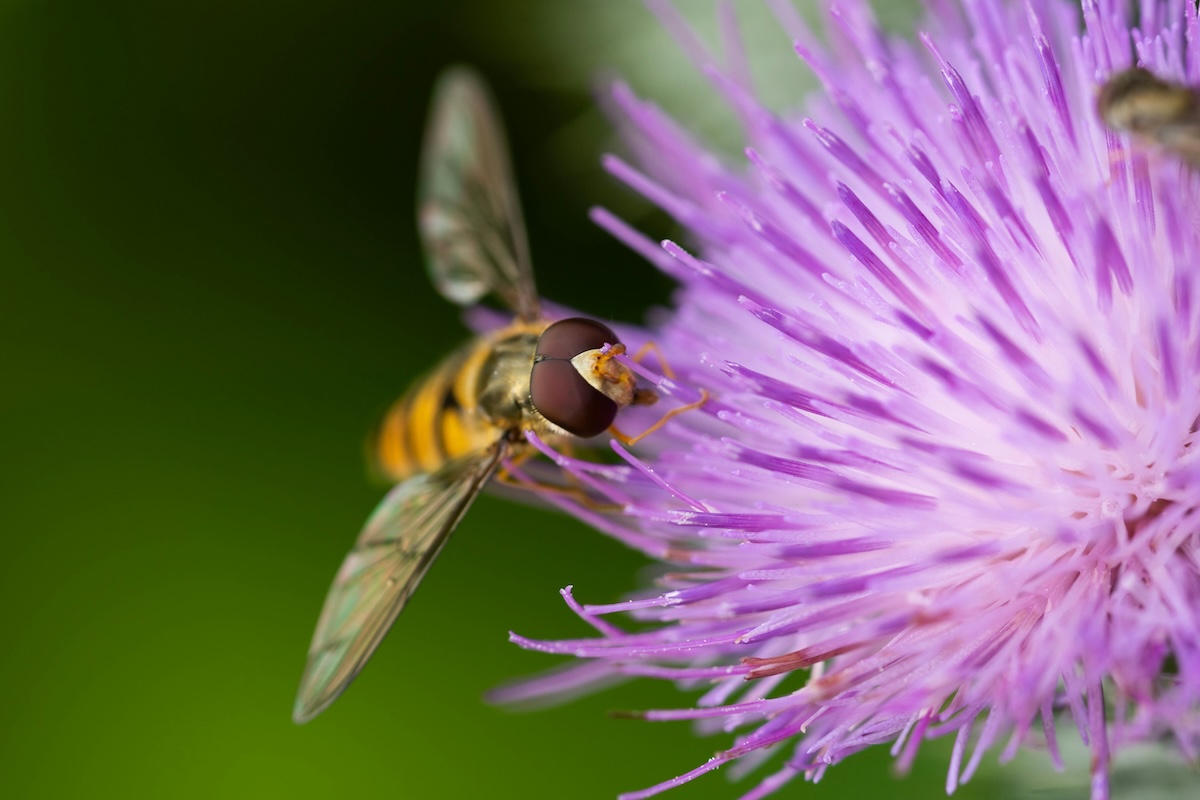 The challenge of coexistence approaches a new frontier: the ecosystem of public debate and science | Image: Unsplash
Hamlet’s famous, ultimately unanswerable question takes on new existential urgency in the twenty-first century—and from a different perspective.
The issue is no longer simply whether an individual should be or not be, but whether we can inhabit the same space and time without erasing one another.
That challenge extends across many aspects of daily life, from the biosphere to the production of scientific knowledge and—why not?—to relationships among members of our own species.
In today’s social fabric, coexistence is no longer an optional moral virtue—it has become an essential condition for survival.
In ecology, coexistence describes the dynamic and often fragile equilibrium in which different species share limited resources without driving one another to extinction.
Applied to twentieth-century geopolitics, the concept acquired the qualifier peaceful to describe efforts to find common ground that could prevent mutual annihilation during the Cold War.
Today, the challenge of coexistence approaches a new frontier: the ecosystem of public debate and science.
Natural coexistence
Ecologist Peter Chesson of the University of Arizona helps us understand that coexistence is not synonymous with static harmony, but with dynamic balance.
Seminal studies on the maintenance of biodiversity show that different species can persist within the same ecological community when mechanisms are in place to reduce competitive exclusion and foster differentiation, variation, adaptation, or complementarity.
In other words, coexistence does not mean occupying the same space in the same way, but rather finding ways to remain connected despite limited resources, tensions, and asymmetries.
We already know that biodiversity loss and ecosystem imbalance driven by humanity’s growing disconnection from nature have come at a steep cost to human health.
Yet the paradox of today’s hyperconnected world is that, even as digital technologies have brought us closer together, they have also fragmented us into ideological bubbles.
Confronted with global crises—from climate emergencies to pandemics—the human response has too often drifted toward isolation and intolerance, as if the complexity of reality could be tamed by rejecting those who see only Otherism.
When competing worldviews refuse to engage in dialogue, scientific knowledge is reduced to little more than a political football.
As a result, the “Other” is no longer regarded as a legitimate interlocutor, but as a threat to be eliminated.
Shared knowledge

For science and global health, coexistence unfolds across two vital dimensions.
The first is inward-facing: coexistence among different forms of knowledge. The challenges of our time are far too complex to be solved by any single discipline. Interdisciplinary collaboration is key. The health sciences need the humanities; ecology depends on economics; technology requires ethics.
Fostering this essential interdisciplinarity means practicing coexistence within laboratories, research groups, universities, and healthcare settings, recognizing that diverse forms of knowledge deepen our understanding of reality.
The second dimension is outward-facing: the relationship between science and society. The rise of denialism and misinformation cannot be countered through intellectual arrogance or academic isolation that speaks only within its own walls.
Instead, it calls for openness to others and a willingness to listen.
Scientists and researchers must coexist and engage in dialogue with other forms of knowledge, with the needs of local communities, and with the legitimate questions of a population now constantly bombarded with digital noise.
In this context, coexistence means building bridges through accessible language and empathy, affirming science as a shared, democratic public good.
It offers a light at the end of the tunnel—a source of hope for a better, more equitable world, one that makes no distinction among the beings with whom we share this time and place. The challenge posed by this article’s title, therefore, allows no room for neutrality.
Refusing to coexist—whether across disciplines, cultures, or between reason and a pluralistic society—leads to the erosion of public debate and, ultimately, to socioecological collapse.
A Shared Future
Embracing difference, broadening our perspective, and recognizing the need for coexistence and interdependence remain challenges that a significant share of the world’s population has yet to acknowledge. The world is, at once, diverse, contradictory, and relational.
Brazilian writer João Guimarães Rosa seemed to grasp this when he wrote, “Everything is and is not.” Perhaps that is where Hamlet’s enduring question finds its lasting power: there is no definitive answer to what it means to exist in the world.
There is only the restless journey of learning to exist alongside the Other, with differences, contradictions, and the complexities that sustain life itself.
Choosing coexistence does not mean striving for artificial consensus or the absence of conflict. Rather, it means learning to navigate our differences with ethical responsibility and mutual respect.
For if we are no longer capable of coexisting despite our differences, then, ironically, the future that awaits us may be one in which we no longer exist.
The opinions expressed in articles and videos do not necessarily reflect the views of Science Arena or Einstein Hospital Israelita.
*
This article may be republished online under the CC-BY-NC-ND Creative Commons license.
The text must not be edited and the author(s) and source (Science Arena) must be credited.