 #Interviews
#Interviews
28.05.2026
“The risk isn’t AI, but delegating intellectual work to the machine,” researcher says
Fernanda Scussel believes artificial intelligence tools can expedite research, but they require careful checks, well-crafted prompts, and clarity about authorship
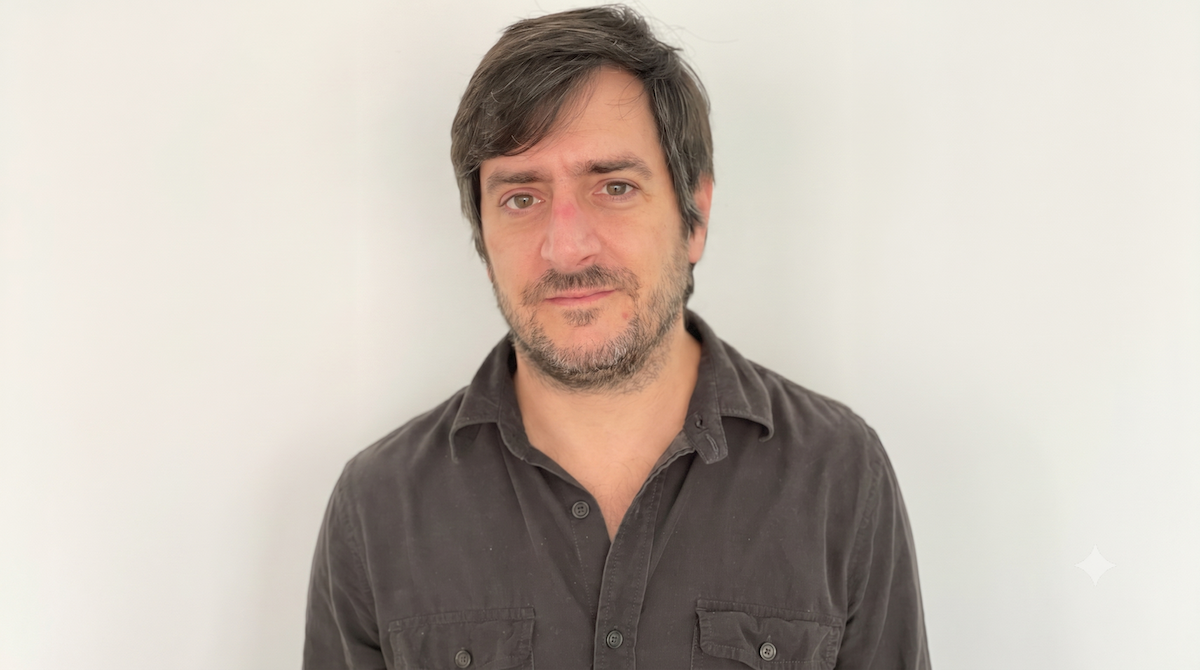
 “AI has shed light on fundamental problems within the academic community that already existed but were being overlooked,” says Fernanda Scussel, who holds a PhD in administration from the Federal University of Santa Catarina (UFSC) created the “Pesquisa na Prática” project | Image: Personal archive
“Artificial intelligence [AI] has shed light on fundamental problems within academia that already existed but were being overlooked,” says Fernanda Scussel. With a PhD in administration from the Federal University of Santa Catarina (UFSC), Scussel is the creator of the Pesquisa na Prática (Research in Practice) project, which focuses on teaching scientific methodology and promoting the responsible use of digital technologies in academic work.
Rejecting both uncritical enthusiasm and technological panic, she sees AI not as a threat to academia, but as a mirror reflecting long-standing issues: gaps in methodological training, unresolved questions of authorship, and a culture that still treats scientific integrity as a bureaucratic protocol rather than a core value.
The arrival of AI tools in everyday research has prompted organizations such as the Brazilian National Council for Scientific & Technological Development (CNPq) to publish unprecedented regulatory guidelines—a sign that the technology is already part of academic practice and demands clear governance standards.
For Scussel, the greatest risk is not the technology itself, but researchers who delegate essentially intellectual tasks to machines.
In this interview with Science Arena, she explains how to select AI tools critically, why cross-validation is nonnegotiable, and what separates responsible AI use from careless application.
Science Arena — What are the biggest practical challenges researchers face when using AI without compromising the quality of their work?
Fernanda Scussel – AI has highlighted fundamental problems in academia that already existed but were neglected, such as questions of authorship, authenticity, and weaknesses in how research methodology is taught in Brazil.
The challenge is not only using the tool ethically, but also examining academic culture as a whole.
Today we face what we call the ‘paralysis paradox’: the more tools we have, the more paralyzed researchers feel.
The focus needs to shift away from the technology itself and back to the research process. In other words, AI should be viewed as a tool for specific stages of research—not as a magical solution capable of writing dissertations or reading papers on its own.
Many researchers feel overwhelmed by the sheer number of tools available. What criteria do you use to determine what is actually useful?
The main criterion is suitability for the task. Researchers should first define the problem they need to solve and only then choose the technology. Another important factor is testing: I recommend exploring no more than three or four tools and focusing on the one you feel most comfortable using.
Good results come from making the most of a specific tool, because consistent use enables machine learning and allows the model to better understand the user’s needs over time.
What validation strategies are paramount to ensure that a tool is trustworthy?
We need to understand that AI platforms are companies, and they contain what I call a “flattering element” designed to encourage engagement—they want to please you.
That means researchers must develop their own validation criteria. One crucial strategy is cross-checking, to verify whether what the AI claims actually matches what the author of a paper wrote.
Another critical error is delegating essential tasks, such as reading, to the machine. Use AI to accelerate the process—for example, to help navigate a complex text—but never relinquish intellectual responsibility for the content.
Having a genuine interest in your research will keep you from taking shortcuts on fundamentally important pathways.
How do you stay up to date and distinguish genuine innovation from mere hype?
You need to be very careful with hype because it creates an environment of anxiety. If you are already using a tool that delivers reliable and satisfactory results, there is no need to migrate to the “tool of the week” simply because of external pressure.
Maintaining focus on a single tool also strengthens the machine-learning process I mentioned earlier and reduces the anxiety of constantly chasing the next technique.
As a professor, I test many different options, but for most researchers, the ideal approach is to tune out the noise and concentrate on what works for their own process.
What are the most common mistakes people make when using these tools?
The first is not knowing how to create an effective prompt. You need to know how to “direct” the AI—that is, provide context and establish limits.
The second is the lack of interaction: many people simply copy and paste the first response they receive, which results in generic writing and increases the risk of plagiarism.
Finally, there is a lack of technical understanding, such as ignoring the “context window,” which can lead to hallucinations when too much information is inserted at once.
How to structure an effective prompt for scientific research
-
1. Define the context
-
Tell the tool your field of research, level of expertise, and the specific objective of the task.
-
2. Set boundaries
-
Clearly state what you want—and what you do not want—the AI to produce.
-
3. Provide examples
-
Demonstrate the type of output you expect, especially for writing or analytical tasks.
-
4. Manage the context window
-
Avoid inserting excessively long texts into a single query to reduce the risk of hallucinations.
-
5. Always cross-check
-
Verify whether the references cited by the AI actually correspond to what the original authors wrote.
What are the greatest opportunities AI offers today for democratizing Brazilian science?
AI has practically eliminated the English-language barrier, for example, and to me that has been a major breakthrough. Researchers not fluent in English can now understand complex texts and participate in classes on a more equal footing.
The technology also facilitates the internationalization of Brazilian science by helping adapt language and make papers more persuasive for high-impact journals, accelerating publication in prestigious outlets.
In your view, what are the next steps for this technology?
We now need to focus on training educators so they are better prepared to incorporate these tools into their own practices and teach students how to use them correctly.
We need to discuss all of this responsibly and without taboo. AI is here to stay, and therefore it deserves serious attention and a thoughtful approach.
*
This article may be republished online under the CC-BY-NC-ND Creative Commons license.
The text must not be edited and the author(s) and source (Science Arena) must be credited.