 #Careers
#Careers
11.06.2026

ChatGPT and other AI redefine scientific literature review
Study shows how tools such as ChatGPT, Elicit, and Research Rabbit can speed up literature reviews without replacing researcher analysis
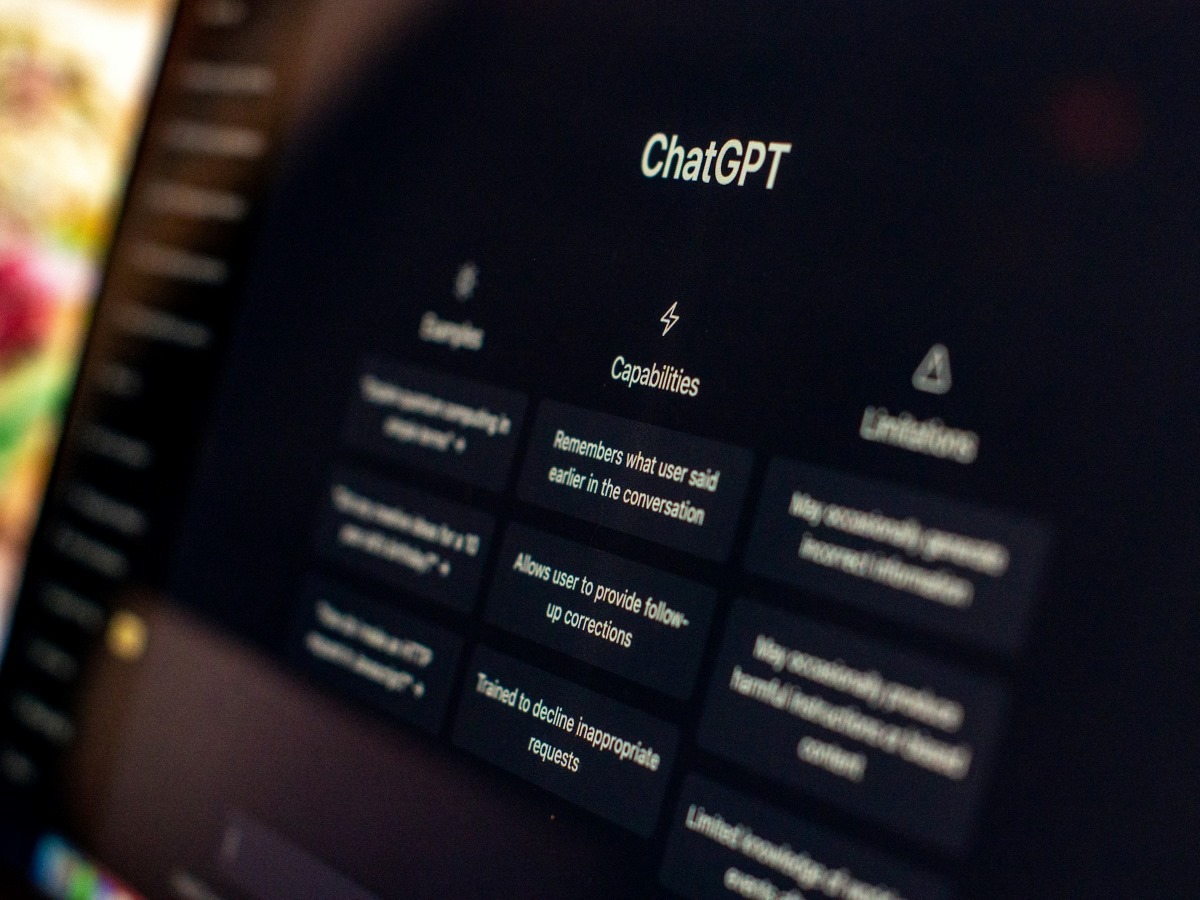 ChatGPT and other AI resources are increasingly utilized by researchers for literature review, reference organization, and scientific writing | Image: Unsplash
Incorporation of artificial intelligence (IA) tools into academic research is set to reshape one of its most laborious stages: literature review. This is the projection of a study undertaken by specialists from São Paulo’s ABC School of Medicine University Center (FMABC) and the Brazilian Clinical Oncology Society (SBOC), whose findings were published in the journal Einstein in March.
According to the authors, the use of advanced language models can speed up scientific output and make it more structured and efficient. However, they are yet to achieve full autonomy, and cannot replace the scientist.
The article points out that the human eye is key to guaranteeing critical interpretation of data and generation of original knowledge.
This discussion takes on particular relevance given the movement by state universities in São Paulo—the University of São Paulo (USP), University of Campinas (UNICAMP), and São Paulo State University (UNESP)—to regulate the use of AI in research.
The guidelines highlight the need for methodological transparency and require that researchers detail not only use of the tool, but also how it is applied.
Traditional process under pressure from tech
Literature review is a structuring stage of scientific output, in which the researcher sets out what they know about the subject, identifies knowledge gaps, and guides new investigations.
In the specific case of narrative reviews, there is more room for interpretation, synthesis, and construction of the case to be stated. It is at this point that AI comes into being as a support tool.
The study draws on the diagnosis that the growing volume of scientific publications has made the review process increasingly complex and time-consuming, creating a need for automated solutions capable of dealing more effectively with large quantities of available textual information.
To examine this scenario, the authors conducted a narrative review based on searches in the PubMed and Google Scholar databases, combining terms related to scientific writing, medicine, and AI. The strategy also included semantic exploration using digital tools, and secondary reference analysis.
Unlike systematic reviews, the selection process prioritized thematic relevance, enabling a comprehensive view of the ecosystem of available tools, albeit with lesser methodological reproducibility.
Partially automated production chain
At the outset of the review process, the language models demonstrated their capacity to suggest research gaps, relying on both recent trend analysis and summarization of discussions in published scientific articles.
In the structuring phase, tools such as ChatGPT enable skeleton scripts to be drafted for the article, reducing initial planning work and contributing to logical coherence in the text.
Literature searches, traditionally based on keywords, are enhanced by systems using semantic analysis, citation networks, and coauthorship.
Platforms such as Research Rabbit and Semantic Scholar can identify connections invisible to conventional searches, providing a more contextualized browsing experience.
In terms of organization, reference management tools integrated into AI resources allow not only for article storage, but also for structured annotation, classification, and recovery of information.
This is a crucial aspect for narrative reviews, which rely on the cross-referencing of multiple sources.
Finally, AI can act as a multifunctional assistant during the writing process—producing drafts, adjusting academic style, improving clarity, and even simulating critical reviews.
The study points out that this integration can significantly save time spent on writing while enhancing formal manuscript quality.
Structural limits
Although tech advancement is praiseworthy, the authors emphasize that automation can also present relevant risks, notably the production of technically correct but intellectually superficial texts, without significant analytical contribution.
The lack of original interpretations, generation of incorrect information (known as “hallucinations”), and the inaccuracy of references demand careful verification by researchers.
There is institutional concern over the indiscriminate use of these tools, which may lead to mass production of articles with questionable scientific value, driven by academic pressures.
The study concluded that the way forward is not the total automation of science, but the consolidation of a new knowledge production regime: hybrid, streamlined, and dependent upon qualified human supervision.
AI tools to help researchers
ChatGPT
Identifies research gaps, prepares drafts, rewrites article sections (e.g. introduction and discussion), suggests adjustments to register, and improves readability. It can also evaluate articles in a similar manner to peer review.
Research Rabbit
Identifies articles, authors, and related topics through analysis of citations and coauthorship. Facilitates literature browsing with a visual interface, and integrates with Zotero to enable citation management.
Semantic Scholar
Uses natural language processing and machine learning to research articles, understand content in context, and rank articles by relevance.
Elicit
Uses advanced research strategies to locate and compile relevant articles. Provides an exclusive interface to efficiently classify bibliographical research results.
Zotero
Free reference management system (RMS) to collect, organize, cite, and share research sources. Includes browser integration, PDF annotation, markup, citation, bibliographical management, and support.
Mendeley
Web-based reference management system (RMS) similar to Zotero, with integration to Microsoft Word online for management of citations and references in the cloud.
TinyWow
Offers PDF summary tools for quick article analysis and relevance assessment.
Scribbr
Offers PDF summaries to help manage large volumes of literature, providing concise article summaries.
Quillbot
Summarizes scientific articles for initial screening to determine their relevance and importance for narrative reviews.
Grammarly
AI-driven communication assistant to help with spelling, grammar, and style, ensuring clarity and accuracy. Can be integrated with text processes to provide real-time assistance.
Jenni.ai
Combines spelling and grammar correction, text enhancement, and assistance in compiling bibliographical citations. Improves writing by suggesting phrase development and integrating support resources.
Yomu
Integrates writing assistance resources, with text improvement and help with bibliographical references. Supports the writing process with resources similar to those of Jenni.ai.
Claude
Advanced conversational AI to assist with writing, summarizing, and brainstorming scientific texts. Recognized for its focus on security and treatment of extensive materials.
Perplexity
AI-based search engine providing concise answers and sources; useful for obtaining updated references during literature reviews.
DeepSeek Chat
Large language model (LLM) designed for in-depth reasoning, code-based tasks, scientific questions and answers, problem solving, and drafting of technical content.
Llama/Mistral via DuckDuckGo/Groq
Chat platform with DuckDuckGo AI offers access to Llama and Mistral via Groq – useful for quick scientific consultations and summaries with short response times.
How to use AI tools in scientific production?
Reference
Del Giglio A, Costa MU. Utilizing Artificial Intelligence to create narrative literature reviews. einstein (São Paulo). 2026;24:eRW1165. https://dx.doi.org/10.31744/einstein_journal/2026RW1165
*
This article may be republished online under the CC-BY-NC-ND Creative Commons license.
The text must not be edited and the author(s) and source (Science Arena) must be credited.
Careers
#Careers
 #Careers
 #Careers